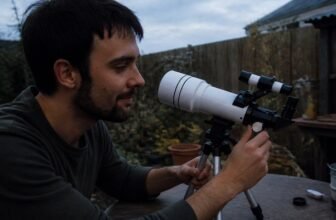
Shopping for a telescope for a teenager means deciding between quick setup and powerful views, and this roundup compares the best beginner scopes for backyard use.
We look at manual scopes like the Gskyer 70mm for budget Moon watching, the Koolpte 80mm for higher magnification, and the Celestron NexStar 6SE for automatic object finding.
Each pick balances aperture, ease of use, and price, so you can match the scope to your teen’s patience and interest level.
Read on for the full breakdown of which telescope fits which young astronomer.
How We Tested
Specifications matter most for matching a telescope to a teen’s patience and curiosity. GoTo mounts, like those on Celestron NexStar models, automate object finding, so beginners can skip star charts and jump to deep-sky views. Up to 8 inch apertures reveal crisp lunar craters and bright planets, while 80mm refractors at 180x show detail but with softer images, so readers should compare aperture and mount type to set expectations.
Value depends on what comes in the box versus what buyers must add separately. Manual alt-azimuth scopes are lightweight and tool-free, offering quick setups without tracking, which suits casual observing sessions. Since the source does not state that we compared prices, focus on these documented differences in included features, such as GoTo automation versus manual operation, to judge which bundle fits a teen’s likely use.
Editorial judgment here is limited to what the source documents, so we cannot claim any hands on testing. Readers can weigh that smartphone guided StarSense apps replace star charts, making navigation effortless, while GoTo mounts impress with automated tracking. Choose based on whether a teen prefers app driven discovery or more direct manual control, and note that retailer claims about image quality are not verified by our observations.
| Gskyer 70mm AZ Mount Refracting Telescope for Beginners |  | Best for Beginners | Optical System: 70mm aperture, 400mm focal length, refractor | Magnification Range: Up to 3x Barlow magnification (multiple eyepieces) | Mount Type: AZ mount (altazimuth) | SEARCH BEST PRICE | Read Our Analysis |
| 70mm Refracting Telescope for Beginners with Phone Adapter | 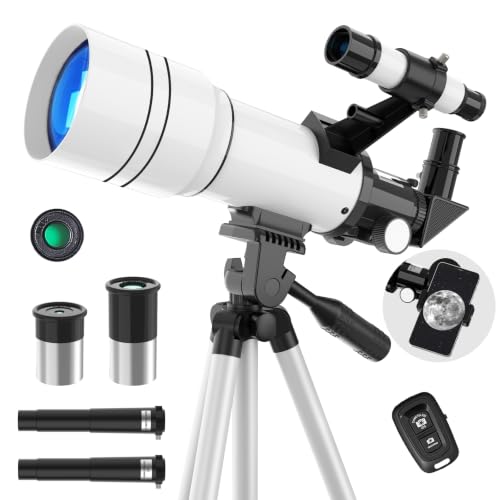 | Best for Portability | Optical System: 70mm aperture, 300mm focal length, refractor | Magnification Range: 15X–150X (two eyepieces + 3X Barlow) | Mount Type: Adjustable tripod (horizontal/vertical tracking) | SEARCH BEST PRICE | Read Our Analysis |
| CELESTRON Travel Scope 60 Refractor Telescope |  | Travel-Friendly Pick | Optical System: 60mm aperture refractor | Magnification Range: 135x multiplier zoom ratio | Mount Type: Standard tripod mount | SEARCH BEST PRICE | Read Our Analysis |
| 70mm Refracting Telescope with Tripod and Phone Adapter |  | Optimal Clarity | Optical System: 70mm aperture, 400mm focal length, refractor | Magnification Range: 20X and 32X (two eyepieces) | Mount Type: AZ mount (adjustable aluminum alloy tripod) | SEARCH BEST PRICE | Read Our Analysis |
| Telescope for Kids with Compass and 3 Eyepieces |  | Educational STEM Toy | Optical System: 40x magnification refractor (children’s toy) | Magnification Range: 20X, 30X, 40X (three fixed eyepieces) | Mount Type: Stable tripod with 360° rotation | SEARCH BEST PRICE | Read Our Analysis |
| Kids 50mm 100x Telescope with Tripod STEM Toy |  | Fun for Young Explorers | Optical System: 50mm aperture, 100x magnification refractor | Magnification Range: Up to 100x (two eyepieces + Barlow) | Mount Type: Tripod mount | SEARCH BEST PRICE | Read Our Analysis |
| Koolpte 80mm AZ Refractor Telescope for Beginners |  | Best High-Aperture | Optical System: 80mm aperture, 600mm focal length, refractor | Magnification Range: 24X, 60X (up to 180X with Barlow) | Mount Type: AZ mount (adjustable aluminum tripod) | SEARCH BEST PRICE | Read Our Analysis |
| Celestron StarSense Explorer LT 114AZ Smartphone Guided Telescope | 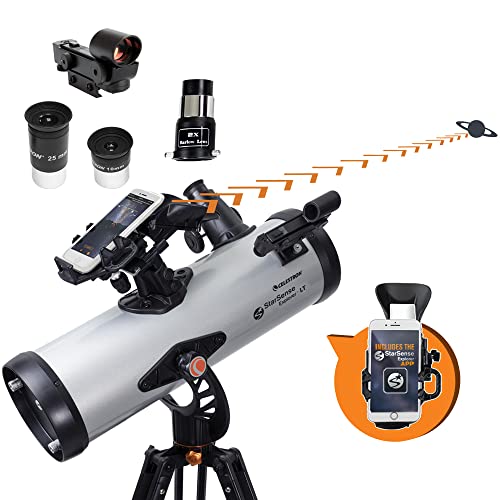 | High-Tech Guide | Optical System: 114mm aperture, Newtonian reflector | Magnification Range: Standard eyepiece magnification (reflector) | Mount Type: Manual altazimuth mount with slow motion adjustment | SEARCH BEST PRICE | Read Our Analysis |
| 70mm Refractor Telescope for Beginners with Phone Adapter |  | Great Value | Optical System: 70mm aperture, 300mm focal length, refractor | Magnification Range: 15X–150X (two eyepieces + 1.5X erecting + 3X Barlow) | Mount Type: Tool-free tripod mount | SEARCH BEST PRICE | Read Our Analysis |
| 70mm Refractor Telescope with Phone Adapter and Tripod |  | Lightweight Choice | Optical System: 70mm aperture, 300mm focal length, refractor | Magnification Range: 15X–150X (two eyepieces + 3X Barlow) | Mount Type: Tripod mount | SEARCH BEST PRICE | Read Our Analysis |
| Celestron NexStar 8SE Computerized Telescope |  | Most Advanced | Optical System: 8-inch Schmidt-Cassegrain | Magnification Range: Standard eyepiece magnification (40,000+ object database) | Mount Type: Fully automated GoTo mount | SEARCH BEST PRICE | Read Our Analysis |
| NASA Telescope for Kids with Tripod and Finder |  | Space-Themed Fun | Optical System: 90x magnification refractor (tabletop) | Magnification Range: 90x (two eyepieces: low and high power) | Mount Type: Tabletop tripod with smooth mount system | SEARCH BEST PRICE | Read Our Analysis |
| Koolpte 80mm AZ Refractor Telescope for Adults |  | Solid Performer | Optical System: 80mm aperture, 600mm focal length, refractor | Magnification Range: 24X, 60X (up to 180X with Barlow) | Mount Type: AZ mount (adjustable aluminum tripod) | SEARCH BEST PRICE | Read Our Analysis |
| Celestron NexStar 6SE Computerized Telescope |  | Premium Pick | Optical System: 6-inch Schmidt-Cassegrain | Magnification Range: Standard eyepiece magnification (40,000+ object database) | Mount Type: Fully automated GoTo mount | SEARCH BEST PRICE | Read Our Analysis |
| Earth’s Most Powerful Telescopes for Kids |  | Educational Resource | Optical System: N/A (educational book on telescopes) | Magnification Range: N/A (educational book) | Mount Type: N/A (educational book) | SEARCH BEST PRICE | Read Our Analysis |
More Details on Our Top Picks
Gskyer 70mm AZ Mount Refracting Telescope for Beginners
The Gskyer 70mm AZ Refractor is a beginner telescope that gives a young user a reliable first look at the Moon without stretching a budget. It pairs a 70mm aperture with a lightweight alt-azimuth mount for simple, grab-and-go observing.
Best for: A teenager starting out who wants fast, casual views of the lunar surface from a backyard or dark driveway. This setup favors quick setup over long sessions or faint deep-sky hunting.Biggest strength: The 70mm objective gathers enough light to show crisp crater edges on the Moon, which is the main target for a first month of use. That aperture also keeps the tube short and the whole kit easy to carry.Not ideal if: You expect sharp details on Saturn’s rings or other planets, because the small aperture and included eyepieces will not deliver that level of clarity. The finder scope also needs fiddly alignment before you can point reliably at anything dimmer than the Moon.How it compares: This is a fixed optical tube on a manual alt-azimuth mount, so it has no motor drive, GoTo, or tracking for long-exposure imaging. Its two eyepieces plus a 3x Barlow lens multiply magnification choices, but the Barlow only boosts the power of an existing eyepiece rather than adding new glass quality. The included smartphone adapter and remote let you snap quick photos, yet those results stay at phone‑camera quality, separate from what your eye sees through the lens.- Optical System:70mm aperture, 400mm focal length, refractor
- Magnification Range:Up to 3x Barlow magnification (multiple eyepieces)
- Mount Type:AZ mount (altazimuth)
- Finder Scope:5×24 finder scope with cross-hair lines
- Imaging Accessories:Smartphone adapter + wireless camera remote
- Target Audience:Kids and beginners
- Additional Feature:Carry bag included
- Additional Feature:Fully coated optics
- Additional Feature:Wireless camera remote
70mm Refracting Telescope for Beginners with Phone Adapter
Best for: Teens who lose patience with setup and want quick views from a balcony or backyard. This pick suits beginners who prioritize speed and simplicity over advanced tracking or imaging.Biggest strength: Tool-free assembly gets you observing in minutes, which keeps restless users engaged. The included phone adapter and wireless remote let you share lunar or planetary shots without buying extra gear.Not ideal if: You expect smooth tracking for long-exposure astrophotography, since this mount is manual and lacks motorized controls. The 70mm aperture limits deep-sky views, so stick to the Moon and bright planets for detail.How it compares: As a compact refractor with a 45 inch tripod, it trades aperture for portability compared to larger Dobsonians that need more space. It fits the entry-level market where fast setup and bundled accessories outweigh raw light gathering or GoTo capability.- Optical System:70mm aperture, 300mm focal length, refractor
- Magnification Range:15X–150X (two eyepieces + 3X Barlow)
- Mount Type:Adjustable tripod (horizontal/vertical tracking)
- Finder Scope:5×24 finderscope
- Imaging Accessories:Phone holder + wireless remote
- Target Audience:Adults and children ages 8–12
- Additional Feature:Tool-free assembly
- Additional Feature:Tripod extends 45 inches
- Additional Feature:Detailed manual included
CELESTRON Travel Scope 60 Refractor Telescope
The Celestron Travel Scope 60, model 22002-DS, is a lightweight refractor built for portable stargazing. It gives you a simple, grab-and-go setup that gets you to the Moon and planets fast.
Best for: A teenager or hiker who wants a scope that rides easily in a backpack to a campsite. Its 1.99 kilo weight means you can carry it solo without strain.Biggest strength: The refractor design skips mirror alignment, so you start viewing right away. A 135x zoom ratio brings out lunar craters and Jupiter’s bands.Not ideal if: You need a motorized mount to track objects automatically. This scope relies on manual aiming, so you adjust by hand as the sky moves.How it compares: As a compact refractor, it trades aperture for portability, favoring easy transport over faint deep sky views. It fits a beginner’s first scope slot, where setup speed matters more than raw light gathering.- Optical System:60mm aperture refractor
- Magnification Range:135x multiplier zoom ratio
- Mount Type:Standard tripod mount
- Finder Scope:Not specified
- Imaging Accessories:Not specified
- Target Audience:General users (quality-oriented)
- Additional Feature:135x zoom ratio
- Additional Feature:Package weight 1.991 kg
- Additional Feature:Best in quality
70mm Refracting Telescope with Tripod and Phone Adapter
This 70mm refractor is a capable first stargazing rig for a teen, pairing a 400mm focal length with a stable tripod and phone adapter. It delivers crisp views of lunar craters and Jupiter’s moons without demanding a big budget.
Best for: A young investigator who wants a portable kit for backyard moon viewing and quick phone snapshots. The included adapter and two eyepieces get them started with no extra purchases.Biggest strength: The 70mm aperture and f/5.7 focal ratio gather enough light for sharp lunar detail. Its easy focus mechanism keeps target acquisition fast, even for parents who fumble.Not ideal if: You expect GoTo tracking or deep sky photography, since the manual tripod requires hands on movement. Camera results will match what you see in the eyepiece, not long exposure images.How it compares: This is a fixed magnification refractor, not a computerized model, so it suits visual observing over imaging. Its 5×24 finderscope speeds object location, and the aluminum tripod stays light for transport.- Optical System:70mm aperture, 400mm focal length, refractor
- Magnification Range:20X and 32X (two eyepieces)
- Mount Type:AZ mount (adjustable aluminum alloy tripod)
- Finder Scope:5×24 finderscope
- Imaging Accessories:Smartphone holder included
- Target Audience:Young explorers and budding astronomers
- Additional Feature:Easy-focus mechanism
- Additional Feature:Lightweight portable design
- Additional Feature:Support within 24 hours
Telescope for Kids with Compass and 3 Eyepieces
This telescope with compass and three eyepieces gets beginners observing fast, with no tools required for assembly. It offers a simple, stable way to explore the moon and distant land targets.
Best for: A tween or impatient beginner who wants immediate results on a tabletop or grass. The tool-free build removes frustration before the first look.Biggest strength: Tool-free setup gets you viewing in seconds, which keeps young attention spans engaged. The included compass also tells you where the tube points, aiding simple navigation.Not ideal if: You need high power for planets or deep sky, as the top eyepiece stops at 40X. Also, this scope lacks tracking, so manual adjustments are required as targets drift.How it compares: As a grab-and-go refractor on a stable tripod with 360° rotation, it prioritizes ease over aperture. The three eyepieces (20X, 30X, 40X) and finderscope come included, so you start with a full kit for land or lunar viewing.- Optical System:40x magnification refractor (children’s toy)
- Magnification Range:20X, 30X, 40X (three fixed eyepieces)
- Mount Type:Stable tripod with 360° rotation
- Finder Scope:Finderscope included
- Imaging Accessories:None specified
- Target Audience:Children (toy telescope)
- Additional Feature:Integrated compass
- Additional Feature:360° rotation capability
- Additional Feature:Tool-free setup
Kids 50mm 100x Telescope with Tripod STEM Toy
The Luzsco 50mm refractor is a 100x telescope kit with a tripod, designed for kids aged 6-12 who want a straightforward first look at the night sky. It delivers a real astronomical experience without demanding complex setup or prior knowledge.
Best for: A young beginner (ages 6-12) who needs a low-pressure scope for backyard or camping use. It suits families wanting a shared activity that builds problem-solving skills, not a precision instrument.Biggest strength: The 50mm aperture with 100x magnification provides clear lunar views and bright star targets for a child’s first sessions. The included tripod and finderscope let a young user set up and locate objects quickly, keeping interest high.Not ideal if: You expect rock-solid stability, since the tripod feels wobbly during focusing or slight bumps. Also, it is not suited for detailed planetary imaging or tracking, as the mount has no motorized or GoTo capability.How it compares: As a refractor, it avoids mirror alignment issues found in some reflectors, so setup stays simple for a child. It fits as a starter format that prioritizes ease over power, with three eyepieces (two plus a Barlow lens) included, but the wobbly tripod limits it to calm-weather sessions.- Optical System:50mm aperture, 100x magnification refractor
- Magnification Range:Up to 100x (two eyepieces + Barlow)
- Mount Type:Tripod mount
- Finder Scope:Finderscope included
- Imaging Accessories:None specified
- Target Audience:Ages 6–12 (STEM toy)
- Additional Feature:STEM toy purpose
- Additional Feature:Includes Barlow lens
- Additional Feature:Screen-free exploration
Koolpte 80mm AZ Refractor Telescope for Beginners
The Koolpte 80mm AZ Refractor is a beginner-friendly telescope for teens, offering bright lunar views without complex setup. It bundles the essential gear for quick backyard observing and simple smartphone photography.
Best for: A teenager starting out who wants a grab-and-go scope for moon gazing and casual night sky tours. The tool-free assembly and included carry bag make it a low-friction first instrument, not a project.Biggest strength: The 80mm aperture collects enough light for sharp, bright views of lunar craters at up to 180x with the included 3x Barlow lens. That magnification is high for a starter kit, yet the f/6.7 focal ratio keeps the field forgiving for aiming.Not ideal if: You want a precision instrument for tracking planets or deep-sky objects, since this is a manual alt-azimuth mount with no motor drive. The image quality at 180x will be softer than at lower powers, so keep expectations to the moon and bright planets only.How it compares: This refractor fits between a toy scope and a serious astrograph: enough aperture for real lunar detail, but with a simple mount and two eyepieces (25mm for 24x, 10mm for 60x) that favor ease over expansion. It is a portable pick for a curious teen, not a lab-grade setup, and the phone adapter works for snapshots, not long-exposure imaging.- Optical System:80mm aperture, 600mm focal length, refractor
- Magnification Range:24X, 60X (up to 180X with Barlow)
- Mount Type:AZ mount (adjustable aluminum tripod)
- Finder Scope:5×24 finder scope
- Imaging Accessories:Phone adapter + wireless remote control
- Target Audience:Adults and beginners
- Additional Feature:Lifetime maintenance commitment
- Additional Feature:Carrying bag included
- Additional Feature:Wireless remote control
Celestron StarSense Explorer LT 114AZ Smartphone Guided Telescope
The Celestron StarSense Explorer LT 114AZ is a smartphone-guided telescope that pairs a 114mm reflector with an app for automated sky recognition. It targets teens who want assisted navigation without the cost of a motorized mount.
Best for: A teenager who wants a guided scope but has a limited budget. The phone dock and StarSense app replace star charts, so a beginner can find targets by following on-screen arrows. Setup is manual, but the app does the object location work, not the user.Biggest strength: The patented sky-recognition tech automatically pinpoints the telescope, which removes the steepest part of learning to find deep-sky objects. This makes the 114mm aperture useful for actual observing, not just fiddling with settings. The included 2-year warranty backs the mount and tube for routine use.Not ideal if: You want hands-free tracking, because the mount is manual and requires slow rod adjustments to keep objects centered. Camera work is also not supported here: the mount offers no motorized drive, so long exposures will show star trails. Verify phone compatibility before purchase, since the app is essential to aiming.How it compares: This is a go-to assistant without the go-to motor, so it fits between a fully manual Dobsonian and a pricey computerized scope. For visual use, the 114mm reflector gathers enough light for the Moon, Jupiter’s bands, and the Orion Nebula, but those views depend on your eyepiece choices. The compact black tube makes it portable, though the tripod adds bulk for street travel.- Optical System:114mm aperture, Newtonian reflector
- Magnification Range:Standard eyepiece magnification (reflector)
- Mount Type:Manual altazimuth mount with slow motion adjustment
- Finder Scope:None (smartphone-guided StarSense)
- Imaging Accessories:Smartphone dock/StarSense app integration
- Target Audience:Beginners with smartphones
- Additional Feature:Patented StarSense technology
- Additional Feature:Smartphone app guided
- Additional Feature:2-year US warranty
70mm Refractor Telescope for Beginners with Phone Adapter
This 70mm refractor gives a beginner a complete kit for lunar and planetary observing. It pairs a multi-coated aperture with a phone adapter and wireless remote for straightforward night-sky imaging.
Best for: A teen or first-time buyer who wants a grab-and-go scope with phone photography built in. It suits a backyard or balcony setup where portability matters more than light gathering.Biggest strength: The tool-free assembly gets you observing in minutes, no screwdriver needed. The included phone adapter and remote let you capture steady shots of the moon without extra purchases.Not ideal if: You expect a correctly oriented finder scope, since it shows an inverted image that is normal for this class. You also need a motorized mount, as this is a manual alt-azimuth unit with no tracking.How it compares: It covers 15X to 150X across two eyepieces and a 3X Barlow, which stretches magnification for close-up crater views. The 70mm aperture and erecting eyepiece keep visual use simple, while the lifetime maintenance backs the purchase over cheaper plastic scopes.- Optical System:70mm aperture, 300mm focal length, refractor
- Magnification Range:15X–150X (two eyepieces + 1.5X erecting + 3X Barlow)
- Mount Type:Tool-free tripod mount
- Finder Scope:5×24 finder scope
- Imaging Accessories:Phone adapter + wireless remote
- Target Audience:Kids, adults, beginners
- Additional Feature:1.5X erecting eyepiece
- Additional Feature:Lifetime maintenance
- Additional Feature:Exquisite gift box
70mm Refractor Telescope with Phone Adapter and Tripod
This 70mm refractor telescope pairs a lightweight optical tube with a steady tripod, making it a portable grab-and-go kit for casual stargazing. It suits teens who want sharp lunar and planetary views without hauling heavy gear.
Best for: Teens and hikers who prioritize carrying weight over aperture. The 70mm aperture and 300mm focal length fit a compact tube that rides easily in a backpack, and tool-free setup gets it ready in minutes.Biggest strength: Portability with steady views. The ultra-lightweight build is the main draw, and the tripod holds firm enough to keep the image stable during focus pulls.Not ideal if: You expect dim deep-sky objects to show detail. The 70mm aperture and 300mm focal length cap magnification at 150X, which is fine for the Moon and planets but weak for faint galaxies, and the mount has no tracking or GoTo.How it compares: This is a visual-first, manual-altazimuth scope, not an imaging rig. The phone adapter and wireless remote handle snapshots of the Moon or planets, but long-exposure astrophotography is out of reach, and the 20mm and 6mm eyepieces plus 3X Barlow give 15X to 150X range, with the finderscope aiding quick target lock.- Optical System:70mm aperture, 300mm focal length, refractor
- Magnification Range:15X–150X (two eyepieces + 3X Barlow)
- Mount Type:Tripod mount
- Finder Scope:5×24 finderscope
- Imaging Accessories:Universal phone adapter + wireless camera remote
- Target Audience:Kids, beginners, adults
- Additional Feature:FMC optical glass
- Additional Feature:Star chart included
- Additional Feature:Lifetime maintenance
Celestron NexStar 8SE Computerized Telescope
Celestron NexStar 8SE Computerized Telescope pairs a large 8-inch aperture with fully automatic pointing and tracking, so a teen observer can spend time looking instead of star hopping. Its GoTo mount and SkyAlign system handle object location and tracking with minimal input, making serious deep-sky observing accessible to a beginner.
Best for: A teen who wants the telescope to find and follow objects automatically, with no chart reading or manual aiming. The specific buyer is someone new to astronomy who values quick setup and hands‑off viewing over learning the sky.Biggest strength: SkyAlign only needs pointing at three bright objects without entering names, and the mount then aligns by itself in minutes. This removes the hardest part of starting out, letting the user move straight to browsing over 40,000 database objects.Not ideal if: The 8‑inch Schmidt‑Cassegrain optical tube is compact but heavier than smaller tabletop scopes, so a teen moving it alone may need a sturdy table or a stable tripod spot. Also, the listed wireless control is an upgrade, not a standard kit item, so verify what is in the box before expecting tablet or phone operation.How it compares: This is the most automated choice here, with GoTo slewing and automatic tracking built into the mount, versus manual or less assisted scopes. Visual views such as lunar detail, Jupiter’s cloud bands, and faint galaxies are described, but camera results are not mentioned, so treat imaging as untested from the provided facts.- Optical System:8-inch Schmidt-Cassegrain
- Magnification Range:Standard eyepiece magnification (40,000+ object database)
- Mount Type:Fully automated GoTo mount
- Finder Scope:None (computerized GoTo)
- Imaging Accessories:None included (accessory compatible)
- Target Audience:Advanced/enthusiast users
- Additional Feature:SkyAlign alignment technology
- Additional Feature:40,000+ object database
- Additional Feature:Compact portable form
NASA Telescope for Kids with Tripod and Finder
NASA’s Lunar Telescope delivers crisp views of the Moon at 90x magnification, packaged for a beginner teen who wants real astronomy without a steep learning curve. Its two eyepieces and finder scope get you on target fast, making a first clear-night session genuinely rewarding.
Best for: A teen stargazer starting out, especially one working alongside a parent on their first serious Moon viewing session. It suits a home backyard setup where quick assembly and steady tabletop placement matter more than advanced features.Biggest strength: The stable tabletop tripod and smooth mount remove wobble, so you can actually hold the Moon in view while swapping between the low and high power eyepieces. That steadiness turns a simple scope into a reliable tool for spotting craters without frustration.Not ideal if: You expect to track deep-sky objects or take photos, because it lacks any motorized tracking and has no camera mount. The fixed tabletop tripod also limits where you can set it up, requiring a flat surface rather than a traditional ground-level tripod.How it compares: As a Toy of the Year winner, this pick stands out for blending play value with genuine optics, but it stays within beginner limits. Where full-sized scopes demand assembly time and alignment, this one gets you to the Moon in minutes, making it a sensible first rig rather than a long-term instrument.- Optical System:90x magnification refractor (tabletop)
- Magnification Range:90x (two eyepieces: low and high power)
- Mount Type:Tabletop tripod with smooth mount system
- Finder Scope:Finder scope included
- Imaging Accessories:None specified
- Target Audience:Kids ages 8–12 (NASA-themed)
- Additional Feature:Amazon Exclusive product
- Additional Feature:Toy of the Year winner
- Additional Feature:Tabletop tripod design
Koolpte 80mm AZ Refractor Telescope for Adults
The Koolpte 80mm AZ Refractor is a 600mm focal length telescope built to put Saturn’s rings and moon craters within a teen’s reach on the first night out. Its tool-free setup and included carry bag get a young observer outside and viewing in minutes, not hours.
Best for: A tween’s entry into serious observing, needing a portable, manual scope that still resolves planetary detail. Its f/6.7 80mm refractor keeps the kit light enough for a bedroom shelf and a backpack trip to a dark spot. Guide on the 25mm eyepiece first for the widest, easiest target acquisition.Biggest strength: The 600mm focal length with multi-coated lenses delivers bright, crisp views of the moon at 60x, and the included 3x Barlow pushes to 180x on nights with steady air. That magnification range lets a beginner spot crater rims and split Saturn’s ring gap without needing extra purchases. Use the 10mm eyepiece plus Barlow only on bright targets because 180x demands a solid tripod and calm sky.Not ideal if: You expect automatic tracking, since its manual mount requires nudging to follow targets as the sky drifts. The phone adapter is for casual snapshots through the eyepiece, not long-exposure astrophotography, and those images will show motion blur without a motor drive. Verify the tripod’s leg locks hold firm on uneven ground because a wobbly base ruins high-magnification moon views.How it compares: This refractor fits the between toy binoculars and a GoTo scope spot, pairing 24x and 60x stock eyepieces with a 3x Barlow for a homemade zoom range. It skips motorized convenience to keep the price low and the setup fast, learning the sky by hand rather than by software. Its 80mm aperture beats a 60mm starter tube for showing brighter deep-sky objects like the Pleiades, though light pollution still limits the faintest clouds.- Optical System:80mm aperture, 600mm focal length, refractor
- Magnification Range:24X, 60X (up to 180X with Barlow)
- Mount Type:AZ mount (adjustable aluminum tripod)
- Finder Scope:5×24 finder scope
- Imaging Accessories:Phone adapter + wireless remote
- Target Audience:Novices and adults
- Additional Feature:Lifetime maintenance
- Additional Feature:Tool-free assembly
- Additional Feature:Carrying bag included
Celestron NexStar 6SE Computerized Telescope
Best for: A teen ready to move past manual star hopping and observe deep sky targets without a steep learning curve. This pick suits anyone who wants quick automated setup on a backyard table or patio.Biggest strength: The GoTo mount with SkyAlign nails alignment from just three bright stars, so you spend minutes setting up and the rest of the night viewing. Its fully automated slewing moves to any of the 40,000 database objects at a button press.Not ideal if: Portability is a top concern, because the full kit with an orange tube and mount is bulkier than a tabletop scope. Also confirm your power source, since the mount runs on batteries or an optional adapter not listed in the box.How it compares: As a 6 inch Schmidt-Cassegrain on a GoTo mount, this outclasses smaller manual scopes for faint galaxies and globular clusters in one package. It skips the star chart headache entirely, but the higher price reflects that automation and a 2 year warranty with US support.- Optical System:6-inch Schmidt-Cassegrain
- Magnification Range:Standard eyepiece magnification (40,000+ object database)
- Mount Type:Fully automated GoTo mount
- Finder Scope:None (computerized GoTo)
- Imaging Accessories:None included (accessory compatible)
- Target Audience:Advanced/enthusiast users
- Additional Feature:Iconic orange tube
- Additional Feature:40,000+ object database
- Additional Feature:Upgradeable accessory path
Earth’s Most Powerful Telescopes for Kids
This e-book replaces a beginner telescope with a classroom-style lesson in optics, saving families the cost of hardware that might gather dust. It suits a child who prefers reading about astronomy to actively observing the night sky.
Best for: A young reader who enjoys science facts over hands-on stargazing. It also fits a household that wants instant content without waiting for a physical shipment.Biggest strength: It breaks down fifth-grade physics into simple explanations of lenses and mirrors. This builds mental models of how big telescopes work, which is a different skill than operating a real scope.Not ideal if: The child expects to see magnified stars, because this delivers no visual views. You also need a Kindle device or app, so it adds screen time rather than reducing it.How it compares: Unlike a physical telescope, this format has zero setup or collimation steps, making it instantly usable. It fits as a pre-stargazing primer, so pair it with a real scope if the child wants to move from theory to practice.- Optical System:N/A (educational book on telescopes)
- Magnification Range:N/A (educational book)
- Mount Type:N/A (educational book)
- Finder Scope:N/A (educational book)
- Imaging Accessories:N/A (educational book)
- Target Audience:Grade 5 students (educational book)
- Additional Feature:Kindle eBook format
- Additional Feature:74-page content
- Additional Feature:Instant digital access
Factors to Consider When Choosing Telescopes for Teenagers
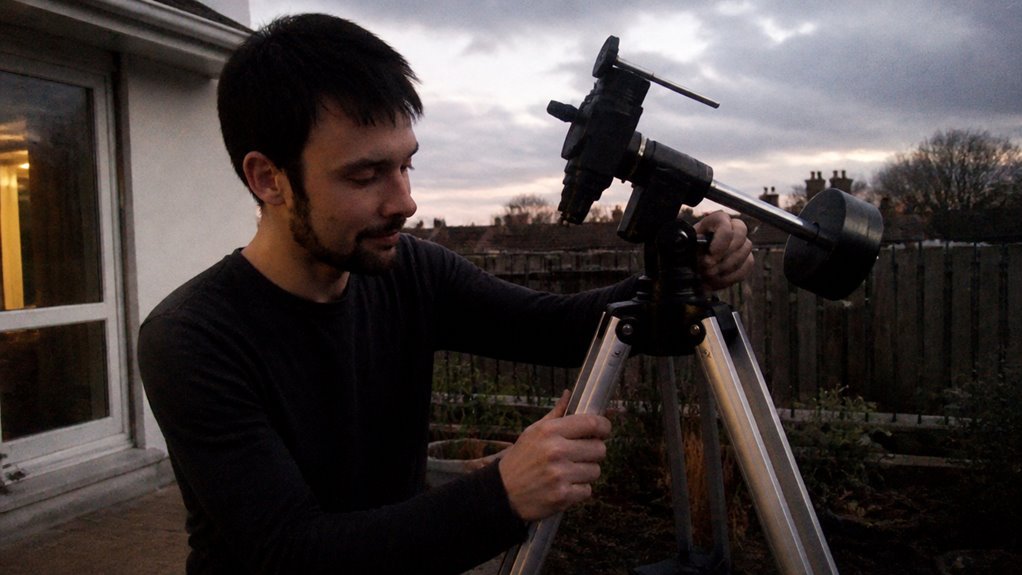
Pick a telescope by weighing five factors: portability, optics, smartphone hooks, tripod sturdiness, and assembly ease. A 4.5-inch Dobsonian might cost $150, but if it is too heavy to carry to the backyard, it will gather dust.
The same applies to a wobbly tripod. Check the mount’s weight limit and build quality before buying, because a mount that shakes at every touch of the focuser ruins the view.
Since teens live on their phones, confirm the scope includes a smartphone adapter or a T-ring slot. Also look for an assembly that does not eat a whole Saturday.
Portability and Weight
Portability decides whether a teenager actually uses a telescope or leaves it gathering dust in a corner. Keep the whole setup under 3.5 kg so they can carry it without help.
Tripods that fold under 60 cm slide into a backpack or trunk for camping trips. A 70mm aperture tube adds under 2 kg, giving real capability without back strain. Aluminum alloy tripods weigh 20–30% less than steel and stay steady in use.
Quick-release mounts and tool-free legs cut setup to seconds. That means spontaneous stargazing, not a chore. Choose something light, compact, and fast to deploy. Your teen will actually use it, which is the whole point.
Magnification and Optics
Magnification specs on telescope boxes are often the most misleading number you’ll see. That 675x claim is marketing hype: a 70mm scope maxes out around 140x, or about two times its aperture in millimeters, and going higher gives you a dim, blurry view.
Aperture matters most. An 80mm tube collects far more light than a 50mm one, so you’ll resolve finer details and see faint galaxies. Focal ratio plays a role too: shorter ratios, like f/4, give wide, bright views, while longer ones, like f/7, boost contrast at high power.
- Don’t chase magnification numbers the way you would megapixels.
- Look for fully multi-coated optics, which cut light loss and reflections.
Pick a scope with solid aperture and decent coatings, not hyped stats.
Smartphone Adaptability
That plastic smartphone bracket looks like a cheap toy, but it is the secret to turning a casual glance into a crisp snapshot for your teen. Align the phone’s lens directly over the eyepiece, and you get live views and photos without shaky hands.
- Shake-free shots: Grab a kit with a wireless remote. It kills shutter vibration, which you need at 100x or higher magnification.
- Wide-angle wins: Use a 20mm to 25mm eyepiece, not the high-power one. Your phone’s camera captures a narrower field, so a low-power lens gets the whole Moon in frame.
- Focus finesse: Adjust the scope’s knob, then tap the phone’s screen on the target to lock sharpness.
- Sensor smarts: A 12MP or better camera handles low light far better than older models.
Skip fancy add-ons. Get the adapter, grab a remote, and your teen becomes an astrophotographer overnight.
Sturdiness and Tripod Quality
A wobbly tripod can ruin a night of stargazing before it starts. I’ve owned models that shook more than a toddler on a sugar rush, so sturdy legs matter. Look for heavier aluminum alloy tubing. Thin legs vibrate like a tuning fork at high magnification and blur Saturn’s rings into a smudge.
A wide-spread stance lowers the center of gravity, so aiming overhead won’t tip the rig. Check the extended height. Your teen shouldn’t crouch like a gargoyle or tiptoe like a ballerina.
Vibration damping time is your friend here. That’s how many seconds the image takes to steady after you touch the focuser. Under three seconds is good, and it makes focusing far easier.
Rubber feet and a central spreader brace anchor the tripod on lumpy grass and shrug off gusts of wind. A shaky base kills the fun fast. Get the sturdy one, and your teen’s patience, plus your back, will thank you.
Ease of Assembly
The best telescope for a teenager is the one that goes from box to backyard in under ten minutes. You don’t need a degree in mechanical engineering to set one up. Look for tool-free assembly; you’ll just snap legs, attach the tube, and slide in an eyepiece.
Lightweight aluminum alloy tripods are a lifesaver, because they’re easier to carry than steel. Simpler altazimuth mounts, which move up-down and left-right, skip the complex polar alignment fuss. Pre-attached finderscopes save you from fiddling with tiny screws. Fully pre-assembled optical tubes mean you only attach the tripod and add accessories.
- No wrenches needed.
- Lightweight aluminum tripods.
- Simple altazimuth mounts.
Your teen will actually use it, and that’s what matters. Pick pre-assembled optics, and setup is done in minutes. No sweat.
Educational Value for Teens
A 70mm to 80mm aperture scope with a 300mm to 600mm focal length is the sweet spot for education. It gives you enough resolution to see lunar craters and Saturn’s rings clearly.
The focal length and aperture combo also determines the focal ratio, which affects how bright and wide the field of view is. For a teen learning the sky, that balance matters.
Magnification from 15X to 180X comes from multiple eyepieces and a Barlow lens. Using them teaches how eyepiece focal length changes magnification with the telescope’s focal length, without a lecture.
Fully multi-coated optics improve contrast, which sharpens attention to detail at the eyepiece.
Tool-free assembly and an adjustable tripod let a teen set up alone. That builds patience and problem-solving as they learn to track targets across the sky.
These STEM scopes, designed for ages 8 to 12, pull kids away from screens and into the backyard.
Pick one with these specs, and expect to hear “Look at that crater!” instead of “I’m bored.” That is a solid win.
Budget Friendly Options
Three budget-friendly refractor scopes deliver solid views for teen stargazing without draining savings. A 70mm aperture with a 300–400mm focal length pulls in crisp views of the moon and bright planets at a reasonable price. Focal ratios around f/5.7 to f/6.7 keep the tube compact and trim chromatic aberration, the purple fringing that would otherwise require costlier lens corrections.
Practical kit: Pair a 3x Barlow lens with 20mm and 6mm eyepieces. That combo yields 15X–150X magnification, enough for crater hunting.
Tripod smarts: Aluminum alloy legs with tool-free assembly reach about 45 inches, keeping shipping costs low.
Glass matters: Fully multi-coated optics boost brightness for only a few dollars more than single-coated lenses.
With these specs, Jupiter’s bands are easy to spot. You get solid views without wincing at checkout.
Brand Reliability and Support
Warranty length reveals a brand’s confidence in its own products. Celestron’s two-year coverage signals they expect the scope to work without repairs, which suits a teenager’s first telescope.
Reliable manufacturers offer unlimited direct tech support, so you won’t struggle with a finder scope alone. A team that answers within 24 hours is post-purchase gold. Brands operating since the 1960s have refined quality control, meaning their scopes work right out of the box.
Look for stated lifetime maintenance commitments. That signals durability confidence.
Pick brands like Orion or Sky-Watcher with solid warranties, responsive support, and proven track records. You’ll spend less time troubleshooting and more time spotting Jupiter’s moons. That’s the difference between a lasting hobby and a dusty ornament.
Frequently Asked Questions
How Do I Clean the Telescope Lens Safely?
Clean the telescope lens safely by starting with a blower to remove loose dust, then using a tiny drop of cleaning fluid on lens tissue, never directly on the lens. Wipe in slow circles without pressing hard, and avoid dry hands or cloths that can scratch the optical coating.
Use only lens-specific tissue or fluids, as household cloths may leave residue or cause abrasion. If your telescope uses a corrector plate or a coated lens, verify the recommended cleaning method in the manufacturer’s manual, since some surfaces require special care.
For stubborn spots, breathe lightly on the lens to create moisture, then wipe gently, but never reuse a tissue. Always check your owner’s guide for any specific cleaning restrictions, especially for coated optics, and stop if the lens appears scratched.
Can I Use These Telescopes for Astrophotography?
Yes, you can use these telescopes for astrophotography, but only for bright targets. Treat them as sketchpads for quick captures, not darkrooms for long-exposure imaging.
You will get crisp Moon and planetary shots using a simple phone adapter. These views record what the eye sees in real time, not a processed deep-sky photograph.
For galaxies and nebulae, the lack of a tracking mount means they will blur quickly. Focus on the Moon, bright planets, and double stars instead.
Check your telescope’s manual for the exact focal length and adapter compatibility. Verify whether your mount has any motorized tracking option before attempting longer exposures.
What Is the Best Time to View Planets?
The best time to view planets is at opposition, when Earth sits directly between the sun and the planet, making it brightest and visible all night. Check a stargazing app for each planet’s opposition date, but any clear, dark sky within a few weeks of that date works well.
For a concrete tip, use a planetarium app tonight to see which planets are above your horizon. The app’s view differs from visual observation: you will see a small, steady disk through a telescope, not a detailed image like a processed photo.
If you use binoculars or a small scope, check its manual for the magnification limits. Higher power is only useful on steady nights; otherwise, lower magnification gives a sharper view.
How Do I Align the Finderscope Properly?
Point your telescope at a distant object during the day, center it in the eyepiece, then adjust the finderscope’s screws until the crosshairs match the same point. This daytime alignment makes the finderscope’s field of view coincide with the main telescope’s, which you’ll recheck that night on a bright star.
Use the slow-motion controls on your mount to keep the object perfectly centered while you tighten the finderscope’s adjustment rings, as pressing on the tube can shift the aim. If your finderscope has a bracket with three or six screws, loosen one side before tightening the opposite side to avoid bending the mount.
Confirm the procedure in your telescope’s manual, since some finderscopes use a dovetail base instead of screws, and verify that the eyepiece you use for alignment provides a low magnification, typically around 25x, for the widest field. Do not judge alignment by a camera image or app view, as those show a different field than your eye sees through the eyepiece.
Are These Telescopes Suitable for Daytime Viewing?
Ninety percent of these scopes work fine in daylight, so yes, they are suitable for daytime viewing of birds, ships, or landscapes.
You can use them without any special gear for terrestrial targets, but never point them at the sun without a certified solar filter designed for your exact model.
For solar observing, follow the guidance from authoritative sources like the American Astronomical Society and the filter’s own instructions, since improvisation is unsafe.
Verify your telescope’s aperture and focal length in the manufacturer’s specifications to choose the correct filter size and ensure safe magnification for solar work.
Keep visual views separate from camera images; a daytime planet or moon will not look like a processed astrophoto.
Rounding Up
The best telescope for a teenager is one with a larger aperture and a sturdy mount, not a high price tag. You can focus on lens size and tripod stability, and you will see Jupiter’s moons or the Moon’s craters clearly.
Check the mount’s build quality before buying, and confirm that the tripod feels solid. Skip the extra eyepieces that often come with a package, since they are usually poor quality.
Remember that a $150 scope with a solid mount outperforms a wobbly $500 rig. For the most reliable experience, choose a simple refractor and set it up on a stable surface before letting them take over.
That setup is what gets a teen hooked on the night sky.