
Which telescope gives you the best first views without the frustration of a flimsy setup? This roundup compares beginner scopes by the only spec that matters most: aperture, the light-gathering size that determines how crisp the Moon and planets appear.
You will also see how manual mounts stack up against automated tracking in the same price range, with a clear look at what you trade for convenience.
Whether you are starting from a backyard or a small balcony, these picks focus on steady views and easy handling, not just magnification numbers.
Keep reading for the full breakdown of mounts and specs.
How We Tested
Specifications matter most for mount stability and setup speed, since first time users benefit from a telescope that stands firm and assembles without tools. Readers can compare aperture size for light gathering and focal ratio for field width, then check whether the mount is manual or automated for tracking ease.
Value depends on what arrives in the box, as some refractors include eyepieces and finders while reflectors might require extra purchases like a collimation tool. Buyers can weigh sealed, low maintenance refractor optics against the larger aperture per dollar that reflector designs offer, without assuming one is cheaper overall.
Editorial judgment helps you prioritize based on documented trade offs, such as choosing a manual altazimuth mount for simplicity or a GoTo mount for automatic tracking. We do not claim to have tested these products, so focus on how each design fits your patience level and observing goals rather than expecting hands on verdicts.
| Celestron NexStar 6SE Computerized Telescope (GoTo Mount) |  | Best Overall | Aperture: 6-inch (150mm) Schmidt-Cassegrain | Magnification Range: Not specified (GoTo, database-driven) | Mount Type: Computerized GoTo (Alt-Az) | SEARCH BEST PRICE | Read Our Analysis |
| Koolpte 80mm AZ Refractor Telescope for Beginners |  | Best Value | Aperture: 80mm refractor | Magnification Range: 24X–180X | Mount Type: Altazimuth | SEARCH BEST PRICE | Read Our Analysis |
| 70mm Refractor Telescope for Beginners with Tripod |  | Budget-Friendly Pick | Aperture: 70mm refractor | Magnification Range: 15X–150X | Mount Type: Not specified (tripod included) | SEARCH BEST PRICE | Read Our Analysis |
| Gskyer 70mm AZ Mount Refracting Telescope for Beginners |  | Best For Beginners | Aperture: 70mm refractor | Magnification Range: Not specified (2 eyepieces + 3X Barlow) | Mount Type: Altazimuth | SEARCH BEST PRICE | Read Our Analysis |
| 50mm 100x Beginner Telescope for Kids with Tripod |  | Best For Kids | Aperture: 50mm refractor | Magnification Range: Up to 100X | Mount Type: Not specified (tripod included) | SEARCH BEST PRICE | Read Our Analysis |
| Koolpte 70mm AZ Refractor Telescope for Kids |  | Top Kids Pick | Aperture: 70mm refractor | Magnification Range: Not specified (2 eyepieces + 3X Barlow) | Mount Type: Altazimuth | SEARCH BEST PRICE | Read Our Analysis |
| 70mm Refractor Telescope for Kids and Adults |  | Most Versatile | Aperture: 70mm refractor | Magnification Range: 15X–150X | Mount Type: Not specified (tripod included) | SEARCH BEST PRICE | Read Our Analysis |
| 70mm Refractor Telescope for Kids and Beginners |  | Best Portable | Aperture: 70mm refractor | Magnification Range: 20X–32X | Mount Type: Altazimuth | SEARCH BEST PRICE | Read Our Analysis |
| Kids Beginner Telescope with Tripod STEM Educational Gift |  | STEM Educational Pick | Aperture: 50mm refractor | Magnification Range: Up to 100X | Mount Type: Not specified (tripod included) | SEARCH BEST PRICE | Read Our Analysis |
| Koolpte Kids Telescope with Tripod and Finder Scope |  | Best Starter Scope | Aperture: 50mm refractor | Magnification Range: Not specified (2 eyepieces) | Mount Type: Altazimuth | SEARCH BEST PRICE | Read Our Analysis |
| Celestron NexStar 5SE Computerized Telescope |  | Most Compact | Aperture: 5-inch (125mm) Schmidt-Cassegrain | Magnification Range: Not specified (GoTo, database-driven) | Mount Type: Computerized GoTo (Alt-Az, wedge compatible) | SEARCH BEST PRICE | Read Our Analysis |
| NASA Lunar Telescope for Kids with Tripod |  | Best Tabletop Design | Aperture: Not specified (90x magnification) | Magnification Range: Up to 90X | Mount Type: Tabletop (smooth mount) | SEARCH BEST PRICE | Read Our Analysis |
| Portable 70mm Refractor Telescope for Kids and Adults | 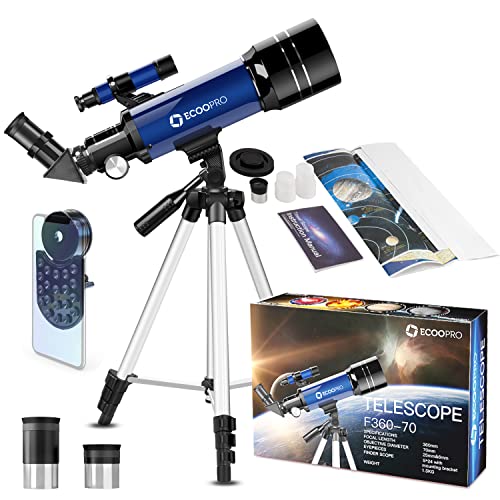 | Best Travel Companion | Aperture: 70mm refractor | Magnification Range: 51X–128X | Mount Type: Altazimuth | SEARCH BEST PRICE | Read Our Analysis |
| Celestron NexStar 8SE Computerized GoTo Telescope |  | Premium Pick | Aperture: 8-inch (203mm) Schmidt-Cassegrain | Magnification Range: Not specified (GoTo, database-driven) | Mount Type: Computerized GoTo (Alt-Az) | SEARCH BEST PRICE | Read Our Analysis |
| 70mm Refracting Telescope for Beginners with Phone Adapter | 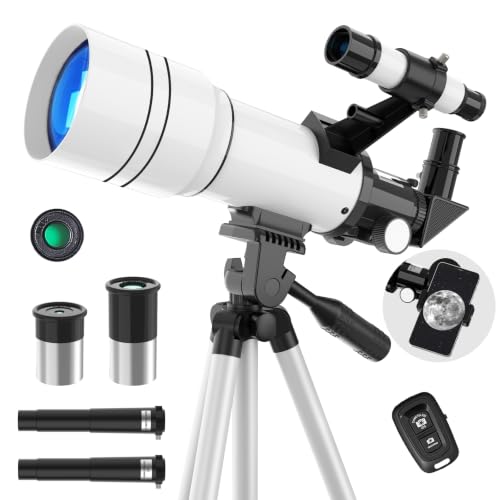 | Smartphone-Ready Pick | Aperture: 70mm refractor | Magnification Range: 15X–150X | Mount Type: Altazimuth | SEARCH BEST PRICE | Read Our Analysis |
More Details on Our Top Picks
Celestron NexStar 6SE Computerized Telescope (GoTo Mount)
The Celestron NexStar 6SE is a 6-inch Schmidt-Cassegrain telescope on a computerized GoTo mount. It removes the need for manual star-finding, making night-sky exploration immediate for beginners.
Best for: A newcomer who wants automated object location without learning the sky first. Point at any three bright stars and the mount aligns itself. Its 40,000-object database covers planets and deep-sky targets from the hand control.Biggest strength: The compact 6-inch optical tube folds a long focal length into a portable package. This design pulls in Jupiter’s cloud bands while keeping the kit easy to carry. Setup time stays low because SkyAlign needs no star names.Not ideal if: You want to attach a camera for long-exposure astrophotography, since the GoTo mount tracks but is not built for that. Visual use is the stated strength, not imaging results. The two-year warranty covers the mount and tube, but no imaging accessories are included.How it compares: Against a manual scope of similar aperture, this one gets used more because alignment takes three bright points. The orange tube is a classic look, but the real edge is that the mount does the pointing work. Portability stays practical for a 6-inch scope, so it suits backyard and travel use.- Aperture:6-inch (150mm) Schmidt-Cassegrain
- Magnification Range:Not specified (GoTo, database-driven)
- Mount Type:Computerized GoTo (Alt-Az)
- Included Eyepieces:Not specified (GoTo hand control)
- Target Audience:Beginners upgrading from manual scopes
- Included Accessories:Celestron accessory compatibility
- Additional Feature:SkyAlign three-star alignment
- Additional Feature:40,000+ object database
- Additional Feature:2-year US warranty
Koolpte 80mm AZ Refractor Telescope for Beginners
The Koolpte 80mm AZ refractor is a budget-friendly entry into astronomy. It pairs a capable 80mm aperture with a simple alt-azimuth mount for quick, tool-free assembly.
Best for: A first-time adult or teen buyer who wants a straightforward tabletop or tripod scope for bright planets and the Moon. It suits a beginner who values simple setup over computerised object hunting.Biggest strength: The 80mm aperture and coated optics pull in enough light for crisp lunar detail and Saturn’s rings at 60x or 180x with the included Barlow. This kit includes a phone adapter for casual snapshot attempts, though it is not a dedicated imaging rig.Not ideal if: You expect the 5×24 finder to track moving targets smoothly, because the manual mount needs your hand for every adjustment. Also verify the mount’s tripod height and payload before buying, as the maker lists no load rating and the manual motion limits deep-sky chasing.How it compares: As a fixed-focal-length refractor with two eyepieces and a Barlow, it offers a wider field at 24x than a short-tube design, but it lacks any motorised tracking for long exposures. Its lifetime maintenance promise and 24-hour support lower the risk of a first purchase, while the carry bag makes it more portable than a heavier equatorial setup.- Aperture:80mm refractor
- Magnification Range:24X–180X
- Mount Type:Altazimuth
- Included Eyepieces:25mm, 10mm (plus 3X Barlow)
- Target Audience:Novices and adults
- Included Accessories:Phone adapter, wireless remote, carrying bag
- Additional Feature:Tool-free quick assembly
- Additional Feature:Lifetime maintenance support
- Additional Feature:24-hour customer response
70mm Refractor Telescope for Beginners with Tripod
Best for: A first‑time buyer who wants a quick, low‑cost view of the Moon and bright planets from a backyard or campsite. The 70mm refractor on a manual alt‑azimuth mount needs no alignment and no power.Biggest strength: The multi‑coated 70mm objective pulls in enough light to show lunar craters, Jupiter, and Saturn’s rings with the included 20mm and 6mm eyepieces. The 5×24 finder makes aiming straightforward, and the tool‑free setup gets you observing in minutes.Not ideal if: The 150X top magnification relies on a 3X Barlow, so expect soft detail at that power on a lightweight tripod. There is no motor drive or tracking, so high‑power views of planets will drift out of the field quickly and require manual nudges.How it compares: As a 70mm refractor with a phone adapter and wireless remote, it suits snapshot‑style lunar photography rather than long‑exposure deep‑sky imaging. The two eyepieces, Barlow, star chart, and tripod are all included, so you do not need extra purchases to start.- Aperture:70mm refractor
- Magnification Range:15X–150X
- Mount Type:Not specified (tripod included)
- Included Eyepieces:20mm, 6mm (plus 3X Barlow)
- Target Audience:Kids, beginners, adults
- Included Accessories:Phone adapter, wireless remote, star chart
- Additional Feature:Fully multi-coated optics
- Additional Feature:Wireless camera remote included
- Additional Feature:Ultra-lightweight travel design
Gskyer 70mm AZ Mount Refracting Telescope for Beginners
The Gskyer 70mm AZ Mount Refracting Telescope packs a 70mm aperture and 400mm focal length into a grab-and-go kit for beginners. Its fully coated optics and included accessories deliver clear lunar and planetary views without requiring setup experience.
Best for: A first-time stargazer who wants a lightweight, portable kit for backyard moon and bright planet sessions. The aluminum tripod and carry bag let you move from storage to observing in minutes, so it suits casual use rather than a fixed observatory.Biggest strength: The 3x Barlow lens triples your eyepiece magnification choices, giving you flexible zoom on lunar craters. This turns the two included eyepieces into a broader range of effective focal lengths without buying extra glass.Not ideal if: You need to track objects automatically, since this is a manual altazimuth mount with no motor or GoTo. Also, the 400mm focal length is short for faint deep-sky targets, so plan on bright solar system objects only.How it compares: This refractor stands out for its included imaging gear, like the smartphone adapter and wireless remote, which are rare at this price level. The 5×24 finder scope speeds up target location, but the manual mount means you adjust tracking yourself during long exposures.- Aperture:70mm refractor
- Magnification Range:Not specified (2 eyepieces + 3X Barlow)
- Mount Type:Altazimuth
- Included Eyepieces:Two replaceable eyepieces (plus 3X Barlow)
- Target Audience:Kids and beginners
- Included Accessories:Smartphone adapter, wireless remote, carry bag
- Additional Feature:Cross-hair finder scope
- Additional Feature:Aluminum alloy tripod
- Additional Feature:Carry bag included
50mm 100x Beginner Telescope for Kids with Tripod
TThis 50mm f/8 refractor on a manual alt-azimuth mount is the Luzsco 40050, built for a first telescope experience. It gives a young observer a straightforward path to the moon, with no tracking or GoTo to complicate the first sessions.
Best for: A 6-to-12-year-old getting a first look at the moon, where assembly with a parent is part of the value. This kit suits family camping trips or a birthday gift that needs zero prior astronomy knowledge.Biggest strength: The included Moon Observation Guide turns a bright target into a guided activity of recording and questions. That structure, paired with the manual mount, keeps the pace self-driven and screen-free.Not ideal if: You expect faint deep-sky views; a 50mm aperture at 100x is lunar-sweet, not a nebula hunter. Also verify that the tripod’s leg locks feel secure for your child before handing over full control.How it compares: Against larger-aperture scopes, this one sacrifices faint-object reach for a lighter, packable kit with a silver finish. It fits as a low-cost, high-engagement entry point where the Barlow lens and two eyepieces (6mm and 20mm) cover the moon at up to 100x.- Aperture:50mm refractor
- Magnification Range:Up to 100X
- Mount Type:Not specified (tripod included)
- Included Eyepieces:6mm, 20mm (plus Barlow lens)
- Target Audience:Kids ages 6–12
- Included Accessories:Finder scope, Moon Observation Guide
- Additional Feature:Includes Moon Observation Guide
- Additional Feature:STEM learning toy
- Additional Feature:Screen-free play encouragement
Koolpte 70mm AZ Refractor Telescope for Kids
Koolpte’s 70mm AZ refractor is a complete first telescope kit for young stargazers who want easy setup and clear views. This package bundles a 70mm aperture and 500mm focal length with a stable altazimuth mount, making it a straightforward entry into astronomy.
Best for: Kids and beginners who need a grab and go scope for backyard Moon watching and casual sky tours. The lightweight tube and aluminum tripod set up fast without tools, and the included carry case protects the gear between sessions. The 5×24 finderscope gets targets centered quickly.Biggest strength: The 70mm aperture resolves crisp views of lunar craters at 500mm focal length, which is enough detail to hold interest. Two eyepieces plus a 3x Barlow let you adjust magnification without buying extra parts. The phone adapter and wireless remote turn those views into shareable photos.Not ideal if: You expect deep sky imaging or go-to tracking, because the manual altazimuth mount has no motors and the tripod has no payload rating listed. Bright planets beyond the Moon will show small discs, but the kit’s 3x Barlow may push magnification past useful limits on unsteady nights. Verify the aluminum tripod’s height matches your child’s viewing posture.How it compares: This kit competes with tabletop refractors by adding a full height tripod and carrying case, so you do not need a separate table or bag. It skips computerized pointing, but the finderscope and smooth AZ mount keep the focus on learning the sky manually. Lifetime maintenance and 24 hour support cover the scope, not any optional upgrades.- Aperture:70mm refractor
- Magnification Range:Not specified (2 eyepieces + 3X Barlow)
- Mount Type:Altazimuth
- Included Eyepieces:25mm, 10mm (plus 3X Barlow)
- Target Audience:Kids and beginners
- Included Accessories:Phone adapter, wireless remote, carrying case
- Additional Feature:Eye protection optics
- Additional Feature:Carrying case included
- Additional Feature:Lifetime maintenance support
70mm Refractor Telescope for Kids and Adults
Best for: A beginner or family wanting a grab and go refractor for moon, planet, and daytime views from a backyard or balcony. The 70mm aperture and short 300mm focal length suit casual observers who value immediate use over deep sky reach.Biggest strength: Tool free assembly on a sturdy tripod gets you observing in minutes, which removes friction for kids and new users. The fully multi coated optics reduce glare, so lunar craters and Saturn’s rings appear crisp at low power.Not ideal if: You want tracking or GoTo for long imaging sessions, because the mount is manual and the 300mm focal length limits close up planetary magnification. The 5×24 finder helps locate targets, but you must nudge the tripod by hand to keep objects centered.How it compares: This refractor fits below larger aperture reflectors and catadioptrics, trading light grasp and tracking for portability and a simpler kit. Its 20mm and 6mm eyepieces plus 3x Barlow give 15x to 150x, while the phone adapter and wireless remote handle quick snapshots, not long exposure astrophotography.- Aperture:70mm refractor
- Magnification Range:15X–150X
- Mount Type:Not specified (tripod included)
- Included Eyepieces:20mm, 6mm (plus 1.5X erecting, 3X Barlow)
- Target Audience:Kids, adults, beginners
- Included Accessories:Phone adapter, wireless remote, gift box
- Additional Feature:1.5X erecting eyepiece
- Additional Feature:Tool-free assembly
- Additional Feature:Exquisite gift box
70mm Refractor Telescope for Kids and Beginners
Best for: This EACONN E70AZ suits kids and beginners who want a grab and go scope for the Moon and daytime scenery. Its 70mm refractor with a 400mm focal length pairs with a lightweight aluminum tripod that adjusts from 12 to 38 inches without tools, so a child can set it up alone in minutes.Biggest strength: The fully coated optics deliver clear views of the Moon and nearby objects, while the 5×24 viewfinder speeds up aiming. With two eyepieces included, the 20mm gives 20x and the 12.5mm gives 32x, covering low and medium magnification for a first scope.Not ideal if: You expect deep sky views, since the 70mm aperture and short 400mm focal length will not show nebulae or galaxies. The 12.5mm eyepiece offers a narrow field and short eye relief, so keep expectations to bright targets like the Moon and planets.How it compares: As a refractor on an aluminum tripod, it trades aperture for portability, fitting a duffel bag for travel or quick backyard use. The included phone adapter lets you snap photos of the Moon through the eyepiece, but camera results will be basic snapshots, not astrophotography.- Aperture:70mm refractor
- Magnification Range:20X–32X
- Mount Type:Altazimuth
- Included Eyepieces:12.5mm, 20mm
- Target Audience:Astronomy beginners and children
- Included Accessories:Phone adapter, viewfinder
- Additional Feature:Tripod height 12-38 inches
- Additional Feature:Custom phone adapter
- Additional Feature:Tool-free assembly
Kids Beginner Telescope with Tripod STEM Educational Gift
Best for: A beginner aged 6 to 12 who needs a first telescope for backyard or camping use. This kit suits families wanting a screen free STEM activity that builds patience and problem solving.Biggest strength: The 50mm aperture gathers enough light for bright targets like the Moon. The included 6mm and 20mm eyepieces give two magnification steps, with 100x as the top view.Not ideal if: You expect crisp detail on Saturn’s rings, since this is a starter scope. The tripod is wobbly, so steady viewing takes practice and a calm night.How it compares: As a complete kit, it includes the finderscope, Barlow lens, and two eyepieces ready to assemble. It fits the entry level bracket where portability and simplicity matter more than high power or tracking.- Aperture:50mm refractor
- Magnification Range:Up to 100X
- Mount Type:Not specified (tripod included)
- Included Eyepieces:6mm, 20mm (plus Barlow lens)
- Target Audience:Kids ages 6–12
- Included Accessories:Tripod, finderscope, Barlow lens
- Additional Feature:STEM educational toy
- Additional Feature:Parent-child bonding activity
- Additional Feature:Screen-free exploration
Koolpte Kids Telescope with Tripod and Finder Scope
The Koolpte Kids Telescope is a first scope built for preschoolers, offering a durable and simple way to view the Moon. It pairs a 50mm aperture with a straightforward altazimuth mount for easy, supervised stargazing.
Best for: Families with a three-year-old who needs a robust scope for bright targets like the Moon. The aluminum tripod and smooth mount survive clumsy handling while keeping setup simple for an adult.Biggest strength: The finder scope cuts aiming time, so you spend less effort hunting and more time looking. Its low-power eyepiece locates the Moon quickly before you switch to the high-power one for details.Not ideal if: You expect deep sky views, since the 50mm aperture is limited to bright objects only. The kit lacks any tracking or GoTo features, so you must nudge the mount by hand to follow targets.How it compares: This pick stands out as a durable starter kit rather than a performance instrument, with two eyepieces and a learning guide included. The guide covers lunar phases and eclipses, which adds educational value without adding cost for extras.- Aperture:50mm refractor
- Magnification Range:Not specified (2 eyepieces)
- Mount Type:Altazimuth
- Included Eyepieces:High-power and low-power eyepieces
- Target Audience:Children ages 3 and up
- Included Accessories:Finder scope, learning guide
- Additional Feature:Ages 3 and up
- Additional Feature:Learning guide included
- Additional Feature:Adult supervision recommended
Celestron NexStar 5SE Computerized Telescope
The NexStar 5SE is a 5-inch Schmidt-Cassegrain telescope on a computerized GoTo mount that automatically locates and tracks celestial objects for you. Its benefit is hands-off observing: you align on three bright stars, select a target, and the scope slews to it and keeps it centered without manual adjustments.
Best for: A beginner who wants the telescope to find objects automatically, not a hobbyist who enjoys star-hopping with charts. You get a compact, orange tube that fits on a small tabletop or tripod, so it travels easily to a dark site. The GoTo mount holds 40,000 objects in its database.Biggest strength: SkyAlign requires only three bright stars centered in the eyepiece, with no prior sky knowledge needed. Once aligned, the mount tracks automatically, so Jupiter’s bands or lunar craters stay in view while you relax. You can add wireless control later as an option.Not ideal if: You want to photograph deep-sky objects, because the GoTo mount tracks for visual use but imaging needs and results are not covered by the supplied facts. The price is higher than a manual scope, and you pay for the automation rather than a larger aperture. Celestron covers the unit with a 2-year warranty and US support.How it compares: This is a compact 5-inch scope with a GoTo mount, which fits a beginner who wants the night sky delivered without charts or star hopping. It does not compete on aperture size, but it replaces the patience of manual finding with automatic slewing and tracking. The kit includes the optical tube, mount, and tripod, with no mention of extra eyepieces beyond the standard setup.- Aperture:5-inch (125mm) Schmidt-Cassegrain
- Magnification Range:Not specified (GoTo, database-driven)
- Mount Type:Computerized GoTo (Alt-Az, wedge compatible)
- Included Eyepieces:Not specified (GoTo hand control)
- Target Audience:Beginners
- Included Accessories:Integrated wedge for astrophotography
- Additional Feature:Integrated wedge for polar alignment
- Additional Feature:SkyAlign three-star alignment
- Additional Feature:40,000+ object database
NASA Lunar Telescope for Kids with Tripod
The NASA Lunar Telescope for Kids with Tripod is a Toy of the Year-winning refractor that turns family moon viewing into a steady, high-magnification experience. It delivers clear lunar detail through a smooth, wobble-free mount that an eight-year-old can operate with confidence.
Best for: A family with a young child who wants a first real telescope for moon gazing. The tabletop tripod and low-power eyepiece suit small hands and quick setup in the backyard. Two eyepieces let the child switch from wide-field finder views to close-ups without extra purchases.Biggest strength: The smooth mount keeps the target locked while scanning, so the moon stays centered during magnification changes. That stability directly supports the 90x top power, letting you see craters that are sharp rather than shaken. Assembly takes minutes, which means more time observing and less time untangling parts.Not ideal if: You expect deep-sky objects like planets or nebulae because this scope is optimized for the moon’s bright surface. The finder scope helps lock onto the lunar disk, but faint targets will not benefit from that aid. Portability is limited to the included tabletop tripod, so you need a flat surface like a picnic table or deck.How it compares: This is a purpose-built lunar scope rather than a general-purpose beginner model, so its kit prioritizes moon detail over versatility. The two eyepieces and finder scope cover the full lunar viewing workflow, from locating the moon to zooming in on a single crater. No GoTo or tracking means you manually adjust the mount, which is fine for a child learning to scan the sky.- Aperture:Not specified (90x magnification)
- Magnification Range:Up to 90X
- Mount Type:Tabletop (smooth mount)
- Included Eyepieces:Low and high power eyepieces
- Target Audience:Kids ages 8–12
- Included Accessories:Tabletop tripod, finder scope
- Additional Feature:Tabletop tripod design
- Additional Feature:Toy of the Year winner
- Additional Feature:Amazon Exclusive product
Portable 70mm Refractor Telescope for Kids and Adults
This 70mm refractor telescope pairs a quick, tool-free setup with bright, sharp views of the moon and daytime targets. It’s a portable kit that gets families observing in under a minute, then packs away neatly for the next trip.
Best for: Parents with kids aged 5 to 12 who need a grab-and-go scope for backyard or travel use. The included backpack and lightweight, adjustable tripod make it a simple companion for short sessions. Its tool-free assembly removes the frustration of tiny screws at the start of an outing.Biggest strength: The multi-coated 70mm glass draws crisp moon craters and daytime birds without a steep learning curve. Two Kellner eyepieces deliver 51X to 128X, which is enough range for a beginner to explore without feeling overwhelmed. An erect image diagonal keeps views correctly oriented for terrestrial spotting.Not ideal if: You expect deep-sky imaging or precise tracking, since this scope is manual and built for visual use only. The slow-motion pan handle aids tracking but does not automate it, so faint objects will drift with Earth’s rotation. Eyepiece focal lengths are not listed, so you must calculate exact magnifications from the included 51X and 128X figures.How it compares: This refractor favors portability and simplicity over aperture, making it a better first scope than a larger, heavier model on a slow tripod. The included moon and star maps plus backpack distinguish it from bare tube-and-mount kits, while the finderscope speeds up target hunting for younger users. Its 70mm aperture balances light grasp with a form that fits easily in a car or carry-on.- Aperture:70mm refractor
- Magnification Range:51X–128X
- Mount Type:Altazimuth
- Included Eyepieces:K25mm, K10mm
- Target Audience:Kids ages 5–12 and beginners
- Included Accessories:Backpack, moon/star maps, pan handle
- Additional Feature:Erect image diagonal
- Additional Feature:Pan handle for tracking
- Additional Feature:Moon and star maps included
Celestron NexStar 8SE Computerized GoTo Telescope
Best for: Hobbyists who want a fully automated deep sky session without learning star charts. This suits a backyard observer who values immediate targets over manual navigation. Its GoTo database removes the need to identify objects by eye.Biggest strength: The 8 inch Schmidt-Cassegrain aperture collects enough light to resolve lunar craters, Jupiter’s cloud bands, and distant globular clusters. The motorized mount then tracks those targets automatically, so you spend time viewing, not reacquiring. This combination suits long looks at faint galaxies without manual corrections.Not ideal if: You prefer manual aiming or want a lightweight grab and go tube, since the 8 inch optical tube and fork mount add bulk. Also verify the included two year warranty covers your region, as support is US based. Wireless control and GPS are upgrades, not standard kit.How it compares: This pick trades higher cost for automated alignment via SkyAlign, where you center three bright stars and the mount orients itself. It fits as a premium step up from manual scopes, since the 40,000 object database and tracking are built in, not added later. You pay more to observe, not hunt, but the included hand control and tripod ship in the box.- Aperture:8-inch (203mm) Schmidt-Cassegrain
- Magnification Range:Not specified (GoTo, database-driven)
- Mount Type:Computerized GoTo (Alt-Az)
- Included Eyepieces:Not specified (GoTo hand control)
- Target Audience:Beginners
- Included Accessories:Celestron accessory compatibility
- Additional Feature:SkyAlign three-star alignment
- Additional Feature:40,000+ object database
- Additional Feature:2-year US warranty
70mm Refracting Telescope for Beginners with Phone Adapter
The 70mm refractor is a beginner-friendly telescope that pairs a smartphone adapter with a straightforward setup. Its 700mm focal length and 70mm aperture deliver bright, sharp views of the Moon and bright planets for a first-time buyer.
Best for: A child or adult who wants their first scope for casual backyard viewing without learning complex mounts. The tool-free assembly gets you observing in minutes, and the included phone adapter makes sharing views easy.Biggest strength: The 20mm eyepiece gives a wide 15X field for finding targets, then swapping to the 6mm with the 3X Barlow reaches 150X for lunar craters. That magnification range covers both sweeping star fields and close-up planetary detail without extra purchases.Not ideal if: You expect a research-grade instrument or motorized tracking for long-exposure imaging. The manual mount has no GoTo or tracking, so you will nudge the tube by hand to keep objects centered, and the tripod tops out at 45 inches for seated use only.How it compares: This pick stands alone as a budget refractor that prioritizes ease over power, with a multi-coated lens that keeps views bright for its class. The inverted finderscope is normal for this format, so you align it once and rely on the wide 20mm view to locate targets before zooming in.- Aperture:70mm refractor
- Magnification Range:15X–150X
- Mount Type:Altazimuth
- Included Eyepieces:6mm, 20mm (plus 3X Barlow)
- Target Audience:Adults and children ages 8–12
- Included Accessories:Phone holder, wireless remote, finderscope
- Additional Feature:Reduces glare and improves contrast
- Additional Feature:Tripod extends to 45 inches
- Additional Feature:Included wireless remote
Factors to Consider When Choosing Beginner Telescopes
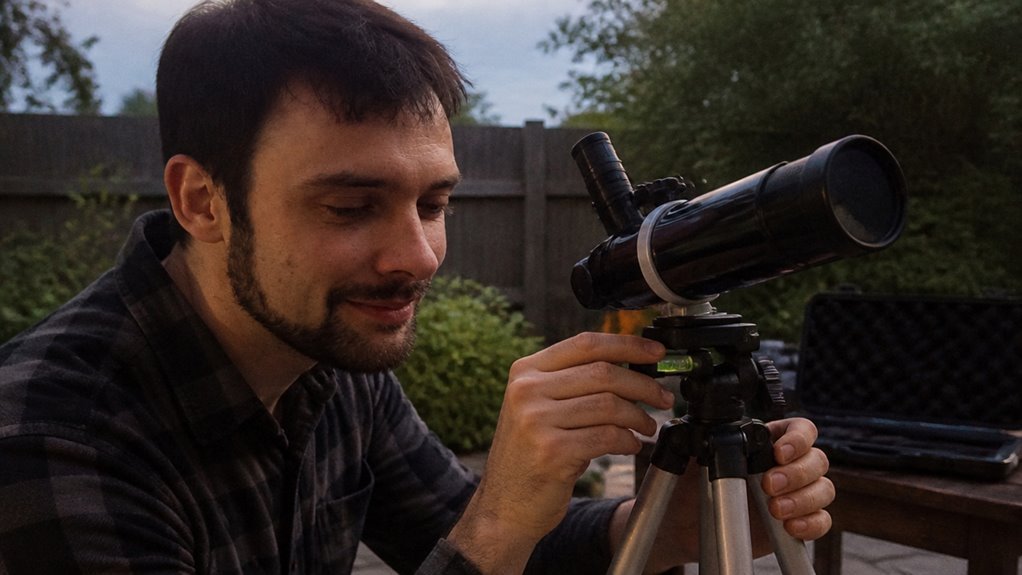
Aperture is the most important spec on any beginner telescope. It refers to the width of the main lens or mirror, and it determines how much light the scope collects, which is what makes faint galaxies look like more than just gray smudges. Bigger aperture also helps with resolving finer detail on planets and the Moon.
A mount that stays steady is just as important as the optics themselves. A tripod that shakes in a light breeze will ruin the view at high magnification, so look for a mount and tripod with solid construction and smooth movement. For visual observing, a simple alt-azimuth mount is easier to learn, while an equatorial mount can help with manual tracking but has a steeper learning curve.
The optical design affects both price and performance. Refractors use lenses and are generally lower maintenance, while reflectors use mirrors and typically deliver more aperture for the same price. Reflectors also require occasional collimation, which is the process of aligning the mirrors to keep the image sharp.
Setup time matters more than you might think. If the telescope takes more than a few minutes to assemble and align, you will use it less often, especially on cold or late nights. Also, keep magnification in perspective. A useful magnification range depends on the aperture, and a 70mm scope on a stable tripod will outperform a flimsy 130mm scope with a shaky mount on almost every target.
Aperture Size
Aperture size, the diameter of your main lens or mirror, decides how much light your telescope can collect. That is the whole game. Bigger aperture means brighter, sharper views of lunar craters, planetary bands, and even faint galaxies. A 70mm scope gathers nearly twice the light of a 50mm, so you will actually see deep-sky objects instead of staring at nothing.
But here is the tradeoff. Doubling aperture quadruples light, yet it also quadruples weight, size, and price. You do not want a telescope that never leaves your trunk. For a beginner, 70–100mm hits the sweet spot. That range offers enough punch to impress, yet stays small enough to use regularly.
Check these specs:
- 70mm: decent for the moon and planets, okay for a few galaxies
- 100mm: noticeably better on deep-sky objects, still portable
Do not chase huge aperture. Choose the size you will actually carry outside.
Mount Stability
A wobbly mount ruins a night of stargazing. You spend more time waiting for the image to settle than actually seeing anything. Crank up the magnification, and that tiny shake becomes a violent earthquake.
You need a solid base. Look for a tripod with a wide leg stance and some heft. It fights wind sway so you don’t have to.
On the head, you have two main options. Altazimuth mounts give simple up-down, left-right movement. Equatorial mounts require polar alignment but track objects more smoothly as the Earth turns.
Whichever you choose, verify the mount’s load capacity exceeds the total weight of your telescope and accessories. Grab a model with slow-motion control knobs. These let you make tiny, precise adjustments instead of launching objects out of the eyepiece.
Pay for a stable mount now. You’ll save your sanity later.
Optical Design
Picking your optical design is the first real fork in the road. It mostly comes down to how much tinkering you’re willing to do on a cold night.
Refractors use lenses and sealed tubes, needing zero upkeep. They are ideal for the lazy astronomer.
Reflectors use mirrors, giving you more aperture per dollar. You will occasionally need to collimate them.
Schmidt-Cassegrains combine lenses and mirrors in a short, closed tube. They pack high magnification into a portable shell.
Aperture size, not magnification, determines light-gathering. Bigger apertures reveal fainter galaxies, so do not chase power.
Focal ratio (focal length divided by aperture) matters. Lower f/ratios yield wider fields and shorter exposures for astroimaging.
The f/5 just beats the f/10 for sweeping views. Hate upkeep? Choose a refractor.
Crave faint fuzzies? Choose a reflector.
Setup Simplicity
Choosing the right glass is only half the job. The other half is getting it outside before the clouds roll in, so pick a scope with tool-free or quick-release mounts. That way assembly takes under a minute, with no wrench and no swearing.
Fewer parts mean fewer lost parts, so look for integrated mounts and pre-attached finderscopes. A pre-assembled tube on a simple altazimuth mount skips counterweights and polar alignment entirely. That convenience matters because a telescope that fights you is just a lawn ornament.
An erect-image diagonal and crosshair finder get you aiming fast. Check the tripod’s leg locks too, and choose flip levers over thumbscrews. If setup feels like a chore, you will skip it, so pick the simplest rig and you will actually use it. Clear skies beat complicated ones.
Magnification Range
Magnification is the first spec people check, so let’s settle it now: you don’t need a 300x scope. You’ll rarely use it, and at that power you’d likely get a dim, blurry view anyway. A useful rule of thumb is that your scope’s maximum practical magnification is about double its aperture in millimeters, so a 70mm telescope tops out near 140x.
The low end of your range comes from your longest eyepiece, which gives you a wide field for scanning the sky. To find magnification, divide the telescope’s focal length by the eyepiece’s focal length. A Barlow lens multiplies that power, but using it too often will dim the image and soften details. For a beginner, aim for 20x to 120x, which covers the Moon, planets, and bright galaxies. Beyond that, atmospheric turbulence and a shaky mount make viewing frustrating.
Ignore the marketing hype. Choose a telescope that lands in that practical range, and you’ll see more and enjoy the hobby more.
Frequently Asked Questions
What Maintenance Is Required for Telescope Lenses?
Telescope lens maintenance is straightforward and mainly involves dusting, blowing off debris, and using cleaning solution sparingly. For routine care, use a soft brush to gently sweep the glass, then a blower bulb to remove any remaining particles, which prevents scratches that wiping can cause.
Avoid touching the glass with your fingers, as natural oils can leave a residue that is difficult to clean. Store the telescope covered, ideally with its lens cap and in a dry place, to prevent dampness from causing fungal growth or coating damage.
If you notice stubborn smudges, apply a drop of lens cleaning solution to a microfiber cloth, not directly on the glass, and wipe in one direction. For secondhand or unfamiliar optics, verify the manufacturer’s manual for any specific cleaning restrictions, as some coatings react differently to solutions.
How Do I Align the Finderscope Correctly?
Aligning the finderscope correctly means zeroing it against the main telescope’s eyepiece using a distant daytime target, not a star. Choose a fixed object like a chimney or antenna at least 200 meters away, center it in a low-power eyepiece, then adjust the finderscope’s screws until its crosshairs sit on the same spot.
Use a magnification around 25x to 50x for this step, since higher power makes the target drift quickly and complicates centering. After locking the screws, verify the alignment by nudging the telescope and recentering the target in both views.
If your finderscope has a bracket with push-pull screws, check which screw moves the view in which direction before tightening. The exact adjustment range and rotation direction depend on your mount and finderscope model, so confirm those details in your manufacturer’s manual if the screws seem reversed.
Can I Use These Telescopes for Astrophotography?
These telescopes are not suitable for serious astrophotography, as they are designed for visual observing only. You will struggle with both tracking and focus when attempting long-exposure imaging.
For a practical start today, use a smartphone adapter to capture quick lunar or planetary shots, which are far more forgiving. This approach sidesteps the limitations of the mount and focuser.
Do not buy them for deep-sky imaging, as the supplied mounts lack the precision and payload capacity needed. If you later upgrade, verify the mount’s tracking accuracy and the scope’s focal ratio in the manufacturer’s specifications before attempting any camera work.
What Is the Best Time to Observe Planets?
The best time to observe planets is when they reach their highest point in the sky, often around midnight for most outer planets. For the very brightest views, check the opposition date for each planet, which is when it sits opposite the Sun and is closest to Earth.
At opposition, the planet is both at its largest apparent size and its most brilliant. A simple tip for tonight is to use a star chart app to find the current constellation of your target planet, then aim your telescope there once it clears the horizon.
However, the ideal viewing window shifts depending on whether you are looking at a fast-moving inner planet like Venus or a distant gas giant. For accurate timing, verify the planet’s transit time, the moment it crosses the meridian, using an almanac or your planetarium software.
Remember that visual observing through an eyepiece will show a small, steady disk, not a large, colored image like a processed photograph. For magnified detail, your telescope’s aperture and eyepiece combination matter, so check the manufacturer’s specifications for the maximum useful magnification.
How Often Should I Clean the Optics?
Clean your telescope’s optics only when they are visibly dirty, and never on a fixed schedule, because over-cleaning risks scratches and dust buildup. Start with a blower or soft brush to remove loose particles before any liquid touches the glass, and reserve cleaning fluid for stubborn spots that brushing cannot remove.
Use a microfiber cloth or lens tissue, never paper towels, and apply fluid sparingly to the cloth, not directly onto the optic. For most reflector or refractor setups, you can verify your manual’s recommended cleaning interval, since humidity and storage conditions affect how often dust accumulates.
If you notice reduced contrast or visible smudges, that is your trigger to act, but a few dust specks are harmless and do not affect visual views or camera images meaningfully. Always check your manufacturer’s guide for the exact fluid type and brush size suited to your aperture, as some coatings are more delicate than others.
Rounding Up
What should a beginner look for in a first telescope? A 70mm refractor is the sweet spot for revealing the night sky. Begin by choosing a model in that aperture range, and skip the GoTo mounts, since they lead to fiddling instead of stargazing.
Instead, plan to aim your new scope at the moon first, which is the easiest target to master. You can pair the telescope with a phone adapter to capture share-worthy shots.
Expect to have the basics down pat within a week, not a year. When you set up, keep your focus on simple operation rather than complex features.
My documented advice is to grab that 70mm and start observing tonight, because you have got this.