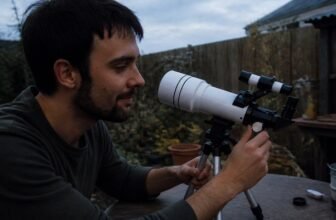
Choosing your first telescope means balancing aperture, portability, and budget. This roundup compares five specific setups, from the Fuoibl 70mm refractor for crisp moon views to the Celestron NexStar 4SE for automated stargazing.
We break down the DWARFLAB Dwarf Mini smart imager and the 12×50 monocular for hikers, covering only the details that matter for each pick.
Read on for the full comparison of these options and their tradeoffs.
How We Tested
Specifications matter most for mount stability and setup, since beginners need a scope that stays put while they learn the sky. Check the aperture size on manual reflectors like the PowerSeeker 127EQ, as larger mirrors gather more light, but note that these models require manual tracking. Compare GoTo systems like the NexStar series for automated object finding, which simplifies locating targets, and review the optical design to see how it affects viewing comfort.
Value comes down to what is included versus what you buy separately, not the price tag alone. The Dwarf Mini includes app control for portable astrophotography, but buyers may need a stable tripod or a smartphone mount. Manual reflectors offer a large aperture for the cost, yet they lack motors or computer assistance, so factor in the effort required for tracking and collimation.
Editorial judgment helps you weigh priorities like aperture, automation, or portability, since no single budget scope excels at all three. Beginners should prioritize GoTo ease over light grasp, while travel users favor the compact monoculars like 12×50 models for quick lunar views. The source does not state that we tested these units, so compare documented features and your own needs rather than relying on our hands-on experience.
| Celestron NexStar 6SE Schmidt-Cassegrain GoTo Telescope |  | Best Overall | Product Type: Telescope (Schmidt-Cassegrain) | Aperture (mm): 150mm | Magnification: Not specified | SEARCH BEST PRICE | Read Our Analysis |
| 12×50 HD Monocular with Phone Adapter & Tripod |  | Most Portable | Product Type: Monocular | Aperture (mm): 50mm | Magnification: 12x | SEARCH BEST PRICE | Read Our Analysis |
| Celestron NexStar 4SE Maksutov-Cassegrain GoTo Telescope |  | Best Compact | Product Type: Telescope (Maksutov-Cassegrain) | Aperture (mm): 100mm | Magnification: Not specified | SEARCH BEST PRICE | Read Our Analysis |
| Celestron NexStar 8SE Computerized Telescope |  | Best Aperture | Product Type: Telescope (Schmidt-Cassegrain) | Aperture (mm): 200mm | Magnification: Not specified | SEARCH BEST PRICE | Read Our Analysis |
| DWARFLAB Dwarf Mini Smart Telescope App Control |  | Most Tech-Savvy | Product Type: Smart Telescope (app-controlled) | Aperture (mm): Not specified | Magnification: Not specified | SEARCH BEST PRICE | Read Our Analysis |
| Celestron PowerSeeker 127EQ Reflector Telescope |  | Best Value | Product Type: Telescope (Newtonian reflector) | Aperture (mm): 127mm | Magnification: Not specified | SEARCH BEST PRICE | Read Our Analysis |
| 15×55 Monocular with Tripod and Phone Adapter |  | Best Durability | Product Type: Monocular | Aperture (mm): 55mm | Magnification: 15x | SEARCH BEST PRICE | Read Our Analysis |
| 70mm Refractor Telescope for Kids with Phone |  | Best for Kids | Product Type: Telescope (refractor) | Aperture (mm): 70mm | Magnification: 15X–150X | SEARCH BEST PRICE | Read Our Analysis |
| Koolpte 70mm AZ Refractor Telescope for Kids |  | Best Beginner Kit | Product Type: Telescope (refractor) | Aperture (mm): 70mm | Magnification: Not specified | SEARCH BEST PRICE | Read Our Analysis |
| Celestron NexStar 5SE Computerized Telescope for Beginners |  | Editor’s Choice | Product Type: Telescope (Schmidt-Cassegrain) | Aperture (mm): 127mm | Magnification: Not specified | SEARCH BEST PRICE | Read Our Analysis |
| Kids 50mm 100x Beginner Telescope with Tripod |  | Best STEM Toy | Product Type: Telescope (refractor) | Aperture (mm): 50mm | Magnification: 100x | SEARCH BEST PRICE | Read Our Analysis |
| 70mm Refracting Telescope for Beginners with Phone Adapter | 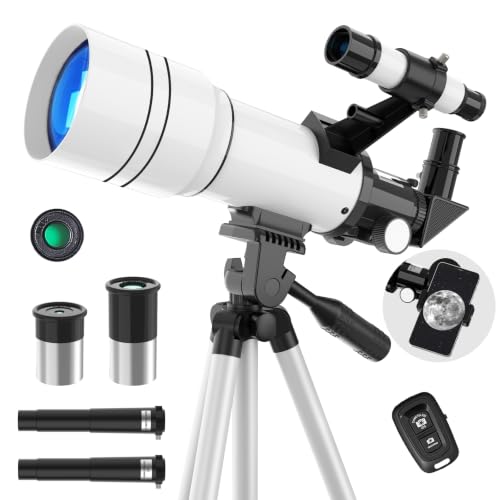 | Best for Smartphone | Product Type: Telescope (refractor) | Aperture (mm): 70mm | Magnification: 15X–150X | SEARCH BEST PRICE | Read Our Analysis |
| Astronomy with a Budget Telescope (Physics and Astronomy) |  | Best Guide | Product Type: Book (eBook) | Aperture (mm): N/A | Magnification: N/A | SEARCH BEST PRICE | Read Our Analysis |
| 70mm Refractor Telescope with Phone Adapter and Tripod |  | Most Complete | Product Type: Telescope (refractor) | Aperture (mm): 70mm | Magnification: 15X–150X | SEARCH BEST PRICE | Read Our Analysis |
| Gskyer 70mm Refracting Telescope for Kids Beginners |  | Budget-Friendly Pick | Product Type: Telescope (refractor) | Aperture (mm): 70mm | Magnification: Not specified | SEARCH BEST PRICE | Read Our Analysis |
More Details on Our Top Picks
Celestron NexStar 6SE Schmidt-Cassegrain GoTo Telescope
The Celestron NexStar 6SE is a 6-inch Schmidt-Cassegrain telescope on a computerized GoTo mount that automates target-finding for visual observers. It replaces manual star-hopping with a hand controller that slews to over 40,000 objects after a quick three-point SkyAlign setup.
Best for: A first-time or upgrading visual observer who wants to spend time viewing lunar craters, Jupiter’s bands, or galaxies instead of learning star charts. This setup suits a backyard or any site with a clear view of three bright objects for alignment.Biggest strength: The GoTo mount’s automated slewing, combined with SkyAlign that needs no object names, gets you observing in minutes. The 6-inch aperture gathers enough light for those lunar and planetary details, and the hand controller stores 40,000+ targets for instant selection.Not ideal if: You are on a tight budget, because this costs more than a manual scope of similar aperture. Also verify the included mount’s tracking accuracy for long-exposure imaging, since the text only supports GoTo pointing, not camera results.How it compares: Against a manual telescope with the same 6-inch optics, the NexStar trades extra cost for time saved in setup and target location. That price difference buys the two-year warranty, US support from California, and an option to add Celestron wireless accessories for hand controller-free operation.- Product Type:Telescope (Schmidt-Cassegrain)
- Aperture (mm):150mm
- Magnification:Not specified
- Mount Type:GoTo (computerized)
- Included Accessories:NexStar+ hand controller, 40,000+ object database
- Brand/Manufacturer:Celestron
- Additional Feature:SkyAlign 3-star alignment
- Additional Feature:40,000+ object database
- Additional Feature:2-year US warranty
12×50 HD Monocular with Phone Adapter & Tripod
This 12×50 HD monocular with phone adapter and tripod is your pocket-sized grab-and-go stargazing buddy. It pairs sharp, color-accurate views through BAK4 prisms and multi-coated optics with quick phone mounting, so you’ll use it far more than a big scope.
Best for: Hikers and casual night-sky observers who want a lightweight, no-setup option for quick looks. The 53mm objective boosts light for low-light scenes, and the 6.5° field gives a 325-foot view at 1200 yards that suits roaming targets. It slips into a pocket with the tripod collapsed.Biggest strength: The included phone adapter and tripod turn any smartphone into a quick imaging platform, with no GoTo or mount setup. The tripod adjusts to two angles and three lengths, while the holder fits iPhone, Samsung, and Google models. You can share views directly on your phone screen.Not ideal if: You demand long-exposure astrophotography or precise tracking, since this has no motorized mount. The 12x power and 6.5° field limit wide panoramas, and waterproofing covers drizzle only, not heavy rain. Check eye relief fits your glasses before buying.How it compares: Against a full-sized telescope, this monocular wins on portability and setup speed, sacrificing aperture and tracking for instant use. It keeps views free of dizziness for eyeglass wearers, unlike many compact optics that force close eye placement. Its 12x magnification suits terrestrial and lunar targets, not deep-sky detail.- Product Type:Monocular
- Aperture (mm):50mm
- Magnification:12x
- Mount Type:Tripod (included)
- Included Accessories:Phone adapter, tripod, carrying bag
- Brand/Manufacturer:HuaZiChok
- Additional Feature:Waterproof low-light vision
- Additional Feature:325ft/1200yd visible range
- Additional Feature:Smartphone holder compatible
Celestron NexStar 4SE Maksutov-Cassegrain GoTo Telescope
This compact 4-inch Maksutov-Cassegrain telescope bundles a long focal length into a sealed tube, making it a strong match for lunar and planetary observing from tight quarters. Its GoTo mount handles the heavy lifting, automatically locating and tracking over 40,000 celestial objects so you can spend your time looking instead of searching.
Best for: A beginner or casual observer who wants a low fuss setup for Moon and planet views from a balcony or small yard. The whole kit is light enough to carry out in one trip, and the SkyAlign procedure only asks you to center any three bright stars, named or not.Biggest strength: The GoTo mount is the centerpiece, slewing automatically to over 40,000 objects with minimal input. That means you can skip star hopping and let the scope track targets steadily while you swap eyepieces.Not ideal if: You expect deep space views, since the 4 inch aperture and long focal ratio limit faint nebulae and galaxies to dim smudges at best. Visual observing of those objects will be underwhelming, so keep your targets to the Moon and bright planets where this design shines.How it compares: This is a grab and go package, not a deep space rig, since its sealed tube design prioritizes portability and maintenance free optics over light gathering. The built in wedge handles entry level astrophotography of the Moon and planets, but expect short exposure results, not long exposure deep sky images, from the included kit.- Product Type:Telescope (Maksutov-Cassegrain)
- Aperture (mm):100mm
- Magnification:Not specified
- Mount Type:GoTo (computerized)
- Included Accessories:NexStar+ hand controller, 40,000+ object database
- Brand/Manufacturer:Celestron
- Additional Feature:Built-in wedge astrophotography
- Additional Feature:SkyAlign 3-star alignment
- Additional Feature:2-year US warranty
Celestron NexStar 8SE Computerized Telescope
Best for: The beginner or casual observer who wants automated star hopping without learning the sky. You get a portable, self contained tube and mount that clears most backyard horizons.Biggest strength: The 8 inch Schmidt Cassegrain aperture collects enough light to show Jupiter’s cloud bands and lunar craters in sharp focus. Its GoTo mount with SkyAlign needs only three bright objects, names optional, to align itself.Not ideal if: You want to attach a camera for long exposure deep sky shots, since the fork mount tracks but not for imaging without extra gear. You will need to verify the included 25 mm eyepiece’s field and eye relief for your own eyeglasses.How it compares: This is a fully automated package, not a budget manual Dobsonian, so it suits those who skip star charts entirely. With over 40,000 database objects and a two year warranty, it trades raw aperture for convenience and support.- Product Type:Telescope (Schmidt-Cassegrain)
- Aperture (mm):200mm
- Magnification:Not specified
- Mount Type:GoTo (computerized)
- Included Accessories:NexStar+ hand controller, 40,000+ object database
- Brand/Manufacturer:Celestron
- Additional Feature:SkyAlign 3-star alignment
- Additional Feature:40,000+ object database
- Additional Feature:8-inch aperture gathers light
DWARFLAB Dwarf Mini Smart Telescope App Control
The Dwarf Mini Smart Telescope pairs a compact, app-driven design with go-to functionality to deliver a streamlined, portable astrophotography setup. Its low weight and automated operation make it a complete, easy-to-deploy system for beginners.
Best for: A traveler wanting a grab-and-go scope for smartphone-enabled deep-sky imaging without a mount setup. The 360° pivot means the app handles target location, so you spend time shooting, not aligning. This suits a family campsite or a quick backyard session where space and patience are limited.Biggest strength: The automated go-to and built-in tracking let you capture 90-second exposures in EQ Mode with a Sony IMX662 sensor. This yields usable color images of brighter nebulae and galaxies, as the internal light-pollution filter helps cut city glow. Setup is a single power connection and app link.Not ideal if: You expect a wide-field visual telescope, since this is an imaging instrument with no eyepiece included. The 2.9μm pixel size is fine for deep-sky shots but not for planetary detail, so small lunar craters or Saturn’s rings will look soft on a phone screen. Also, the app does cloud processing, so offline editing is limited.How it compares: Against a manual Dobsonian or a larger computerized rig, the Dwarf Mini trades aperture and resolution for speed and portability. At 1.85 pounds, it fits in a backpack where a $2,000 mount and tube cannot, yet its 90-second exposures will not match that rig’s faint-object reach. It is a dedicated camera system, not a visual scope.- Product Type:Smart Telescope (app-controlled)
- Aperture (mm):Not specified
- Magnification:Not specified
- Mount Type:App-controlled Auto GOTO
- Included Accessories:Filter, USB-C cable, cleaning cloth
- Brand/Manufacturer:DWARFLAB
- Additional Feature:3-minute setup time
- Additional Feature:90-second single-frame exposure
- Additional Feature:Built-in light pollution filters
Celestron PowerSeeker 127EQ Reflector Telescope
The Celestron PowerSeeker 127EQ is a 127mm reflector telescope on a manual German equatorial mount. It offers families a low-cost way to see deep sky objects and bright planets.
Best for: Beginners who want a first serious scope without a high budget. Its compact tube and manual setup suit casual backyard use, not long observing trips.Biggest strength: The 127mm mirror collects enough light to show the Orion Nebula and Jupiter’s bands. The included 3x Barlow triples magnification for lunar craters.Not ideal if: You want smooth tracking for long observation sessions. The slow-motion rods require manual adjustment, so camera work is not realistic here. No motorized tracking is present.How it compares: As a mirror scope, it beats small refractors on light gathering for nebula views. Its manual German mount gives steady but hands-on movement, unlike GoTo models. Two eyepieces plus a Barlow cover low and high power.- Product Type:Telescope (Newtonian reflector)
- Aperture (mm):127mm
- Magnification:Not specified
- Mount Type:Manual German Equatorial
- Included Accessories:2 eyepieces (20mm, 4mm), 3x Barlow lens
- Brand/Manufacturer:Celestron
- Additional Feature:Free astronomy software download
- Additional Feature:3x Barlow lens included
- Additional Feature:2-year US warranty
15×55 Monocular with Tripod and Phone Adapter
The Sogries 15×55 is a rugged, waterproof monocular that delivers bright, steady views for outdoor use. It pairs a 15x magnification with a 55mm objective lens for clear observation at dawn or dusk.
Best for: New birdwatchers, campers, or sailors who need one tough optic that fits in a hand. The included phone adapter and tripod mount turn it into a quick digiscoping rig for sharing distant sights.Biggest strength: Military-grade armor and full waterproofing let it survive drops, rain, and splashes without fuss. The damped focus wheel stays precise even after rough handling.Not ideal if: You need a high-power telescope for astronomy, since this is a 15x monocular, not a variable zoom or large-aperture scope. Check that the 464g weight and one-handed grip suit your stability needs for long sessions.How it compares: As a fixed-magnification monocular, it beats a spotting scope for portability but lacks interchangeable eyepieces. Its price makes it a low-cost entry point for students, though the BAK4 prisms and multi-coated lenses keep the view bright.- Product Type:Monocular
- Aperture (mm):55mm
- Magnification:15x
- Mount Type:Tripod (included)
- Included Accessories:Phone adapter, tripod
- Brand/Manufacturer:Sogries
- Additional Feature:Military-grade shock-resistant build
- Additional Feature:Damped focus wheel control
- Additional Feature:One-handed operation design
70mm Refractor Telescope for Kids with Phone
This 70mm refractor for kids pairs a wallet-friendly price with tool-free assembly, giving young astronomers a forgiving first scope. Its 70mm aperture and 300mm focal length deliver clear lunar craters and Saturn’s rings while keeping setup simple.
Best for: A child new to stargazing who needs a sturdy, low-cost scope for backyard moon and planet views. The included phone adapter and wireless remote let them snap shareable shots without touching the tripod.Biggest strength: Tool-free snap assembly means you go from box to first target in minutes, so no lost Allen wrench ruins a night. The 5×24 finder scope speeds up aiming, and the two eyepieces plus 3X Barlow cover 15X to 150X.Not ideal if: You want steady high-power views, since pushing past the mid-range gets finicky and the top end shakes. The 300mm focal length suits low and medium magnifications, so skip this if deep-sky detail is the goal.How it compares: This is a basic alt-az refractor with a manual finder, not a GoTo or tracking scope, so it fits beginners who want hands-on aiming. Its 70mm aperture is enough for lunar craters and planetary rings, but there is no powered mount or imaging guidance here. Two eyepieces plus a 3X Barlow give a range of magnifications, yet only the low end stays crisp.- Product Type:Telescope (refractor)
- Aperture (mm):70mm
- Magnification:15X–150X
- Mount Type:Manual Alt-Azimuth
- Included Accessories:2 eyepieces, 3x Barlow, erecting eyepiece, finderscope, phone adapter, wireless remote
- Brand/Manufacturer:Not specified
- Additional Feature:Tool-free assembly design
- Additional Feature:Wireless remote included
- Additional Feature:Lifetime maintenance support
Koolpte 70mm AZ Refractor Telescope for Kids
The Koolpte 70mm AZ is a refractor telescope kit built for young beginners. It offers a complete set of gear for casual sky viewing and terrestrial spotting.
Best for: A child or teen taking their first look at the Moon and bright planets. The kit keeps setup simple, so an adult can get it running in minutes.Biggest strength: The fast f/7.1 focal ratio delivers crisp, clear views. That optical speed keeps images bright for young eyes, and the 500mm focal length reaches targets without a heavy tube.Not ideal if: You expect to photograph the stars. This is a visual scope, and the phone adapter is for snapshots, not long-exposure imaging.How it compares: It matches the classic starter refractor format with a 70mm aperture and a manual alt-azimuth mount. Its edge is the added Barlow lens, finderscope, and carrying case, which you usually buy separately in other kits.- Product Type:Telescope (refractor)
- Aperture (mm):70mm
- Magnification:Not specified
- Mount Type:Manual Alt-Azimuth
- Included Accessories:2 eyepieces, 3x Barlow, finderscope, phone adapter, wireless remote, carrying case
- Brand/Manufacturer:Koolpte
- Additional Feature:24-hour customer support
- Additional Feature:Carrying case included
- Additional Feature:Lifetime maintenance support
Celestron NexStar 5SE Computerized Telescope for Beginners
The Celestron NexStar 5SE bundles a 5-inch Schmidt-Cassegrain optical tube with a fully automated GoTo mount, so you can skip star charts and let the telescope find objects for you. This setup gives beginners a compact, light-gathering scope that targets over 40,000 database objects with minimal setup effort.
Best for: A newcomer who wants automated object hunting without learning the night sky. You align by centering any three bright stars, and the mount does the rest, so no chart reading is involved.Biggest strength: The GoTo mount slews to any object from its built-in database after a quick three-star alignment. This turns setup into minutes and leaves more time for viewing planets, lunar craters, and faint galaxies.Not ideal if: You need a highly portable grab-and-go scope, since the full assembly is not super compact. You also should plan to buy a separate wedge if you want to move from visual tracking to long-exposure astrophotography later.How it compares: This pick beats manual scopes by replacing chart work with automated pointing, but it is a visual-first instrument. The included 2-year warranty and US support add safety for first-time buyers, while the wedge remains a paid add-on for camera work.- Product Type:Telescope (Schmidt-Cassegrain)
- Aperture (mm):127mm
- Magnification:Not specified
- Mount Type:GoTo (computerized)
- Included Accessories:NexStar+ hand controller, 40,000+ object database
- Brand/Manufacturer:Celestron
- Additional Feature:Integrated wedge for astrophotography
- Additional Feature:SkyAlign 3-star alignment
- Additional Feature:40,000+ object database
Kids 50mm 100x Beginner Telescope with Tripod
Luzsco 40050 is a 50mm aperture, 100x magnification beginner telescope built for kids. It turns backyard nights into a first hands-on astronomy experience without needing a screen.
Best for: A child aged 6 to 12 who wants a first telescope for backyard or family camping use. The kit is ready to go out of the box, so a parent can set it up quickly with minimal fuss.Biggest strength: The included 6mm and 20mm eyepieces plus a Barlow lens give two magnification steps and a third option for closer looks. This variety keeps a young observer busy learning how each piece changes the view.Not ideal if: You expect sharp, high-power views of planets or deep sky objects. This is a toy-grade refractor, so the 100x maximum is for casual lunar or bright star observation, not detailed imaging.How it compares: As a STEM toy, it beats a tablet by building patience and problem solving through assembly and aiming. It does not track objects or support a camera, so treat it as a visual-only first scope, not a photographic tool.- Product Type:Telescope (refractor)
- Aperture (mm):50mm
- Magnification:100x
- Mount Type:Manual Tripod
- Included Accessories:Tripod, 2 eyepieces (6mm, 20mm), finderscope, Barlow lens
- Brand/Manufacturer:Luzsco
- Additional Feature:STEM educational toy
- Additional Feature:Ages 6-12 suitable
- Additional Feature:Screen-free exploration
70mm Refracting Telescope for Beginners with Phone Adapter
The Fuoibl 70mm refractor is a beginner-friendly telescope that bundles a phone adapter for easy sharing. It pairs a fully multi-coated 70mm objective with a 300mm focal length to deliver bright, sharp lunar views without setup fuss.
Best for: A first scope for a child or an adult wanting a simple, tool-free intro to moon watching. It suits balcony or living room use with its compact footprint and 45 inch tripod height.Biggest strength: Tool-free assembly gets you observing in minutes, which keeps early sessions frustration free. The included phone holder and wireless remote let you capture what you see without buying extras.Not ideal if: The 5×24 finderscope shows an inverted view, so target hopping takes some practice. You also get no tracking motor, meaning objects drift out of view and need manual recentering.How it compares: The 70mm aperture and 300mm focal length give a 15X to 150X range, which suits crisp moon crater views over deep sky hunting. It is lighter than many full size refractors, making it a practical pick for a driveway or camp table.- Product Type:Telescope (refractor)
- Aperture (mm):70mm
- Magnification:15X–150X
- Mount Type:Manual Alt-Azimuth
- Included Accessories:2 eyepieces, 3x Barlow, finderscope, phone adapter, wireless remote
- Brand/Manufacturer:Fuoibl
- Additional Feature:Tool-free assembly design
- Additional Feature:Adjustable tripod extends 45 inches
- Additional Feature:Technical support team
Astronomy with a Budget Telescope (Physics and Astronomy)
Best for: A beginner buying their first telescope on a tight budget. This guide suits anyone who wants to learn practical observing skills before spending money on gear.Biggest strength: It teaches you to extract real observing power from inexpensive equipment. The book focuses on alignment tricks and target selection, so you get usable views without costly upgrades.Not ideal if: You expect fluff or glossy photography, since the tone is dry and direct. It also lacks any mount or GoTo specs, so you will not find payload or tracking details here.How it compares: This is a 130 page eBook that prioritizes technique over equipment lists, unlike a typical product catalog. It costs under ten dollars and is meant to be read before you buy a telescope, not after.- Product Type:Book (eBook)
- Aperture (mm):N/A
- Magnification:N/A
- Mount Type:N/A
- Included Accessories:N/A (Kindle eBook)
- Brand/Manufacturer:Springer
- Additional Feature:Kindle eBook digital format
- Additional Feature:130-page astronomy guide
- Additional Feature:Physics and astronomy focus
70mm Refractor Telescope with Phone Adapter and Tripod
Best for: This 70mm refractor is the pick for a family buying their first telescope. It suits kids and adults who want quick views without fussing over setup or collimation.Biggest strength: The fully multi-coated 70mm objective and 300mm focal length deliver sharp views of the moon and Saturn’s rings. Its tool-free assembly gets you observing in minutes, not hours.Not ideal if: The 300mm focal length limits high-power planetary detail beyond 150X, and the lightweight tripod will wobble in a breeze. Also, the 6mm eyepiece gives 50X, so pushing past that needs the Barlow, which reduces image brightness.How it compares: As a refractor, it skips the mirror alignment headaches of Newtonians, making it more forgiving for beginners. It packs a full kit, including two eyepieces and a phone adapter, so you don’t buy extras for first use.- Product Type:Telescope (refractor)
- Aperture (mm):70mm
- Magnification:15X–150X
- Mount Type:Manual Alt-Azimuth
- Included Accessories:2 eyepieces, 3x Barlow, finderscope, phone adapter, wireless remote, star chart
- Brand/Manufacturer:Not specified
- Additional Feature:Star chart included
- Additional Feature:Lifetime maintenance support
- Additional Feature:Ultra-lightweight portable design
Gskyer 70mm Refracting Telescope for Kids Beginners
The Gskyer 70mm is a refracting telescope built for beginners who want a simple, portable first scope. Its 70mm aperture collects enough light to show lunar craters and Jupiter’s moons clearly.
Best for: A newcomer or child who wants a ready-to-use telescope without complex setup. The kit includes a tripod, two eyepieces, a Barlow lens, a finder scope, and a smartphone adapter, so you can start observing right away.Biggest strength: The 400mm focal length at f/5.7 gives bright, wide views that suit a beginner. Portability is a plus because the tripod folds and the carry bag makes transport straightforward.Not ideal if: You need a motorized mount for automatic tracking or long exposure imaging. This is a manual altazimuth setup, so you will nudge the scope by hand to keep objects in view.How it compares: This works as a no frills gateway scope, favoring ease of use over magnification. The 3x Barlow triples eyepiece power, but the short focal length means high power magnifies the same limited aperture, so stick to Moon and planets for best results.- Product Type:Telescope (refractor)
- Aperture (mm):70mm
- Magnification:Not specified
- Mount Type:Manual Alt-Azimuth
- Included Accessories:2 eyepieces, 3x Barlow, finderscope, phone adapter, wireless remote, carrying bag
- Brand/Manufacturer:Gskyer
- Additional Feature:Aluminum alloy tripod
- Additional Feature:Carry bag included
- Additional Feature:Wireless camera remote
Factors to Consider When Choosing Budget Telescopes
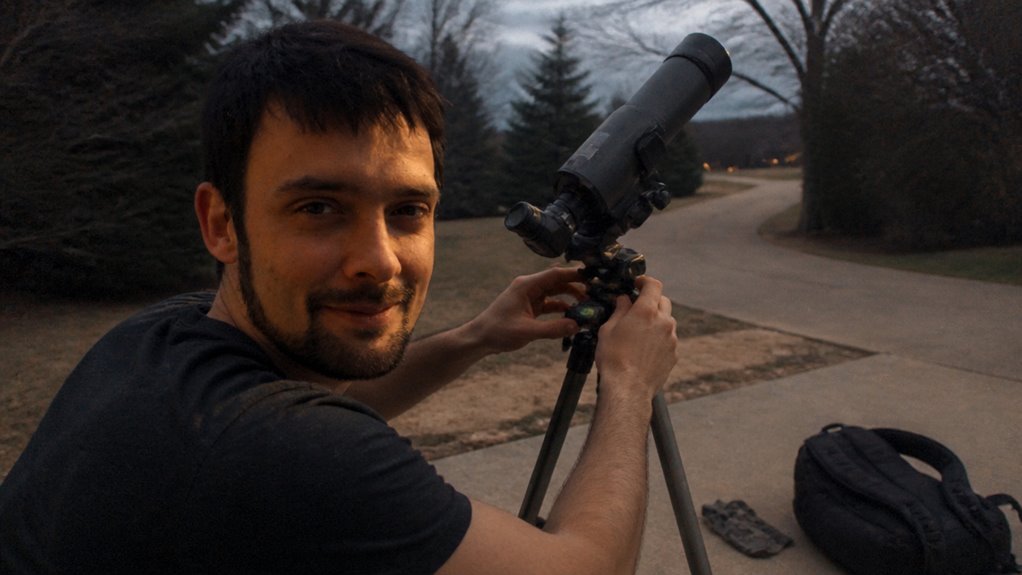
Choosing a budget telescope means knowing where your money matters most. The aperture, or the size of the main lens or mirror, drives what you can see. But it is not the only factor.
Your mount type, optical design, portability, and ease of alignment all affect how often you actually use the scope. A cheap refractor and a cheap reflector deliver very different views and demands.
Here is how each factor plays out, from focal length trade-offs to whether a GoTo mount is worth the extra weight. The goal is a scope that fits your driveway, not just your budget.
Aperture Sets the Ceiling
Aperture controls how much light the scope collects. A larger aperture reveals dimmer objects and finer detail, like Saturn’s rings on a stable night.
A 70mm refractor is lightweight and quick to set up. A 130mm reflector collects more light but needs more careful collimation, which is the alignment of its mirrors.
Choose the largest aperture you can handle comfortably. An oversized scope that stays in the closet helps no one.
Mount Type Determines Stability
The mount holds the tube and must track smoothly as you nudge it. A shaky mount ruins high magnification faster than a small aperture does.
An altazimuth mount moves up, down, left, and right. It is simple and intuitive for visual observing.
An equatorial mount tilts to match Earth’s rotation. It requires polar alignment but helps with manual tracking at higher powers.
For a budget scope, a solid tabletop altazimuth mount often beats a wobbly tripod on paper.
Refractor vs. Reflector Design
A refractor uses a glass lens at the front. It gives crisp views of the Moon and planets with zero maintenance.
A reflector uses a mirror at the back. It gives more aperture per dollar but needs occasional collimation and a longer cooldown time outdoors.
A short focal length refractor offers a wide field of view for sweeping star clusters. A longer focal ratio, like f/10, pairs better with high magnification for planetary detail.
Match the design to your main target. If you want both, expect compromises at this price point.
Portability and Setup Time
A 100mm reflector on a full tripod may cost the same as a 70mm refractor, but one fits on a balcony and the other does not.
Look at your usual observing spot before you buy. If you carry the scope down stairs or through a door, weight and tube length matter more than raw aperture.
A scope that assembles in five minutes gets used. One that needs tools and patience stays packed.
Alignment and GoTo Mounts
Manual scopes require you to find objects by star hopping. That skill takes patience but costs nothing extra.
A GoTo mount can point to thousands of targets with a remote. On a budget, however, GoTo adds weight, battery needs, and setup time, and its pointing accuracy varies.
Do not confuse GoTo pointing with tracking. A GoTo mount tracks once it locks on, but tracking quality depends on the motor and mount stability.
For a first budget scope, a simple manual mount teaches you the sky. Add GoTo only if you know you will accept the extra fiddling.
Fitting Your Driveway, Not Just Your Wallet
Write down three things before you buy: your main targets, your storage space, and your tolerance for setup hassle.
A 70mm refractor on a sturdy altazimuth mount is a safe first choice for planets and the Moon. A 130mm reflector on a solid tabletop base gives more faint fuzzies but demands more care.
Pick the scope you will actually carry outside on a clear night. That factor outweighs any spec sheet number.
Aperture Size Essentials
Aperture size is the most important factor in what you see through a telescope. It is the diameter of the front lens or primary mirror, and it works like a bucket’s mouth catching light. A larger aperture collects more photons. A 70mm refractor might be portable, but a 100mm scope grabs twice the light, making faint galaxies far easier to see.
Resolution also improves with aperture. A 6-inch scope reveals about twice the fine detail of a 3-inch model, since the resolving limit is roughly 4.56 arcseconds divided by the aperture in inches. There is a trade-off, though. That 127mm reflector can weigh far more than a featherweight 70mm, so consider your storage and carrying options.
Useful magnification tops out near 50x per inch of aperture. Chasing higher power with extreme eyepieces usually delivers a dim, blurry view, so choose your eyepieces based on the telescope’s focal length.
If you can lift the larger scope, go bigger. Your back may complain on the way outside, but your eyes will appreciate the difference at the eyepiece.
Mount Type And Goto
Two main mount families dominate the budget telescope market, and the mount type often matters more than the glass itself. A manual alt-azimuth mount is simple but lacks tracking, so you are constantly nudging the tube to keep objects in view.
A German equatorial mount (GEM) solves this with a motorized axis aligned to Earth’s pole, allowing accurate manual tracking through slow-motion rods. The real game-changer is GoTo, a mount system with a 40,000-plus object database that auto-slews to targets.
SkyAlign is particularly useful: center any three bright stars, and the mount computes your position in minutes. You do not need to know star names.
Check for integrated wedges on GoTo mounts, as they allow polar alignment for long-exposure astrophotography. The downsides are cost and setup complexity.
If you hate fiddling, choose GoTo. If you are patient, a manual GEM saves money and still delivers solid tracking.
Optical Design Choices
Three optical designs dominate the budget aisle, and your pick here outweighs the mount’s quirks. Refractors, with their glass lenses, are the low-maintenance workhorses. Sealed tubes mean you never fuss with alignment, and a 70mm version nails lunar craters and planetary bands without a headache.
Reflectors flip the script. A 127mm Newtonian gathers roughly four times more light than a small refractor, so faint nebulae actually show up. You will need to collimate, which means aligning the mirrors periodically. It is fussy, but you swap tweaking for deep-sky treasure.
Compound scopes like a 4-inch Maksutov fold the light path. That gives you a 1500mm focal length in a compact tube. Sealed optics reduce dust, though moving mirrors can shift your image slightly.
Want planets with zero fuss? Choose a refractor. Crave deep-sky under budget constraints? Choose a reflector.
Portability Versus Power
Aperture brings detail, but it also brings weight. The best telescope is the one you will actually use. An 8-inch Dobsonian shows Saturn’s rings crisply, but you will likely leave it in the garage.
For a balance of power and packability, compact Schmidt-Cassegrains and Maksutovs squeeze extra inches of aperture into a short tube. Watch the focal length. Any scope over 1000mm needs a sturdier mount, which adds 5 to 15 pounds of tripod weight.
For dark-sky trips, keep the whole kit under 20 pounds. That usually means a 4 to 6-inch GoTo system or a 5 to 8-inch manual scope. Smaller 70 to 90mm refractors weigh under 10 pounds, set up in five minutes, and ride in one hand.
If you are not hauling it out, you are not seeing anything. Prioritize portability for frequent stargazing.
Ease Of Alignment
Alignment often scares off new telescope owners, but it does not have to.
Manual equatorial mounts are precise but demanding. Polar alignment can take 10 to 20 minutes and requires real sky knowledge. That is a steep learning curve.
GoTo mounts with SkyAlign solve that problem. Center any three bright stars or planets, names optional, and the system calculates its position in minutes.
One-star alignment is faster but less accurate, drifting a few arcminutes. That is still fine for most casual observing.
Alt-azimuth mounts are the easiest option. Level the base, point at something bright, and you are done. No charts or fuss required.
If you are new, choose a GoTo with SkyAlign or a simple alt-azimuth mount. Setup time drops from over an hour to under five minutes, leaving more time for actual stargazing.
Included Accessory Value
A budget scope can feel like a steal or a paperweight, and the included accessories often decide which. Focus on the bundle, not just the optics, because those extras determine how usable the scope is from night one.
Start with the eyepieces. A 20mm eyepiece gives you wide views, and a 6mm delivers higher power for planets. Together, they cover the useful range without immediate upgrades. A 3x Barlow triples each eyepiece’s magnification, effectively doubling your options for little extra cost.
Check the finderscope. A 5×24 model with cross-hairs and a secure bracket saves you from alignment frustration. A loose or cheap finder makes aiming at targets needlessly difficult.
If you plan to photograph with a phone, insist on a universal adapter and remote. Poorly fitted phone holders slip, and that ruins the shot. Make sure the bracket grips your phone model firmly.
The tripod matters more than you might think. A sturdy, adjustable model that reaches 45 inches keeps the view steady. Flimsy legs wobble at high magnification and undermine everything else.
A scope that bundles these items is usually a better deal than one with better glass but bare bones. You are paying for usability, not just the tube. Without the right accessories, you are stuck squinting at a blur instead of stargazing.
Kid-Friendly Features
Nobody wants to buy a telescope that ends up in a closet because the kid can’t figure out the mount. Kid-friendly features matter from day one. Look for apertures between 50mm and 70mm, which is the main light-gathering lens or mirror. That size is light enough for small hands yet powerful enough to show real detail. Tool-free assembly is a must, so kids can set up within minutes without a screwdriver.
A 5×24 finderscope, which is a tiny aiming scope, plus a 20mm eyepiece, simplifies aiming. An adjustable aluminum tripod that extends to about 45 inches fits kids of different heights. Magnification from 15x to 150x comes from interchangeable eyepieces and a 3x Barlow lens, giving flexible viewing options for different targets.
Choose these specs, and you’ll have a budding astronomer instead of a frustrated one.
Build Quality And Support
Durability often decides whether a budget telescope survives its first year. The tripod matters more than the glass. Look for aluminum alloy legs, not plastic, because they cut vibration at higher magnifications. That is your first clue.
Check for a two-year warranty. It signals real confidence in the product. Tool-free assembly also helps, since you will not force parts and risk breaking them.
Fully multi-coated (FMC) glass boosts light transmission and resists scratches. Responsive technical support can rescue you from alignment blunders.
Metal legs and FMC optics will outlast your patience. If you can find lifetime maintenance, take it. It is a safety net for beginners.
Demand a two-year warranty, aluminum legs, and easy setup. You will thank yourself later.
Frequently Asked Questions
What Maintenance Do Budget Telescopes Require After Frequent Use?
Frequent use means budget telescopes need basic upkeep, primarily dusting the optics, collimating the mirrors, and checking screws after each session. You will also need to re-grease the mount and store the tube dry to prevent moisture damage.
Clean eyepieces regularly with a soft brush or lens cloth, and tighten any loose fittings before packing up. A concrete tip: always cap the objective lens or mirror before storage, and keep silica gel packs in the case to absorb humidity.
If your telescope’s collimation is off, verify the adjustment procedure in the manufacturer’s manual, as designs vary by brand. Do not expect faint nebulae to appear as vivid as long-exposure photos; visual views are dimmer and less colorful.
Can I Use These Telescopes for Daytime Terrestrial Viewing?
Yes, you can use these telescopes for daytime terrestrial viewing, though you must always point them away from the sun to prevent permanent eye damage. The same optical path that reveals planets at night works fine on birds, distant scenery, and other bright details.
You will see the image upside down, which is normal for astronomical telescopes. To adapt, simply rotate the diagonal or your viewing position, or accept the orientation as a quirk of the setup.
Check your telescope’s manual to confirm its minimum focus distance, as some models cannot focus on objects closer than about 50 feet. This matters more than magnification for terrestrial work, so verify the focus range before aiming at nearby targets.
How Do I Align the Finderscope on My Budget Telescope?
Aligning the finderscope on your budget telescope is a simple daytime task that takes only a few minutes. Point the main scope at a distant, fixed object like a tree or a utility pole, and center it precisely in the eyepiece using the lowest-power eyepiece available.
Then, without moving the main scope, adjust the finderscope’s adjustment screws until its crosshairs sit exactly on the same object. Repeat this process several times, nudging the screws and re-checking the eyepiece, to refine the alignment.
For a truly accurate setup, verify that the object remains centered even when you move the telescope to different directions. The crosshairs should track with the main scope’s view, not drift to one side.
If your finderscope has a bracket or mounting rings, ensure they are snug but not overly tight before making adjustments. Check your telescope’s manual for the specific screw configuration, as some models use three screws while others use six for fine-tuning.
Are Smartphone Adapters Included With All Budget Telescope Models?
Smartphone adapters are not included with all budget telescope models, so you will often need to purchase one separately.
The bundled accessories in entry-level scopes typically cover eyepieces and a finder, not camera mounts.
Before assuming you are ready to photograph the night sky, check the product listing or box contents for an adapter.
If it is missing, verify the adapter’s compatibility with your telescope’s eyepiece diameter, usually 1.25 inches, and your phone’s width.
For a quick fix today, use a simple plastic clamp-style adapter that fits over the eyepiece and holds your phone’s camera lens centered.
Always confirm the clamp’s maximum phone size against your device, and note that your phone’s live view will show a wider field than what your eye sees through the eyepiece.
What Is the Best Way to Store a Telescope in Humid Climates?
In humid climates, the best way to store a telescope is to keep it in a sealed case with silica gel, after ensuring the tube is pointing down to prevent moisture settling on the optics. Place the setup in a climate-controlled room and run a dehumidifier there to maintain stable, dry conditions.
Before storage, always dry the telescope fully after each use, including the external surfaces and eyepieces. For maximum protection, check your manufacturer’s manual for specific humidity limits, and confirm whether your model benefits from leaving the dust cap slightly ajar for airflow. Silica gel should be regularly recharged or replaced, as saturated desiccant stops absorbing moisture. This approach prevents mold on lenses and corrosion of mechanical parts, so verify your case’s seal integrity annually. Small, rechargeable humidity indicators can help you monitor the interior conditions without opening the case.
Rounding Up
A budget telescope is enough to enjoy the night sky, because 90% of deep-sky objects are visible with a 4-inch scope.
Check the eyepiece barrel size that comes with the scope, since a decent eyepiece often improves views more than a larger aperture.
Compare the assembled weight of manual mounts to ensure you can carry the setup without strain.
Manual mounts cost less, but they demand patience as you track objects by hand.
Automation saves time, yet a simpler refractor teaches the fundamentals of aiming and focusing.
For your first session, start with the brightest target, like the Moon, to practice focusing before hunting Saturn’s rings.
 We will be happy to hear your thoughts

amazingtelescopes.com is an independent observational astronomy lab and optical testing publication. We test refractors, reflectors, computerized GoTo mounts, and planetary imaging instruments.