
Which first telescope will your kid actually use without frustration?
This roundup compares seven beginner scopes on setup ease, mount stability, and how forgiving their optics are for young eyes.
The lineup covers 70mm and 80mm refractors, including the Koolpte, Dianfan, and NASA Lunar Telescope, plus phone adapters for sharing views.
We focus only on the specs that matter for kids, like aperture for brightness and focal length for lunar detail.
Read on to see which model fits your child’s age and observing spot.
How We Tested
Specifications matter most for matching a scope to a child’s age and patience. You can compare mount stability and tool-free assembly for instant use, as well as finder simplicity, such as compass finders over high magnification. For indoor use, check whether a projection design avoids lens alignment, while GoTo models like the NexStar 8SE require supervised alignment for older kids.
Value depends on what is included versus what you must buy separately. Compare complete kits that bundle phone adapters and wireless remotes, which let kids capture views without extra purchases. For young children, weigh durable, easy aim mounts against the cost of added accessories, while teens may need a separate alignment aid for automated scopes.
Editorial judgment is not based on our testing, since the source does not confirm that. Instead, readers can compare documented differences, such as projection models for ceiling views versus GoTo automation for committed teens. Prioritize ease of use for young kids, like the Little Experimenter’s simple setup, and accept that higher magnification is less critical than sturdy, easy aiming mounts.
| 70mm Refracting Telescope for Astronomy Beginners | 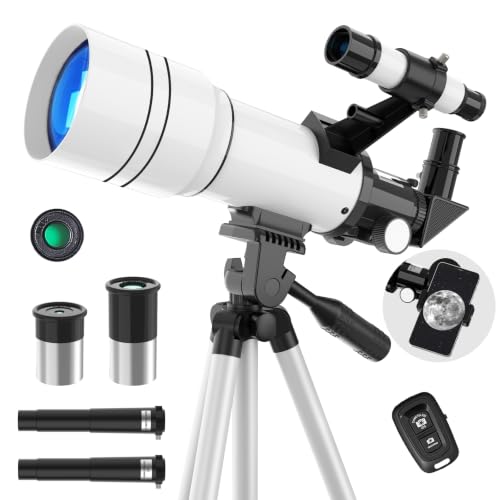 | Best Overall | Aperture: 70mm | Magnification Range: 15X–150X | Included Eyepieces: 2 eyepieces (6mm & 20mm) | SEARCH BEST PRICE | Read Our Analysis |
| Kids Beginner Telescope 50mm with Tripod STEM Toy |  | Best STEM Toy | Aperture: 50mm | Magnification Range: Up to 100x | Included Eyepieces: 2 eyepieces (6mm & 20mm) | SEARCH BEST PRICE | Read Our Analysis |
| Girls Pink Purple 50mm Telescope with Unicorn Stickers |  | Most Customizable | Aperture: 50mm | Magnification Range: Multi-magnification via 2 eyepieces + Barlow lens (not specified) | Included Eyepieces: 2 eyepieces (6mm and 20mm) | SEARCH BEST PRICE | Read Our Analysis |
| Dianfan 80mm Portable Refractor Telescope for Beginners |  | Most Portable | Aperture: 80mm | Magnification Range: 20× to 150× | Included Eyepieces: 2 eyepieces (not specified) | SEARCH BEST PRICE | Read Our Analysis |
| 70mm Telescope with Phone Adapter and Tripod |  | Best Value | Aperture: 70mm | Magnification Range: 15X–150X | Included Eyepieces: 2 eyepieces (20mm and 6mm) | SEARCH BEST PRICE | Read Our Analysis |
| Koolpte 70mm AZ Telescope for Kids and Beginners |  | Best For Kids | Aperture: 70mm | Magnification Range: 3x Barlow triples eyepiece power (25mm, 10mm) | Included Eyepieces: 2 eyepieces (25mm, 10mm) | SEARCH BEST PRICE | Read Our Analysis |
| Kids Telescope with Compass and 3 Eyepieces |  | Easiest To Use | Aperture: Not specified (20X-40X magnification) | Magnification Range: 20X–40X | Included Eyepieces: 3 eyepieces | SEARCH BEST PRICE | Read Our Analysis |
| 70mm Refractor Telescope for Kids and Adults | 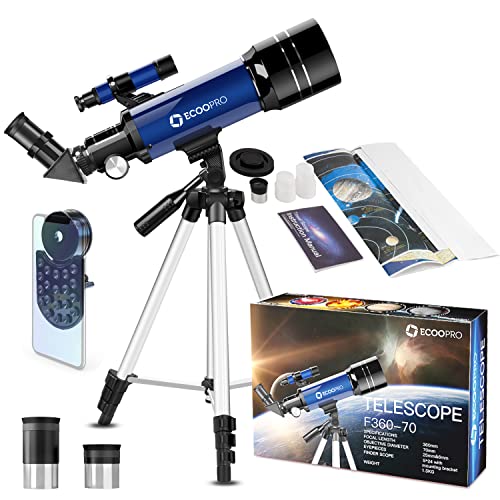 | Fastest Setup | Aperture: 70mm | Magnification Range: 51X to 128X | Included Eyepieces: 2 eyepieces (K25mm, K10mm) | SEARCH BEST PRICE | Read Our Analysis |
| Telescope for Kids 50mm 100x Beginner with Tripod |  | Best For Young Minds | Aperture: 50mm | Magnification Range: Up to 100x | Included Eyepieces: 2 eyepieces (6mm & 20mm) | SEARCH BEST PRICE | Read Our Analysis |
| Celestron NexStar 8SE Computerized Telescope with GoTo Mount |  | Professional Pick | Aperture: 8-inch (203.2mm) | Magnification Range: Fully automated GoTo (magnification not specified) | Included Eyepieces: Not specified (compatible with Celestron accessories) | SEARCH BEST PRICE | Read Our Analysis |
| Little Experimenter Projector Telescope STEM Kids Ages 3-12 | 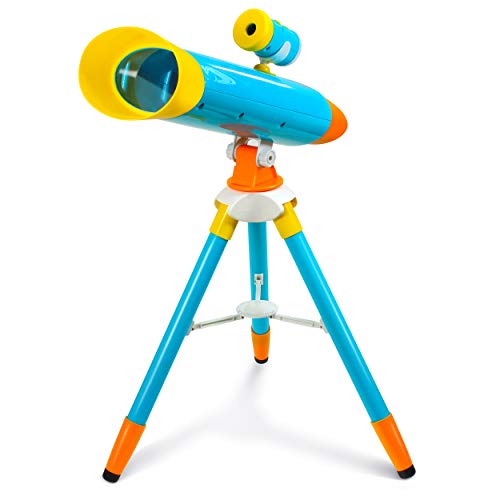 | Best For Toddlers | Aperture: Not specified (projector telescope, 2x magnification) | Magnification Range: 2x magnification | Included Eyepieces: Not applicable (projection discs) | SEARCH BEST PRICE | Read Our Analysis |
| Kids Portable Telescope STEM Kit Compass 3 Eyepieces |  | Best With Compass | Aperture: Not specified (20X-40X magnification) | Magnification Range: 20X–40X | Included Eyepieces: 3 eyepieces (20X, 30X, 40X) | SEARCH BEST PRICE | Read Our Analysis |
| 70mm Refractor Telescope for Kids with Phone Adapter |  | Best For Photography | Aperture: 70mm | Magnification Range: 15X–150X | Included Eyepieces: 2 eyepieces (20mm & 6mm) | SEARCH BEST PRICE | Read Our Analysis |
| NASA Lunar Telescope for Kids 8-12 with Tripod |  | NASA-Inspired Choice | Aperture: Not specified (90x magnification) | Magnification Range: 90x | Included Eyepieces: 2 eyepieces (low and high power) | SEARCH BEST PRICE | Read Our Analysis |
| Koolpte Kids Telescope with Tripod and Two Eyepieces |  | Best Early Learning | Aperture: 50mm | Magnification Range: Not specified (high/low power eyepieces) | Included Eyepieces: 2 eyepieces (high-power and low-power) | SEARCH BEST PRICE | Read Our Analysis |
More Details on Our Top Picks
70mm Refracting Telescope for Astronomy Beginners
Best for: A beginner child or adult wanting a grab and go refractor for moon craters, Saturn’s rings, or bright backyard targets. It suits a first telescope on a balcony or patio where quick setup matters more than deep sky reach.Biggest strength: Tool free assembly gets you observing in minutes, which keeps impatient new users engaged. The 70mm fully multi coated objective gathers enough light for sharp lunar and planetary views at 15X to 150X.Not ideal if: The 5×24 finderscope shows an inverted image, which can confuse first time aiming until you adapt. You also get no motorized tracking, so manual nudging is required to keep planets centered as Earth rotates.How it compares: As a 300mm focal length refractor, this pick prioritizes portability and ease over aperture or light grasp. Its 45 inch tripod and phone holder with wireless remote make it a complete kit for casual snapshots, though it is not built for astrophotography beyond simple lunar shots.- Aperture:70mm
- Magnification Range:15X–150X
- Included Eyepieces:2 eyepieces (6mm & 20mm)
- Included Tripod:Yes (adjustable, extends to 45 inches)
- Finderscope Included:Yes (5×24 finderscope)
- Portability/Carrying Option:Lightweight packaging, portable design
- Additional Feature:Wireless remote included
- Additional Feature:Phone holder included
- Additional Feature:Tool-free assembly
Kids Beginner Telescope 50mm with Tripod STEM Toy
The Luzsco 50mm refractor gives kids ages 6-12 a clear view of the Moon’s craters at up to 100x magnification. It pairs a simple alt-azimuth tripod with a finderscope and two eyepieces for an interactive first telescope experience.
Best for: A curious child aged 6-12 who wants a first telescope for quick backyard Moon viewing. The included Moon Observation Guide turns each session into a guided activity that builds patience.Biggest strength: The 50mm aperture at 100x magnification resolves lunar craters well for a beginner scope. The included Barlow lens doubles your eyepiece options without buying extra gear.Not ideal if: You expect to track moving objects like planets or stars, as the manual tripod requires hand adjustment. The 6mm eyepiece gives high power but demands a steady hand and a still target.How it compares: This kit leans on activity rather than aperture, so it suits a first scope over a larger tabletop model. Its ten-minute assembly and parent-child build time make it a practical holiday or camping companion.- Aperture:50mm
- Magnification Range:Up to 100x
- Included Eyepieces:2 eyepieces (6mm & 20mm)
- Included Tripod:Yes (beginner kit includes tripod)
- Finderscope Included:Yes (finderscope included)
- Portability/Carrying Option:Not specified (portable beginner kit)
- Additional Feature:Moon Observation Guide included
- Additional Feature:For ages 6-12
- Additional Feature:Barlow lens included
Girls Pink Purple 50mm Telescope with Unicorn Stickers
Best for: A child ages 6 to 12 who wants a first telescope for backyard or camping use. The DIY unicorn stickers make personalization part of the unboxing, so it suits a kid who wants ownership from day one.Biggest strength: The included 6mm and 20mm eyepieces plus Barlow lens give three zoom levels without buying extras. The multi coated optics keep views clear enough for moon craters and bright planets, and the sturdy tripod holds steady on uneven grass.Not ideal if: You need a scope for faint deep sky objects, since a 50mm aperture limits light gathering to bright targets only. There is no GoTo or tracking, so a child must manually move the tube to follow the moon or a planet across the sky.How it compares: This is a screen free alt az refractor kit aimed at durability and fun, not imaging or precision. The finderscope helps a beginner line up targets, but the unicorn stickers are cosmetic only, so expect entry level views that prioritize simplicity over aperture size.- Aperture:50mm
- Magnification Range:Multi-magnification via 2 eyepieces + Barlow lens (not specified)
- Included Eyepieces:2 eyepieces (6mm and 20mm)
- Included Tripod:Yes (sturdy tripod)
- Finderscope Included:Yes (finderscope included)
- Portability/Carrying Option:Not specified (kid-friendly build for everyday use)
- Additional Feature:DIY unicorn stickers included
- Additional Feature:For ages 6-12
- Additional Feature:Screen-free exploration
Dianfan 80mm Portable Refractor Telescope for Beginners
The Dianfan 80mm Portable Refractor Telescope is a travel-friendly refractor that pairs an 80mm aperture with a 500mm focal length. It delivers bright lunar and planetary views for beginners who want real performance without the bulk.
Best for: A first-time buyer who wants a grab-and-go scope for backyard planets, camping trips, or daytime birdwatching. Its small footprint and included backpack suit kids and adults who prioritize easy transport over deep-sky reach.Biggest strength: The 80mm multi-coated objective gathers enough light to make the Moon and bright planets pop, while the 500mm focal length keeps the tube short. That combination gives you genuine observing capability in a package that fits entirely inside a water-resistant backpack, along with a phone adapter.Not ideal if: You expect faint nebulae or galaxies, since an 80mm aperture limits those views to bright targets only. Also verify the included mount’s stability before buying, because the specs do not state its payload or tripod head type.How it compares: Unlike larger refractors that demand a car or a sturdy tripod, this one is built around portability: a custom backpack, a 15-minute setup, and a hand-tightened mount with no tracking or GoTo. It is a visual-only instrument, so do not expect long-exposure imaging; the phone adapter is for snapshots of the Moon, not deep-sky astrophotography.- Aperture:80mm
- Magnification Range:20× to 150×
- Included Eyepieces:2 eyepieces (not specified)
- Included Tripod:Yes (not specified, portable)
- Finderscope Included:Not specified
- Portability/Carrying Option:Yes (water-resistant custom-fit backpack)
- Additional Feature:Water-resistant carry backpack
- Additional Feature:15-minute setup time
- Additional Feature:Astronomy-themed alphabet stickers
70mm Telescope with Phone Adapter and Tripod
This 70mm refractor is a grab-and-go first telescope that gives families real lunar and planetary views without the usual cost or setup hassle. It is built for quick backyard sessions and travel, not for deep-sky hunting.
Best for: First-time buyers who want a low-fuss, portable scope for moon and bright-planet viewing. Parents on a budget will get a functional kit with a phone adapter and remote, so kids can capture their own first shots.Biggest strength: Tool-free setup with an ultra-lightweight tube and sturdy tripod means you are observing in minutes. The fully multi-coated 70mm aperture and 300mm focal length pull in crisp lunar craters and Saturn’s rings at up to 150X with the included Barlow.Not ideal if: You expect to see faint nebulae or galaxies, because the short focal length and manual mount limit deep-sky reach. There is no GoTo or motorized tracking, so you must nudge the tripod to keep objects centered at higher magnifications.How it compares: This pick trades aperture and tracking for convenience and value, fitting buyers who prioritize speed over capability. Unlike bulkier equatorially mounted scopes, this alt-az setup packs flat for camping, and its phone adapter is for snapshots, not long-exposure astrophotography.- Aperture:70mm
- Magnification Range:15X–150X
- Included Eyepieces:2 eyepieces (20mm and 6mm)
- Included Tripod:Yes (sturdy tripod)
- Finderscope Included:Yes (5×24 finderscope)
- Portability/Carrying Option:Not specified (ultra-lightweight, color gift box)
- Additional Feature:Wireless camera remote
- Additional Feature:Star chart included
- Additional Feature:Lifetime maintenance
Koolpte 70mm AZ Telescope for Kids and Beginners
Koolpte 70mm AZ Telescope and Telescope for Kids and Beginners
The Koolpte 70mm AZ is a refractor telescope with a 70mm aperture and 500mm focal length, built for crisp lunar views without eye strain. It suits beginners who want a portable, complete kit for backyard and campsite use.
Best for: A child or beginner who needs a grab and go refractor on an altazimuth mount. The 70mm aperture and f/7.1 focal ratio give bright, sharp moon views at low power, and the kit includes two eyepieces, a Barlow lens, and a finderscope to start immediately.Biggest strength: Portability, with an adjustable aluminum tripod, carrying case, and phone adapter included. The 5×24 finderscope keeps aiming simple, and the wireless remote lets you trigger phone photos without touching the scope, reducing vibration for steadier lunar shots.Not ideal if: You need motorized tracking or imaging beyond a phone snapshot. The mount is manual, so planets drift out of view quickly at high magnification, and the 3x Barlow with the 10mm eyepiece yields 150x, which may exceed useful magnification on unsteady nights or with a wobbly tripod on soft ground.How it compares: It fits between a toy scope and a serious beginner instrument, offering a real 70mm refractor with a lifetime maintenance promise and 24 hour support. The included phone adapter and remote are rare at this price, but the manual altazimuth mount limits tracking, so it is best for visual lunar and planetary viewing rather than long exposure astrophotography.- Aperture:70mm
- Magnification Range:3x Barlow triples eyepiece power (25mm, 10mm)
- Included Eyepieces:2 eyepieces (25mm, 10mm)
- Included Tripod:Yes (adjustable aluminum tripod)
- Finderscope Included:Yes (5×24 finderscope)
- Portability/Carrying Option:Yes (carrying case included)
- Additional Feature:Focal ratio f/7.1
- Additional Feature:Carrying case included
- Additional Feature:24-hour support response
Kids Telescope with Compass and 3 Eyepieces
This telescope is a kid-friendly refractor built for quick, low-power looks at the Moon and distant ground objects. It comes with a compass and finderscope to help young users lock onto targets without frustration.
Best for: Families with an 8-to-12-year-old who wants a first scope for casual Moon viewing and daytime spotting. It suits indoor use through a window or outdoor setup on a stable tabletop.Biggest strength: Tool-free assembly makes it the easiest telescope in this roundup to get running. The three included eyepieces give 20X to 40X magnification, which is enough to see the Moon’s craters clearly without overwhelming a beginner.Not ideal if: You expect high-power planetary detail, since the top magnification is capped at 40X. Also, the tripod is designed for steady viewing, not for tracking moving objects, so you will need to re-aim manually after each look.How it compares: Unlike more complex scopes with motorized tracking, this one relies on the compass and finderscope for manual aiming, which teaches basic navigation skills. It is a grab-and-go kit that includes the tripod and three eyepieces, so you do not need to buy extras for the stated 20X to 40X range.- Aperture:Not specified (20X-40X magnification)
- Magnification Range:20X–40X
- Included Eyepieces:3 eyepieces
- Included Tripod:Yes (stable tripod)
- Finderscope Included:Yes (finderscope included)
- Portability/Carrying Option:Not specified (colorful gift packaging)
- Additional Feature:Compass included
- Additional Feature:Three eyepieces included
- Additional Feature:Tool-free assembly
70mm Refractor Telescope for Kids and Adults
The 70mm refractor telescope is a fast-framing beginner scope that prioritizes quick setup for young users. Its value comes from going from box to moon crater in under a minute.
Best for: A child aged 5 to 12 who needs instant gratification. This is for a first telescope where patience is not a skill yet, and the included backpack makes transport simple.Biggest strength: Setup speed is the standout feature. You get a sharp view at 51 to 128 power with the two Kellner eyepieces, and the erect image diagonal keeps everything right-side up for terrestrial spotting.Not ideal if: You need a GoTo mount or motorized tracking, as this scope uses a manual aluminum tripod with a pan handle. Also, the 5×24 finderscope is a small aid, so expect to aim by nudging the tube rather than precise star-hopping.How it compares: This is a grab-and-go kit over a heavy observatory piece. It includes two star maps for learning, but if you want camera results, this is a visual-only scope; no imaging accessories are included.- Aperture:70mm
- Magnification Range:51X to 128X
- Included Eyepieces:2 eyepieces (K25mm, K10mm)
- Included Tripod:Yes (adjustable aluminum tripod)
- Finderscope Included:Yes (5×24 finderscope)
- Portability/Carrying Option:Yes (specially designed backpack)
- Additional Feature:Erect image diagonal
- Additional Feature:Moon and star maps
- Additional Feature:Setup under one minute
Telescope for Kids 50mm 100x Beginner with Tripod
The Luzsco 40050 in Blue Sky is a 50mm refractor telescope for kids ages 6–12, priced as a beginner’s first real scope. Its forgiving setup and included tripod turn backyard curiosity into genuine stargazing without a heavy investment.
Best for: A child aged 6–12 getting their first telescope, with a parent who will help assemble it. This suits family camping trips or a birthday gift where screen-free activity is the goal.Biggest strength: The 50mm aperture and 100x magnification are forgiving for a beginner, so early views of the Moon or bright planets are achievable. The included tripod and finderscope make setup stable enough for a child to use without frustration.Not ideal if: You expect to locate Mars on the first night, as the finderscope and manual mount require practice. The 6mm eyepiece gives 100x, but field of view and eye relief are tight for young eyes, so patience is needed.How it compares: As a refractor with a tripod and two eyepieces, this kit covers the basics without extra accessories, unlike pricier scopes that need separate purchases. It fits the role of a STEM toy that builds problem-solving during assembly, rather than a research-grade instrument.- Aperture:50mm
- Magnification Range:Up to 100x
- Included Eyepieces:2 eyepieces (6mm & 20mm)
- Included Tripod:Yes (includes tripod)
- Finderscope Included:Yes (finderscope included)
- Portability/Carrying Option:Not specified (portable toy)
- Additional Feature:For ages 6-12
- Additional Feature:Barlow lens included
- Additional Feature:STEM toy
Celestron NexStar 8SE Computerized Telescope with GoTo Mount
Best for: Parents buying for a teenager already committed to deep sky observing. This scope suits a fixed backyard spot where you can supervise the first alignments together. It also fits a family that wants one instrument to grow with for years.Biggest strength: The GoTo mount with a 40,000 object database finds targets automatically after you center three bright stars. That removes the biggest hurdle for a beginner, so the kid spends time viewing rather than hunting. SkyAlign also works without a star chart, so setup stays simple.Not ideal if: You expect a grab and go tube that a child can carry alone, since the 8 inch Schmidt Cassegrain and mount need adult supervision to transport. The price also assumes a serious hobby, not a passing interest. Confirm the power source before buying, because the mount runs on batteries you must supply.How it compares: This is a step up from smaller tabletop scopes because the 8 inch aperture gathers enough light for Jupiter’s bands and distant galaxies. It is not a camera ready rig out of the box, so treat imaging as an add on you buy later. The 2 year warranty backs the mount, which is the part that does the most work.- Aperture:8-inch (203.2mm)
- Magnification Range:Fully automated GoTo (magnification not specified)
- Included Eyepieces:Not specified (compatible with Celestron accessories)
- Included Tripod:Yes (mount included, tripod not specified)
- Finderscope Included:No (computerized GoTo, no finderscope needed)
- Portability/Carrying Option:Yes (compact, portable form factor)
- Additional Feature:40,000+ object database
- Additional Feature:SkyAlign alignment technology
- Additional Feature:2-year US warranty
Little Experimenter Projector Telescope STEM Kids Ages 3-12
The Little Experimenter Projector Telescope turns a child’s curiosity into an interactive space experience. It projects vivid space images onto walls or ceilings, making it a first astronomy tool for young kids.
Best for: Families with kids ages 3 to 12 who want a no-fuss introduction to space. It suits indoor playrooms or bedrooms where wall and ceiling projections are easy to see.Biggest strength: The soft, flexible eyepiece molds around both eyes, so there is no squinting or fighting over positioning. This makes it usable for young children without needing a precise head angle.Not ideal if: You expect real telescope views of planets like Saturn’s rings. The 2x magnification only shows preloaded disc images, not live sky objects.How it compares: Unlike a conventional refractor or reflector scope, this unit uses projection discs instead of a lens system and aperture. It trades optical power for durability and simple setup, requiring no collimation or tripod leveling. The swiveling head locks in place for stable ceiling viewing.- Aperture:Not specified (projector telescope, 2x magnification)
- Magnification Range:2x magnification
- Included Eyepieces:Not applicable (projection discs)
- Included Tripod:Yes (foldable tripod)
- Finderscope Included:No (projection discs instead)
- Portability/Carrying Option:Not specified (foldable tripod)
- Additional Feature:24 space-themed images
- Additional Feature:Swivel viewing capability
- Additional Feature:Batteries included
Kids Portable Telescope STEM Kit Compass 3 Eyepieces
The ToyerBee Kids Portable Telescope STEM Kit combines a telescope with a built-in compass, turning sky observation into a navigation-focused activity. Its three eyepieces provide a range of magnification for exploring both distant objects and lunar details.
Best for: A young beginner who wants a simple, tool-free first telescope for daytime viewing and basic moon observing. This suits a child who enjoys combining direction-finding with spotting distant targets.Biggest strength: The built-in compass turns stargazing into a mini navigation quest, adding a learning layer beyond just pointing the tube. The 360° rotating tripod lets the child follow a target smoothly without moving the base.Not ideal if: You need a telescope for serious astronomical observation, since the kit does not specify aperture or focal length details. The three eyepieces are labeled by magnification only, so you cannot verify field of view or eye relief before buying.How it compares: This kit focuses on portability and immediate use, with a finderscope and stable tripod that operates on grass or tabletops. It differs from a full-size astronomy scope by omitting tracking or imaging features, so it fits a first-kit role rather than a long-term observation platform.- Aperture:Not specified (20X-40X magnification)
- Magnification Range:20X–40X
- Included Eyepieces:3 eyepieces (20X, 30X, 40X)
- Included Tripod:Yes (stable tripod, tabletop or grass)
- Finderscope Included:Yes (finderscope included)
- Portability/Carrying Option:Yes (gift box packaging)
- Additional Feature:Compass included
- Additional Feature:Three eyepieces included
- Additional Feature:360° rotation
70mm Refractor Telescope for Kids with Phone Adapter
Best for: Kids who want to capture and share what they see through a scope. The phone adapter and remote make it easy for a child to snap steady shots without adult help.Biggest strength: Tool-free setup gets you viewing fast. The rock-solid tripod keeps the 70mm refractor steady while you hunt lunar craters or track Saturn’s rings.Not ideal if: You need a wide true field on the finder. The 5×24 finder shows inverted images, so a beginner must adapt to that view before aiming at targets.How it compares: It packs two eyepieces and a 3X Barlow into the box, reaching 15X to 150X without extra purchases. That kit plus the phone adapter makes it a grab-and-go package for a first scope, not a bare tube.- Aperture:70mm
- Magnification Range:15X–150X
- Included Eyepieces:2 eyepieces (20mm & 6mm)
- Included Tripod:Yes (sturdy tripod)
- Finderscope Included:Yes (5×24 finder scope)
- Portability/Carrying Option:Yes (exquisite gift box for carrying/storage)
- Additional Feature:1.5X erecting eyepiece
- Additional Feature:Wireless remote included
- Additional Feature:Exquisite gift box
NASA Lunar Telescope for Kids 8-12 with Tripod
Best for: Kids 8 to 12 who need a first real telescope for moon viewing. This pick suits a bedroom desk or kitchen table, since its tabletop tripod asks for a flat surface. A parent with basic assembly skills can set it up in minutes.Biggest strength: The 90x magnification turns the moon into a visible crater field for a young observer. Two eyepieces let a child switch between a wide low power view and a closer high power look without changing the mount.Not ideal if: You want to photograph the moon or track it across the sky, since this unit has no motor drive or camera adapter. The tabletop tripod also needs a sturdy table, so backyard ground use will be shaky and low to the ground.How it compares: This is a dedicated lunar scope with a finder aimed at the moon first, not a general deep sky instrument. Its Toy of the Year win and U.S. support add trust for a gift, but check the eyepiece barrel size if you plan to add lenses later.- Aperture:Not specified (90x magnification)
- Magnification Range:90x
- Included Eyepieces:2 eyepieces (low and high power)
- Included Tripod:Yes (tabletop tripod)
- Finderscope Included:Yes (finder scope included)
- Portability/Carrying Option:Not specified (tabletop design, one size)
- Additional Feature:Toy of the Year winner
- Additional Feature:Tabletop tripod
- Additional Feature:For ages 8-12
Koolpte Kids Telescope with Tripod and Two Eyepieces
The Koolpte Kids Telescope with Tripod and Two Eyepieces is a 50mm beginner refractor built for toddler hands. It gives a three-year-old a simple way to start observing the Moon, birds, or distant trees.
Best for: Parents seeking a low-cost first scope for a preschooler. The compact build and simple controls fit a child who needs adult help but wants to point and turn it themselves.Biggest strength: The altazimuth tripod mount moves up, down, and around with no knobs to fight, so a child can track a target easily. Two eyepieces give a low-power wide view for finding objects and a high-power option for close-ups.Not ideal if: You expect the child to set up the tripod alone, because adult assembly is required and you will likely fumble the legs first. The kit lacks any tracking or motorized features, so it suits only stationary manual viewing.How it compares: At just under $40, this is a safe, solid intro that prioritizes simplicity over power or portability. It ships with a finder scope and a learning guide on lunar phases and eclipses, which makes it a teaching bundle rather than a bare scope.- Aperture:50mm
- Magnification Range:Not specified (high/low power eyepieces)
- Included Eyepieces:2 eyepieces (high-power and low-power)
- Included Tripod:Yes (aluminum tripod with altazimuth mount)
- Finderscope Included:Yes (finder scope included)
- Portability/Carrying Option:Not specified (educational space toy)
- Additional Feature:For ages 3 and up
- Additional Feature:Learning guide included
- Additional Feature:Day and night observation
Factors to Consider When Choosing Telescopes for Kids
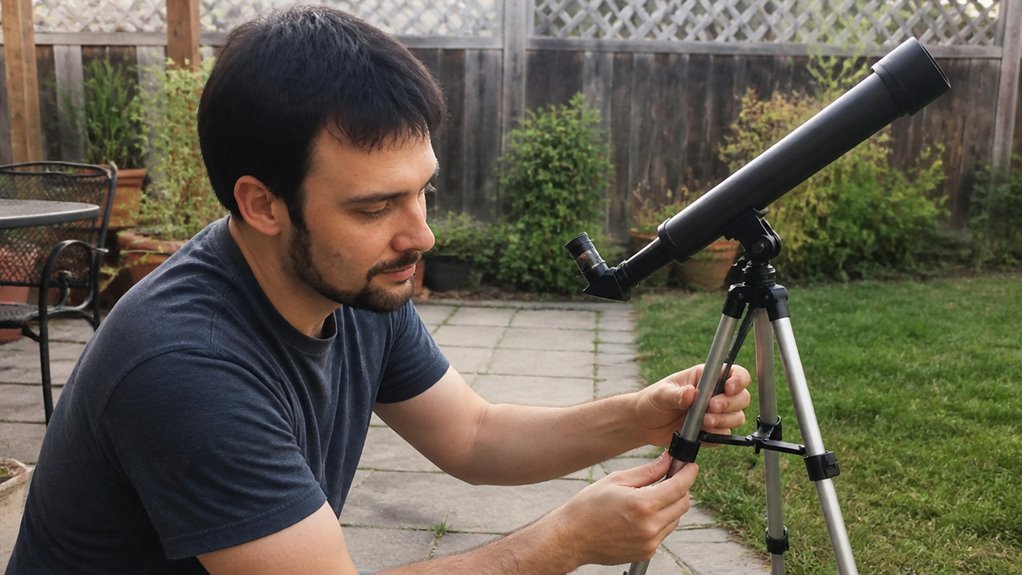
You don’t need a Hubble replica to hook your kid on the night sky. But you do need to balance five key factors before buying.
Aperture, the diameter of the main lens or mirror that gathers light, drives image brightness. Magnification range is often oversold, since most kids never use over 100x.
Then you have setup simplicity, durability and safety, plus portability for backyard or camping trips.
Let’s walk through each one. A wobbly tripod or a confusing focuser can crush enthusiasm faster than a cloudy Friday.
Aperture Size Matters
For kids’ telescopes, aperture size matters most. A 70mm front lens collects about 96% more light than a 50mm, so the Moon’s craters look crisp and Jupiter’s bands actually appear. In light-polluted backyards, that extra light gathering keeps faint targets visible, while smaller scopes give up quickly.
That said, bigger isn’t always better for small hands. A 50mm is lighter, but it can feel like squinting through a straw. You want something a child can carry easily, yet that still delivers a real view.
- 70mm: Bright, sharp, handles moonlight well.
- 50mm: Lighter, but you’ll likely regret the dimmer views.
I’ve tried both, and the extra inch of glass is worth the mild arm workout. Skip the toy scopes and go with a 70mm. Your kid will actually see something, and they won’t lose interest by minute three.
Magnification Range
Magnification causes more buyer’s remorse than any other spec. A box that brags “500x!” is a warning, not a promise. Magnification simply equals the telescope’s focal length divided by the eyepiece’s focal length, so changing eyepieces changes the power completely. For a typical 50mm aperture scope, the useful ceiling is around 100x, or roughly double the aperture in millimeters. Beyond that, you get a dim, blurry image.
Low magnification, 15x to 30x, gives a wide field of view. That makes it easy to locate the Moon or follow a satellite.
Higher magnification, 100x to 150x, reveals crater detail, but only with a stable tripod and steady air.
A Barlow lens doubles or triples magnification, but it reduces sharpness and brightness. Save it for bright targets like the Moon.
Skip the extreme numbers. A scope with a 25mm and a 10mm eyepiece covers the range you actually need.
Setup Simplicity
Setup Simplicity won’t win awards, but it decides whether the telescope becomes a dust collector by Tuesday. Choose a kit your kid can assemble without a meltdown.
Tool-free, quick-release systems often complete setup in under a minute. That’s faster than arguing over schoolwork.
Simple models keep it to three parts: tube, tripod, and two eyepieces. Nothing more.
Adjustable aluminum tripods extend to about 45 inches, fitting different heights. Altazimuth mounts move smoothly up, down, and sideways, so no polar alignment math is required.
Age-appropriate kits for ages 6 to 12 need zero batteries, tools, or prior astronomy knowledge. If setup takes longer than a snack break, you’ve lost them.
Pick something that clicks together fast and gets outside quickly. That’s the real win.
Durability and Safety
Why does durability outrank a bigger mirror? A smashed eyepiece shows nothing, no matter how shiny the lens. You are buying for a kid, not a lab.
Look for lightweight aluminum tubes; they tip less, so they hurt less. Tool-free assembly removes choking hazards from loose screws. A wide tripod base keeps things steady during excited pokes. Recessed eyepieces and enclosed optics protect small fingers from glass.
Metal or high-impact plastic joints survive drops without sharp shards. Expect to pay $80 to $150 for models that take a beating. Your rugrat will drop it; that is physics, and it is a trade-off you will gladly make.
A dented tube beats a broken skull. Prioritize toughness over magnification. You will thank him later when Jupiter is still in one piece.
Portability and Travel
Two things ruin a kid’s telescope faster than a dropped eyepiece: a trunk that won’t close and a kid who can’t lift the box. Choose a model under 10 pounds so they can carry it themselves on trips.
Look for these travel-friendly specs:
- A compact 300mm tube that fits in a standard backpack.
- Retractable legs that collapse to 20–25 inches for the trunk, yet extend to a comfortable height.
- Tool-free quick-release mounts, cutting setup to under three minutes.
- A wide leg stance to prevent tipping on gravel or grass, which helps when moving between driveway and backyard.
Your back will thank you. Prioritize weight and collapsed size, and you’ll actually get the stars out of the car.
Age Appropriateness
Match a telescope to a child’s age, not their shoe size. For ages 3 to 6, choose a low-magnification scope around 20X to 40X. It won’t reveal craters in detail, but it will let them find the Moon without frustration. Pick a model with tool-free assembly and a chunky, durable build, because drops are likely.
For ages 6 to 12, look for a 50mm to 70mm aperture. That’s the light-grabbing lens size, and it’s a practical sweet spot. It’s clear enough to show Saturn’s rings, yet light enough for a child to carry. Avoid magnification above 100X to 150X, since higher values produce wobbly, dim images. A computer-mounted scope suits ages 12 and up, but that’s a bigger step in complexity.
Younger kids need simple and sturdy, not powerful. Save finicky technology for teens.
Frequently Asked Questions
What Warranty Covers These Kid Telescopes?
Most kid telescopes carry a one-year warranty, though that coverage is not universal. Check the box and product literature, because some brands extend two years on parts and optics.
Register your telescope after purchase, but read the fine print first to see what actions might void coverage. Look for warranty terms that specify whether the mount, eyepieces, or finder scope are included separately.
A concrete tip is to save your receipt and original packaging until the warranty period ends. If a defect appears, contact the manufacturer directly rather than the retailer, and verify in the manual whether shipping costs are covered.
Can Kids See Saturn’s Rings With These?
Yes, kids can see Saturn’s rings with these scopes, even at just 50x magnification, where the rings appear as a clear, separate shape.
The iconic gap between the rings, known as the Cassini Division, becomes visible with steady viewing, though it will look tiny and sharp, not like a photo. For the best result, let the telescope cool to outside temperature for 30 minutes before observing, as this sharpens the image.
Aperture matters most: a 60mm refractor or 76mm reflector will show rings, but a 100mm scope reveals the gap more easily. Check your scope’s manual for its focal length and eyepiece combinations to reach that 50x magnification, and verify the mount is stable, as any shake blurs the view for young eyes.
How Do I Clean the Lenses Safely?
To clean the lenses safely, always start with a blower to remove loose dust, then apply one drop of lens cleaner to a microfiber cloth and wipe in gentle circles without pressure. Never use paper products, as they can scratch the optical coating, and always replace the caps when finished.
For stubborn spots, breathe lightly on the lens to add moisture before wiping, but verify your cleaner is safe for coated optics in the manufacturer’s manual.
Avoid pressing directly on the glass, and check that your microfiber cloth is lint-free to prevent streaks. If debris remains, repeat the blower step rather than increasing force.
Are Extra Eyepieces Needed for Planets?
Extra eyepieces are not needed for planets, since a single high quality 6mm eyepiece can deliver the magnification required for most planetary views. The key is that 90% of planetary detail depends on magnification, not the number of eyepieces you own.
Choose one sharp, well corrected eyepiece over a budget bundle, and you will see Jupiter’s bands clearly. For your specific telescope, check the manufacturer’s specifications to confirm the 6mm focal length gives a usable magnification within your scope’s limits.
That means verifying your telescope’s focal length and the eyepiece’s field of view against the manual. Keep your observation expectations realistic: a visual view will never match a processed photograph, so focus on steady seeing conditions rather than adding more glass.
Do These Work in Light-Polluted Backyards?
Yes, they work in light-polluted backyards, but you will see fewer stars than in dark skies. Light pollution washes out faint galaxies and nebulae, so manage your expectations and focus on the Moon, planets, and bright double stars.
Start with the Moon at any phase, then target Jupiter and Saturn; their brightness cuts through urban glow. For double stars, use a low magnification like 30x to split pairs such as Albireo, which shows color contrast even from a city.
If you use a telescope, check its aperture and focal length in the manual to know your true magnification limits. Camera images will reveal more than your eye sees, so do not expect a backyard view to match a long-exposure photo. A simple trick: shield your eyepiece with a dark cloth to block stray porch lights.
Rounding Up
Which telescope turns kids into mini astronomers? The answer is a sturdy, forgiving, and affordable scope near the $80 range. You can act today by checking that the optical tube and mount weigh enough to stay stable on a table. You should also verify the included eyepieces and adapter match your phone, not assume they fit. Stick to models under $30? No, that buys frustration in a box. The 70mm with a phone adapter handles adult and child tug-of-war over Jupiter’s moons without breaking. My experience says skip the toy category entirely. Look for moon craters first as a quick win. Finally, accept that the real goal is a shared hobby, not a future Carl Sagan.