Choosing your first telescope usually comes down to one question: which size and type will actually suit your backyard and viewing habits? This roundup compares 70mm, 80mm, 90mm, and 114mm models, plus a smart scope with a 4K camera, so you can weigh light-gathering power against portability and manual control.
We focus on what each scope delivers for moon, Saturn, and deep-sky views, and we flag the tradeoff you will face: no auto-tracking, so expect some manual nudging.
Check the specs and prices below to match the right telescope to your needs.
How We Tested
Specifications matter most when comparing telescopes for adults, since aperture size directly controls how much light the scope collects and therefore image brightness. Shoppers can check whether an 80mm to 130mm aperture suits their goal of sharp lunar and planetary views, and confirm multi coated optics are listed to reduce glare. Larger reflectors in the 114mm to 130mm range are documented as better for faint galaxies, while refractors excel on bright targets, so readers can weigh these trade offs themselves.
Value depends on what is included versus what must be purchased separately, based on documented differences. A telescope that comes with multiple eyepieces or a finder scope offers more immediate usability than one requiring additional accessories, and manual mounts with no tracking mean buyers should factor in the effort of frequent repositioning. Comparing the supplied features against your observing preferences lets you determine which package fits your budget without assuming any price advantage.
Editorial judgment should focus on documented capabilities rather than claimed testing, since the source does not confirm firsthand observation or assembly. Readers can use the listed magnification range, such as up to 240x on a 90mm model, to anticipate that high power may soften detail and thus prioritize aperture or optical coatings instead. For this astronomy roundup, choose based on whether you favor bright planets, deep sky objects, or ease of manual aiming, and let the stated specifications guide your final selection.
| Koolpte 80mm AZ Refractor for Adults and Beginners |  | Reliable All-Rounder | Aperture: 80mm | Magnification: 24X–180X (via 3x Barlow) | Mount/Tripod: AZ mount with adjustable aluminum tripod | SEARCH BEST PRICE | Read Our Analysis |
| Smart Telescope Auto-focus 4K Astrophotography Camera Dual Screens |  | Tech-Savvy Choice | Aperture: 80mm | Magnification: Up to 350X | Mount/Tripod: Self-contained (no external mount specified) | SEARCH BEST PRICE | Read Our Analysis |
| 70mm Refracting Telescope for Kids and Adults | 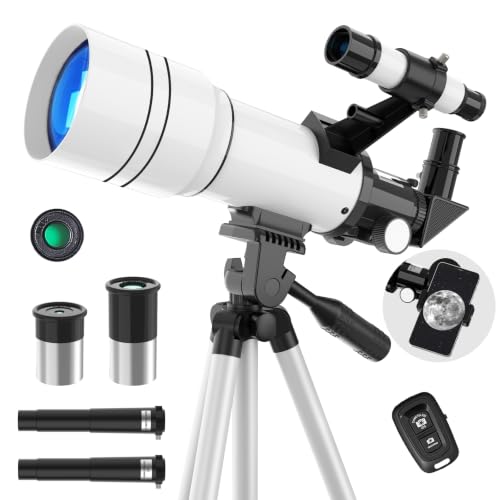 | Family Friendly | Aperture: 70mm | Magnification: 15X–150X (via 3x Barlow) | Mount/Tripod: Adjustable tripod with horizontal/vertical tracking | SEARCH BEST PRICE | Read Our Analysis |
| 70mm Refractor Travel Telescope for Beginners |  | Entry-Level Option | Aperture: 70mm | Magnification: 20X–32X | Mount/Tripod: AZ mount with aluminum tripod (12–38 in) | SEARCH BEST PRICE | Read Our Analysis |
| Dianfan 90mm 800mm Astronomy Telescope for Beginners |  | High Magnification | Aperture: 90mm | Magnification: 32X–240X (via 3x Barlow) | Mount/Tripod: Stainless steel tripod | SEARCH BEST PRICE | Read Our Analysis |
| Celestron StarSense Explorer Smartphone Guided Portable Reflector Telescope | 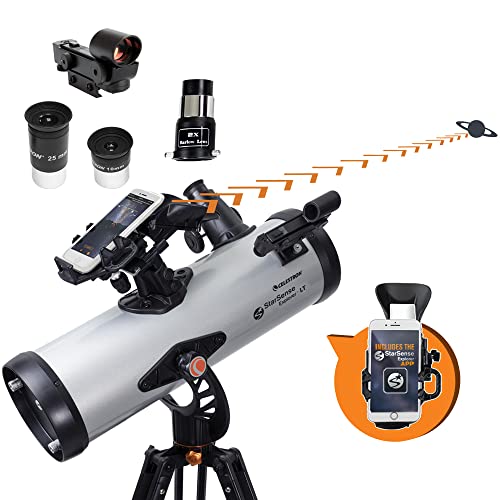 | Smartphone Guided | Aperture: 114mm (4.5″) | Magnification: Not specified (multiple eyepiece capability) | Mount/Tripod: Manual altazimuth mount | SEARCH BEST PRICE | Read Our Analysis |
| 80mm Refractor Telescope for Adults & Beginners |  | Precision Aiming | Aperture: 80mm | Magnification: 30X–66X | Mount/Tripod: Gimbal mount with altitude/azimuth scale | SEARCH BEST PRICE | Read Our Analysis |
| 70mm Refractor Telescope for Beginners with Phone Adapter |  | Lightweight Explorer | Aperture: 70mm | Magnification: 15X–150X (via 3x Barlow) | Mount/Tripod: Sturdy tripod | SEARCH BEST PRICE | Read Our Analysis |
| Koolpte 80mm AZ Refractor for Adults and Beginners |  | Best Value | Aperture: 80mm | Magnification: 24X–180X (via 3x Barlow) | Mount/Tripod: AZ mount with adjustable aluminum tripod | SEARCH BEST PRICE | Read Our Analysis |
| Celestron AstroMaster 130EQ Telescope for Beginners |  | Serious Stargazer | Aperture: 130mm (5″) | Magnification: Not specified (20mm & 10mm eyepieces) | Mount/Tripod: German equatorial mount with slow-motion knobs | SEARCH BEST PRICE | Read Our Analysis |
| Celticbird Portable 80mm Refractor Telescope for Beginners |  | Compact Traveler | Aperture: 80mm | Magnification: 30X–66X | Mount/Tripod: Adjustable aluminum tripod (17.7–52 in) | SEARCH BEST PRICE | Read Our Analysis |
| Gskyer 70mm AZ Refracting Telescope for Beginners |  | Classic Starter | Aperture: 70mm | Magnification: Up to ~120X (via 3x Barlow) | Mount/Tripod: Adjustable aluminum alloy tripod | SEARCH BEST PRICE | Read Our Analysis |
| 70mm Refractor Telescope for Beginners with Phone Adapter |  | Budget-Friendly | Aperture: 70mm | Magnification: 15X–150X (via 3x Barlow) | Mount/Tripod: Sturdy tripod | SEARCH BEST PRICE | Read Our Analysis |
| National Geographic Sky View 70mm Refractor Telescope | 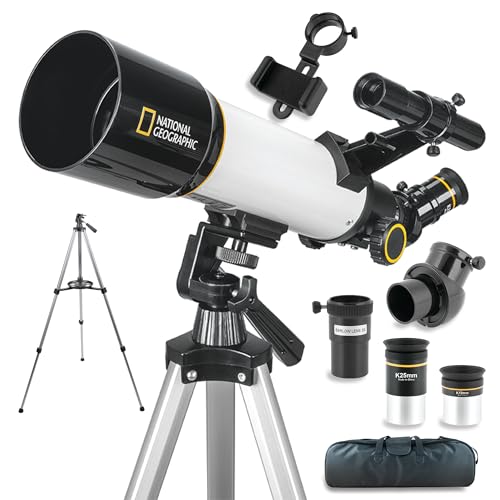 | Brand Trusted | Aperture: 70mm | Magnification: 16X–120X (via 3x Barlow) | Mount/Tripod: Panhandle mount with adjustable tripod and accessory tray | SEARCH BEST PRICE | Read Our Analysis |
| MEEZAA Telescope 90mm Aperture 800mm for Astronomy Beginners |  | Solid All-Purpose | Aperture: 90mm | Magnification: 32X–240X (via 3x Barlow) | Mount/Tripod: Adjustable stainless steel tripod (28–46 in) | SEARCH BEST PRICE | Read Our Analysis |
More Details on Our Top Picks
Koolpte 80mm AZ Refractor for Adults and Beginners
The Koolpte 80mm AZ Refractor is a grab-and-go telescope that delivers clear moon views without demanding any technical skill. It suits beginners and casual backyard stargazers who want a quick, tool-free setup.
Best for: A beginner or hobbyist who wants a simple backyard setup. This refractor suits anyone who prioritizes quick pointing over deep-sky hunting.Biggest strength: The tool-free assembly gets you observing in minutes. With an 80mm aperture and multi-coated lenses, you get crisp views of the moon and bright planets right away.Not ideal if: You expect research-grade imaging or faint galaxy detail. This is a visual instrument for bright targets, not a camera platform, and it lacks tracking.How it compares: It trades magnification range for simplicity, offering 24x and 60x eyepieces plus a 3x Barlow for up to 180x. That is enough for crater hopping, but it will not rival larger aperture scopes on faint deep-sky objects.- Aperture:80mm
- Magnification:24X–180X (via 3x Barlow)
- Mount/Tripod:AZ mount with adjustable aluminum tripod
- Target User:Adults and beginners
- Portability:Carrying bag; adjustable tripod
- Observing Targets:Moon, celestial objects, terrestrial views
- Additional Feature:Lifetime maintenance guarantee
- Additional Feature:Wireless remote included
- Additional Feature:Tool-free assembly
Smart Telescope Auto-focus 4K Astrophotography Camera Dual Screens
This smart telescope pairs an 80mm aperture with a starlight-grade sensor to deliver 4K video and 30MP stills for gadget-loving beginners. It targets users who want clear lunar views and quick sharing without learning a manual mount.
Best for: A beginner who wants a compact, app-driven scope for backyard stargazing and instant social media posts. The 4500mAh battery supports six hours of use, and the box-to-use setup in minutes suits first-time buyers.Biggest strength: The dual screens let you switch between a diopter-adjusted eyepiece and a foldable external display, both under a sunshade. This gives you a direct visual check and a live camera feed without adding extra gear.Not ideal if: You expect a GoTo mount or automated tracking, because the text only mentions manual control via app or remote. The 85 foot remote range limits placement, and you should verify the mount type and payload before buying for heavier accessories.How it compares: This is a grab and go imaging scope, not a deep sky tracker, so it fits between a basic refractor and a fully automated astrograph. The 80mm aperture and 4K camera suit lunar detail and bright targets, while the auto shut off options extend battery life for longer sessions.- Aperture:80mm
- Magnification:Up to 350X
- Mount/Tripod:Self-contained (no external mount specified)
- Target User:Beginners, adults, astronomy/nature enthusiasts
- Portability:Battery-powered (6 hrs); self-contained design
- Observing Targets:Moon, deep-space objects, long-distance photography, birdwatching
- Additional Feature:Dual screen viewing
- Additional Feature:6-hour battery life
- Additional Feature:512GB external memory
70mm Refracting Telescope for Kids and Adults
This 70mm refractor pairs a fully multi-coated objective with a 300mm focal length to give families a grab-and-go first scope for moon and planet views. It bundles eyepieces, a Barlow lens, a finderscope, a phone holder, and a wireless remote in one box for quick backyard setup.
Best for: Beginners and families who want a lightweight scope for balcony or backyard use without a learning curve. The tool-free tripod and included phone remote get you looking at lunar craters within minutes.Biggest strength: Its portability, since a 70mm aperture and 45-inch tripod are easy to carry out for a quick session. The low price also comes with spare-part support if anything goes missing.Not ideal if: You expect sharp views of faint deep-sky objects, because the short 300mm focal length favors bright targets like the moon and Jupiter. The 5×24 finderscope and 150x maximum magnification are enough for those bright objects, though detail will soften at the top end.How it compares: Unlike heavier or taller refractors that need a sturdier mount, this model prioritizes fast setup and easy transport, so it fits between a toy scope and a serious instrument. The included phone holder and remote keep camera work simple, but imaging is limited to snapshots, not long exposures, because the mount has no tracking.- Aperture:70mm
- Magnification:15X–150X (via 3x Barlow)
- Mount/Tripod:Adjustable tripod with horizontal/vertical tracking
- Target User:Kids (8–12) and adults
- Portability:Lightweight portable design
- Observing Targets:Moon craters, Jupiter, Saturn, landscapes
- Additional Feature:45-inch max height
- Additional Feature:Tool-free assembly
- Additional Feature:Glare-reducing optics
70mm Refractor Travel Telescope for Beginners
The 70mm Refractor Travel Telescope is a grab-and-go refractor for adults new to astronomy, delivering clear lunar and terrestrial views without the cost or complexity of larger instruments. Its short tube and tool-free tripod make it a convenient first scope for backyard sessions and travel alike.
Best for: Beginners wanting a low-cost, portable refractor for quick looks at the Moon and landscapes. The 400mm focal length keeps the tube short, so it fits easily in a car trunk or carry bag.Biggest strength: The 70mm aperture pulls in enough light for crisp views at low power, while the AZ mount and adjustable tripod set up in minutes with no tools. That ease of use means you spend more time observing and less time fiddling.Not ideal if: You expect high magnification for planets, because the two included eyepieces top out at 32x, which is modest for detail on small targets. The mount has no motor or tracking, so manual nudging is needed to keep objects centered at any power.How it compares: This scope favors portability and simplicity over aperture or power, fitting a niche for casual, on-the-go use rather than deep-sky observation. It ships with two eyepieces, a phone adapter, and a tripod that extends from 12 to 38 inches, so the kit is complete for basic visual work but leaves room to grow if you add eyepieces later.- Aperture:70mm
- Magnification:20X–32X
- Mount/Tripod:AZ mount with aluminum tripod (12–38 in)
- Target User:Beginners and children
- Portability:Travel-oriented; compact aluminum tripod
- Observing Targets:Moon, landscapes
- Additional Feature:Crosshair finderscope
- Additional Feature:Tool-free installation
- Additional Feature:12-38 inch tripod range
Dianfan 90mm 800mm Astronomy Telescope for Beginners
The Dianfan 90mm 800mm Astronomy Telescope pairs a generous 90mm aperture with an 800mm focal length for a beginner seeking clear lunar and terrestrial views. It bundles two eyepieces, a 3× Barlow lens, and a carry bag, delivering a versatile 32× to 240× magnification range right out of the box.
Best for: A curious newcomer who wants a grab-and-go scope for moon craters and daytime cityscapes. The 90mm aperture and included kit cover casual stargazing without a learning curve.Biggest strength: The 45° mirror delivers correctly oriented, sharp views for both sky and land. Its 15-minute assembly and lightweight stainless steel legs make setup quick and stable.Not ideal if: You need a GoTo mount or motorized tracking for long-exposure imaging, since this scope lacks both. It also has no Barlow or eyepiece focal lengths listed, so verify those specs before buying.How it compares: This pick fits as a no-fuss alt-azimuth refractor, not a computerized or tracking instrument. It stands out for portability with its carry bag, whereas motorized or imaging scopes trade that for power needs and heavier mounts.- Aperture:90mm
- Magnification:32X–240X (via 3x Barlow)
- Mount/Tripod:Stainless steel tripod
- Target User:Adults and beginners
- Portability:Carry bag; lightweight build
- Observing Targets:Moon craters/seas, distant terrain, wildlife, cityscapes
- Additional Feature:Upright zenith mirror views
- Additional Feature:15-minute assembly time
- Additional Feature:Stainless steel tripod
Celestron StarSense Explorer Smartphone Guided Portable Reflector Telescope
Best for: A tech-savvy beginner who wants to skip star charts and find targets fast. The included smartphone dock and StarSense app turn your phone into a guide, so you learn the sky while the scope does the pointing.Biggest strength: Patented StarSense tech analyzes overhead star patterns and builds a curated target list from your location. You follow arrows on the app, and the bullseye turns green when centered, so you spend time observing rather than searching.Not ideal if: You expect motorized tracking or GoTo capability, since this altazimuth mount is manual with slow-motion rods. The app guides you to targets, but you must nudge the scope yourself, and imaging beyond short smartphone shots is not supported.How it compares: This is a guided manual scope rather than a GoTo model, trading motorized slewing for a lower price and lighter weight. The 114mm reflector with its 1000mm focal length delivers sharper views of the Moon, Jupiter, Saturn, and the Orion Nebula than smaller tabletop scopes, while remaining compact and portable.- Aperture:114mm (4.5″)
- Magnification:Not specified (multiple eyepiece capability)
- Mount/Tripod:Manual altazimuth mount
- Target User:Beginners (no experience needed)
- Portability:Compact, portable design
- Observing Targets:Moon, Jupiter, Saturn, Orion Nebula, Andromeda Galaxy
- Additional Feature:Patented sky recognition tech
- Additional Feature:App-guided target finding
- Additional Feature:2-year US warranty
80mm Refractor Telescope for Adults & Beginners
This 80mm refractor is a portable grab-and-go telescope for first-time stargazers and families. It pairs a bright, clear optical tube with a simple manual mount that packs into a backpack.
Best for: Beginners, kids aged eight to twelve, or anyone needing a lightweight scope for quick lunar views or birdwatching. Its short tube and included tripod fit in a backpack, so it suits travel to dark sites without a car.Biggest strength: The 80mm aperture with a 600mm focal length and green coated glass delivers bright, sharp views of the Moon and planets. Its rough adjustment gimbal gives simple up-down and left-right control, removing the need to polar align.Not ideal if: You need tracking or GoTo features, since this mount is manual only and you reposition by hand. Long exposure astrophotography is also out, as there is no motor drive and the included phone adapter is for quick snaps through the eyepiece.How it compares: As a starter refractor, it prioritizes ease of setup and portability over aperture or automated locating. It comes with K20 and K9 eyepieces for 30x to 66x power, plus a 5×24 finder with crosshair, so the kit covers lunar observing right out of the box.- Aperture:80mm
- Magnification:30X–66X
- Mount/Tripod:Gimbal mount with altitude/azimuth scale
- Target User:Astronomy beginners and kids (8–12)
- Portability:Carrying backpack; adjustable tripod
- Observing Targets:Moon, planets, birds, landscapes
- Additional Feature:Gimbal with positioning scale
- Additional Feature:Video assembly instructions
- Additional Feature:Customized phone adapter
70mm Refractor Telescope for Beginners with Phone Adapter
This 70mm refractor telescope pairs a 300mm focal length with multi-coated glass optics in a lightweight, tool-free package, making it a straightforward entry point for first-time stargazers. It includes two eyepieces, a 3X Barlow lens, a phone adapter, and a wireless remote to capture the moon and bright planets without prior astronomy experience.
Best for: Total beginners, including kids and adults, who want a grab-and-go scope for casual moon and planet views. Its 70mm aperture and 300mm focal length suit quick backyard sessions aimed at lunar craters and the brightest planets.Biggest strength: Tool-free assembly and a fully multi-coated 70mm objective deliver bright, high-contrast lunar views in under five minutes. The included phone adapter and wireless remote let you capture those views with a smartphone, though results will vary with camera quality.Not ideal if: You expect faint deep-sky objects like nebulae or galaxies, since the short focal length and 70mm aperture limit light grasp. There is no motorized tracking, so high-power viewing above 150X will require frequent manual adjustment as objects drift.How it compares: This refractor offers a simpler setup than most equatorially mounted scopes of similar size, making it more approachable for children or first-time users. Its 15X–150X range covers low-power scanning and high-power planetary views, but it lacks the aperture needed for serious astrophotography beyond bright targets.- Aperture:70mm
- Magnification:15X–150X (via 3x Barlow)
- Mount/Tripod:Sturdy tripod
- Target User:Kids, beginners, adults
- Portability:Ultra-lightweight; camping/road-trip ready
- Observing Targets:Moon craters, lunar eclipses, Jupiter, Saturn, wildlife, mountains
- Additional Feature:Includes star chart
- Additional Feature:FMC optical glass
- Additional Feature:Color gift box
Koolpte 80mm AZ Refractor for Adults and Beginners
The Koolpte 80mm AZ refractor is a beginner-friendly telescope that pairs a solid optical tube with a simple, stable mount. It gives new users a direct path to lunar observation without demanding any assembly know-how.
Best for: A first telescope buyer who wants a grab-and-go setup for the Moon and bright planets. This kit suits a beginner who values quick setup over deep-sky reach.Biggest strength: Tool-free assembly gets you observing within minutes, which lowers the hurdle for a novice. The 80mm aperture with multi-coated lenses also pulls in crisp lunar detail at moderate power.Not ideal if: You expect deep-sky imaging or faint nebula views, because the aperture and manual mount limit those targets. Confirm the tripod height and stability suit your observing spot before buying.How it compares: This refractor sits at the entry point of the hobby, where a simple alt-azimuth mount and two eyepieces cover the basics. It includes a phone adapter and remote for casual lunar snapshots, but it lacks a motor drive or GoTo for tracking.- Aperture:80mm
- Magnification:24X–180X (via 3x Barlow)
- Mount/Tripod:AZ mount with adjustable aluminum tripod
- Target User:Adults and beginners
- Portability:Carrying bag; adjustable tripod
- Observing Targets:Terrestrial and celestial objects
- Additional Feature:Lifetime maintenance commitment
- Additional Feature:Hands-free remote capture
- Additional Feature:Fully adjustable tripod
Celestron AstroMaster 130EQ Telescope for Beginners
Best for: This telescope suits a newcomer who wants a serious reflector on a tight budget. The 130mm mirror gives bright views of the Moon, Jupiter, and faint galaxies without a premium price.Biggest strength: The German equatorial mount uses two slow motion knobs for steady aiming. That design keeps tracking smooth, so you spend more time looking and less time fussing.Not ideal if: The mount is not motorized, so you must turn the knobs by hand to follow objects. No GoTo or tracking drive is included, and camera work is not supported by this setup.How it compares: As a Newtonian reflector on an equatorial mount, it offers more aperture per dollar than a simple alt az scope. The two eyepieces at 20mm and 10mm plus a red dot finder cover low and high power, and assembly needs no tools.- Aperture:130mm (5″)
- Magnification:Not specified (20mm & 10mm eyepieces)
- Mount/Tripod:German equatorial mount with slow-motion knobs
- Target User:Beginners
- Portability:Minimal parts; sturdy tripod
- Observing Targets:Moon, planets, deep-sky objects
- Additional Feature:German equatorial mount
- Additional Feature:Slow-motion control knobs
- Additional Feature:Free astronomy software
Celticbird Portable 80mm Refractor Telescope for Beginners
The Celticbird Portable 80mm Refractor Telescope assembles a complete starter kit for casual stargazing. It pairs a compact refractor with a stable tripod for easy travel and quick setup.
Best for: A beginner or family wanting a grab-and-go scope that fits in a small car. The 17.7 to 52 inch tripod height adjusts to both kids and adults without tools.Biggest strength: Tool-free assembly saves time at a dark site. Its 600mm focal length on an 80mm aperture delivers enough reach to see Saturn’s rings and Jupiter’s bands clearly at 66X.Not ideal if: You expect motorized tracking or GoTo object finding, since this is a manual alt-azimuth mount only. The two included eyepieces fixed at 30X and 66X limit magnification range without buying extra lenses.How it compares: As a refractor kit, it skips the collimation hassle of reflector scopes, so you spend time viewing rather than aligning mirrors. Its aluminum tripod and included phone adapter make it a practical first scope for lunar snapshots, not long-exposure astrophotography.- Aperture:80mm
- Magnification:30X–66X
- Mount/Tripod:Adjustable aluminum tripod (17.7–52 in)
- Target User:Beginners, kids (8–12), adults
- Portability:Backpack included; tripod range 17.7–52 in
- Observing Targets:Moon, Saturn, Jupiter
- Additional Feature:Moon filter included
- Additional Feature:3-year satisfaction service
- Additional Feature:17.7-52 inch tripod range
Gskyer 70mm AZ Refracting Telescope for Beginners
Best for: Adult beginners who want a ready package for moon and bright cluster views tonight. This refractor suits a first backyard setup where quick assembly and forgiving optics matter more than precision.Biggest strength: The 70mm aperture with fully coated optics gives sharp, comfortable views of the moon without eye strain. Its short 400mm focal length at f/5.7 provides a wide field for scanning craters or the Pleiades as one framed view.Not ideal if: You need a precision instrument for high power or faint deep sky objects, because the 5×24 finder scope is finicky to align and the mount lacks tracking. Also verify the tripod’s stability on uneven ground before relying on it for long exposures.How it compares: This is a casual grab and go refractor rather than a research tool, so it trades ultimate sharpness for ease and portability. The included 3x Barlow lens triples each eyepiece’s magnification, letting you switch power levels without extra purchases, but the visual result depends on steady hands and a level tripod.- Aperture:70mm
- Magnification:Up to ~120X (via 3x Barlow)
- Mount/Tripod:Adjustable aluminum alloy tripod
- Target User:Kids and beginners
- Portability:Carry bag fits telescope and tripod
- Observing Targets:Astronomical targets (moon, planets)
- Additional Feature:3x Barlow lens included
- Additional Feature:Wireless camera remote
- Additional Feature:Cross-hair finder scope
70mm Refractor Telescope for Beginners with Phone Adapter
This 70mm refractor telescope package pairs a stable tripod with a phone adapter for entry-level lunar and planetary viewing. Its tool-free setup and fully multi-coated optics get beginners to crisp targets quickly.
Best for: First-time buyers on a budget who want a grab-and-go kit for Moon and Saturn views. The included phone adapter and remote turn those views into shareable photos without extra purchases.Biggest strength: Fully multi-coated optics reduce glare, so you see lunar craters and Saturn’s rings as distinct shapes, not a blur. A 5×24 finder scope speeds up target acquisition, cutting the usual fumbling time.Not ideal if: You need deep-sky imaging or automated tracking, since this is a manual alt-azimuth mount with no motor. Magnification tops out at 150x, which will struggle with small, faint objects like distant galaxies.How it compares: As a starter refractor, its 70mm aperture is a common entry point, but the bundled phone adapter and gift box add value. The tripod’s steady hold prevents shake, which is a frequent complaint at this price level, giving it an edge over bare tube-and-tripod sets.- Aperture:70mm
- Magnification:15X–150X (via 3x Barlow)
- Mount/Tripod:Sturdy tripod
- Target User:Kids, adults, beginners
- Portability:Gift box for carrying/storage
- Observing Targets:Lunar craters, Saturn’s rings, nature
- Additional Feature:1.5X erecting eyepiece
- Additional Feature:Exquisite gift box
- Additional Feature:Lifetime maintenance
National Geographic Sky View 70mm Refractor Telescope
The National Geographic Sky View 70mm is a first refractor, built to deliver clear views of the Moon and bright planets for a beginner. It combines a 70mm aperture with a 400mm focal length inside a portable package that suits a starting astronomer.
Best for: A beginner wanting a straightforward first telescope for casual backyard sessions. Its panhandle mount moves by hand and stays put, so you can learn the sky without electronics. The included tray holds eyepieces, keeping your setup tidy.Biggest strength: The 70mm aperture gathers enough light to reveal Moon craters and Jupiter’s bands. This refractor holds steady on its mount, so high magnifications stay usable instead of shaking the view.Not ideal if: You expect sharp images at the top magnification, since 120x pushes this scope near its limit. The straight-through viewfinder requires you to bend your neck, and it is fiddly to align on first use.How it compares: It stands out among entry-level refractors because Explore Scientific builds it with real support behind the brand. The kit adds a smartphone adapter for snapshots, but treat those as casual records, not astrophotography results.- Aperture:70mm
- Magnification:16X–120X (via 3x Barlow)
- Mount/Tripod:Panhandle mount with adjustable tripod and accessory tray
- Target User:General beginner audience (National Geographic brand)
- Portability:Adjustable tripod (portable by design)
- Observing Targets:Moon, planets, nebulae, star clusters
- Additional Feature:Accessory tray included
- Additional Feature:Panhandle mount control
- Additional Feature:Diagonal eyepiece holder
MEEZAA Telescope 90mm Aperture 800mm for Astronomy Beginners
The MEEZAA 90mm is a refractor telescope built for beginners who want a straightforward introduction to backyard astronomy. It pairs a 90mm aperture with an 800mm focal length to deliver bright lunar and planetary views without complex setup.
Best for: A first-time buyer who wants a complete, portable kit for casual moon and planet viewing from a home backyard. The included carry bag and tool-free assembly suit someone who wants to observe within minutes of opening the box.Biggest strength: The fully multi-coated 90mm objective lens boosts light transmission, making faint star fields and crater detail visible at 32X through the 25mm eyepiece. The adjustable stainless steel tripod keeps the tube steady on uneven grass or gravel, reducing vibration during high magnification.Not ideal if: You expect to photograph deep sky objects, because the included phone adapter captures only quick snaps and the f/8.88 focal ratio limits exposure speed. The mount is manual with no tracking, so long exposure imaging will blur stars; planetary photos through a phone will show modest detail.How it compares: This pick fits between a toy scope and a computerized model because it offers a 240X top magnification through the 10mm eyepiece and 3X Barlow, yet skips GoTo and tracking entirely. The paper manual and under ten minute assembly time make it easier to start than a kit that requires phone app setup or collimation.- Aperture:90mm
- Magnification:32X–240X (via 3x Barlow)
- Mount/Tripod:Adjustable stainless steel tripod (28–46 in)
- Target User:Adult beginners and astronomy enthusiasts
- Portability:Carry bag; suited for camping/star parties
- Observing Targets:Moon, nature, broad universe exploration
- Additional Feature:28-46 inch tripod height
- Additional Feature:10-minute average assembly
- Additional Feature:Stainless steel tripod
Factors to Consider When Choosing Telescopes for Adults
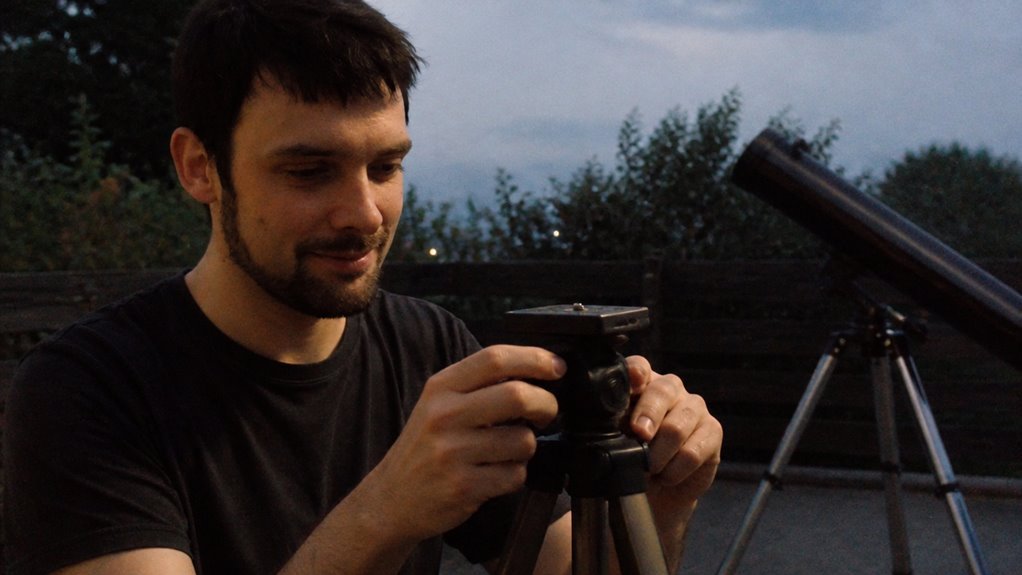
Choose a telescope that fits your real life, not one that just looks impressive. Start with aperture, since that controls how much light the scope collects. Focal length and eyepieces matter too, but ignore the magnification number printed on the box. A high power rating means little if the mount wobbles, and a shaky tripod will blur every target into a mess.
You also need to think about setup and storage. If assembly takes two hours or the tube will not fit in your trunk, you will likely leave it at home. That makes the whole purchase a waste of money. Pick something you can carry outside and start using within minutes.
Aperture and Focal Length
Aperture size, the diameter of the main lens or mirror, is the most important spec in a telescope. More aperture means more light, and the light-gathering area grows with the square of the diameter. An 80mm scope collects about 30% more photons than a 70mm one, which matters for faint galaxies.
Focal length sets your magnification ceiling. An 800mm scope reaches higher power with the same eyepiece than a 300mm one. Divide focal length by aperture to get the focal ratio.
A low focal ratio like f/4 gives wide fields for deep-sky views. A high one like f/10 offers sharper planetary contrast. For a fixed aperture, a longer focal length narrows your field of view.
Choose aperture first, then match focal length to what you enjoy observing. A larger aperture with moderate focal length offers the most versatility.
Magnification and Eyepieces
Magnification gets quoted most often, but it matters least in a telescope. You want real views, not bragging rights. Useful power tops out around 2 to 3 times your aperture in millimeters. A 70mm scope hits its sweet spot near 140x. Beyond that, you are just magnifying blur.
Change power by swapping eyepieces. Divide your scope’s focal length by the eyepiece’s focal length. A 600mm scope with a 25mm eyepiece gives 24x. Want more? A Barlow lens multiplies that without buying new glass. Use low power, around 20 to 30x, to find targets. Then crank to 100 to 150x for lunar craters.
Max useful magnification is about 50x per inch of aperture. High power narrows your field of view and needs steady hands.
Grab a 25mm eyepiece, a 10mm, and a 2x Barlow. You will cover everything worth seeing.
Mount and Tripod Stability
The mount and tripod form the real backbone of any telescope setup, even though they often get overlooked. A stable mount kills vibration, which is non-negotiable for high magnification. At 200x, a slight breeze can turn Jupiter into a blur if your support system wobbles.
Choose an equatorial mount for smooth tracking. It compensates for Earth’s spin, but expect extra weight and alignment hassle. Alt-azimuth is simpler, though less precise for long-duration observing.
Pick a tripod with wide legs and a central tray. This lowers the center of gravity, cutting wobble on uneven grass. Steel beats aluminum for damping; it settles faster after you bump it.
Confirm your mount’s load capacity exceeds your scope’s weight by 15%. Otherwise, you’ll strain the slow-motion knobs and introduce play in the tracking.
A wobbly mount ruins every view, so don’t cheap out here. Invest in stability first, and your optics will perform to their potential.
Assembly and Setup Ease
If a telescope needs a mechanical engineering degree just to stand up, you will quit before the first star appears. Choose a kit with tool-free assembly. Most beginner refractors deliver this: click the tube onto the mount, snap the tripod legs, and you are done in five minutes. No screwdrivers, no frustration.
Aluminum tripods with leg-angle locks adjust from 12 to 52 inches, so you can sit or stand comfortably, even on uneven grass.
The finderscope needs a quick daylight alignment. That is a two- to three-minute tweak, not a major task.
Alt-azimuth slow-motion knobs fine-tune aiming without loosening anything. They are smooth and forgiving.
Pictorial manuals with step counts get you fully set up, eyepiece and leveling included, in about 15 minutes. Pick a kit you can assemble before your coffee cools.
Portability and Travel Readiness
Two numbers matter most when you haul a telescope to a dark-sky site: total weight and collapsed length. Under ten pounds with a carrying bag means you will actually bring it. Under twenty inches collapsed, it fits airline overhead bins or car trunks without a struggle.
Choose a sealed refractor over an open-tube reflector. Sealed tubes stay clean and aligned through bumps, dust, and dew. Look for tripods that extend from twelve to fifty-two inches, which handle uneven terrain without drama. Quick, tool-free assembly under five minutes separates a fast session from a frustrating one.
You will appreciate gear that survives travel. Keep it simple, keep it light.
For travel, grab something under ten pounds, under twenty inches, and sealed. Your back will thank you.
Smartphone Photography Support
Once you’ve set up the telescope, the next step is pointing your phone at the bright circle of light in the eyepiece. Most beginner scopes include a universal phone adapter that clamps your device directly over the eyepiece, aligning the camera lens with that exit pupil.
Use a wireless remote shutter release to prevent shake. At 150X, even your pulse can blur the image.
Check that the adapter fits both your eyepiece diameters (often 20mm and 6mm) and your phone’s width. A loose fit causes vignetting, leaving you with a dark, unusable frame.
Know your scope’s focal ratio before shooting. An f/6.7 system captures light faster than f/8.9, which helps you avoid star trails without a motorized mount.
Stay at low magnification, 15X to 30X, for brighter, easier focusing. Your phone’s small sensor cannot fix blur on its own.
With a secure adapter and a remote release, you’ll get steady shots worth sharing, and your phone will stay put.
Optical Coatings and Clarity
Two telescopes can have the same aperture, yet one shows sharp craters while the other leaves you squinting. The difference is usually optical coatings. Uncoated glass reflects about 4% of light per surface, so you lose photons before they reach your eye. A single anti-reflective coating drops that to 1.5%. Fully multi-coated (FMC) lenses reflect under 0.5%, which can give a typical refractor a 10–15% boost in light throughput.
- Look for “FMC” on the spec sheet instead of judging by lens color.
- Green or blue hue does not matter; the number of layers does.
- Coat every air-to-glass surface for better deep-sky contrast.
Check the layer count, not the marketing. Brighter, cleaner views come from more coated surfaces, not from lens tint.
Don’t buy a scope without multi-coatings. Your night sky will thank you.
Warranty and Technical Support
A stripped focuser gear can turn a great telescope into a paperweight on night two. Check the warranty before you hand over cash. Most adult-first scopes cover manufacturing defects for two years, and some brands promise lifetime maintenance on the tube itself. That is your safety net.
Look for 24-hour response times from in-house experts, not chatbots. They will handle missing screws, shipping dings, and that stubborn collimation issue you will inevitably face.
- Two-year free repair or replacement? Good.
- Lifetime support on optics? Better.
- Complex mounts and electronics? You will need a human on line.
Don’t settle for vague promises. A solid warranty won’t make you an astronomer, but it’ll keep your gear pointing. Pick a brand that answers.
Frequently Asked Questions
How Often Should I Collimate My Reflector Telescope?
Check collimation before every session, but only adjust when star images appear asymmetric, which is typically every few uses if you do not transport the telescope. Transport or rough handling can knock the mirrors out of alignment, so recheck sooner after moving the scope.
Trust your eyes at the eyepiece rather than obsessing over perfect alignment. A quick star test with a high power eyepiece reveals asymmetry in the diffraction pattern, and that is your cue to adjust.
If you use a laser collimator, verify its own alignment first by rotating it in the focuser, because a misaligned tool causes you to chase errors. For detailed procedures, consult your telescope’s manual or collimation guide for your specific aperture and focal ratio.
What Is the Best Way to Reduce Light Pollution for Viewing?
The best way to reduce light pollution for viewing is to escape city glow by driving to a site rated Bortle 3 or darker. This move beats any filter, as it allows you to see faint nebulas and galaxies with clarity.
To find such a location tonight, use a dark sky map or app to identify a spot at least 30 to 60 minutes from urban centers. Check the weather and moon phase, as a bright moon can ruin dark sky conditions even at a remote site.
For equipment, ensure your telescope’s aperture is matched to your observing goals, since larger apertures gather more light but require stable mounting. Verify your mount’s payload capacity in the manufacturer’s specifications to avoid vibration issues. Visual observation will show grayish smudges, not colorful photographs, so set your expectations accordingly.
Do I Need a Moon Filter for Lunar Observation?
A moon filter is not required for lunar observation, but it is a worthwhile accessory. Unfiltered, the full moon’s intense glare can wash out surface contrast and cause eye strain. You do not need a filter, but you will want one once you see the difference.
Try viewing without a filter first at low magnification to judge the brightness. If the image feels harsh, attach a neutral density or polarizing filter to your eyepiece to reduce glare. A polarizing filter lets you adjust the light level smoothly, revealing crisp craters and shadow detail.
Confirm the filter’s thread size matches your eyepiece barrel, typically 1.25 inches or 2 inches. Check your eyepiece’s specifications or the manufacturer’s chart to ensure a secure fit. This simple step makes comfortable, detailed lunar viewing possible on any clear night.
Can I Use These Telescopes for Birdwatching During the Day?
Yes, you can use these telescopes for daytime birdwatching, but with important caveats about orientation and comfort. Most astronomical scopes produce an inverted or mirrored image, so you will need an erecting prism or diagonal to view birds upright and correctly left to right.
For crisp feather detail, use a moderate magnification around 30x to 60x, which is typically far below the telescope’s maximum useful limit. Avoid aiming at the sun, as even a brief glance through any unfiltered scope can permanently damage your eyes; always follow the manufacturer’s solar safety instructions if you attempt solar viewing.
Comfort is a real factor, as astronomical eyepieces often require bending or crouching when aimed horizontally. Set up on a stable tripod with a fluid head if possible, and verify your scope’s focal length and eyepiece sizes in its manual to calculate the exact magnifications available.
How Do I Prevent My Telescope From Fogging up at Night?
To prevent your telescope from fogging, you need to stop condensation from forming on its optical surfaces. A dew heater strap is your best bet, as it gently warms the optics above the dew point. You can also use a dew shield to block radiative cooling, and warm the eyepiece in your pocket before use.
For a quick fix tonight, attach a dew heater strap to the front cell or eyepiece barrel. Verify the strap’s size and wattage match your telescope’s aperture in the manufacturer’s compatibility chart. Keep visual observation separate from camera imaging, since sensors need different heat management. No equipment will make a target look like a processed photograph.
Rounding Up
The main question this article answers is how to choose a telescope for adults that reveals the cosmos clearly. You need a decent tube with a 70 to 90mm aperture, which is the light-gathering lens, to spot Saturn’s rings without frustration.
Check the tripod’s stability before buying, since wobbly mounts will drive you nuts. Compare the mount’s build quality and ensure you pick a stable one, as auto-focus is a gimmick you can skip.
Verify what comes with the mount, so you avoid squinting more than seeing if you cheap out. Based on my documented comedy of errors, a firm scope is non-negotiable for chasing galaxies.
Stick to the 70 to 90mm range and prioritize a solid base over extra features. Aim your firm scope at the sky, and you will see clearly.