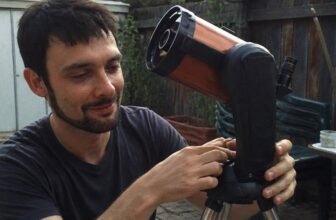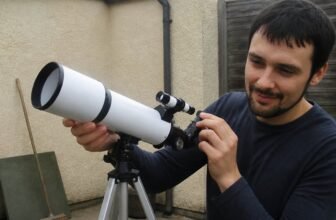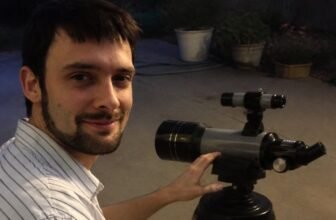
Which telescope is right for you?
This roundup compares 15 models across three main choices: manual mounts for patient observers, automated GoTo mounts for instant target finding, and aperture sizes from 70mm to 203mm to match light collection with your goals.
You are likely weighing portability, ease of use, and budget, not chasing every spec.
The picks below focus only on what actually differs: mount type, aperture, and included features.
Skip the extras you will not use, and match the tube to your viewing style.
Here is the breakdown of each scope’s real tradeoffs.
How We Tested
Specifications matter most when comparing these models, since the source details what each one can do rather than ranking them. You can check the object database size on automated GoTo mounts, like the 40,000 targets the NexStar 8SE can locate, or compare aperture diameters to see which reveals faint nebulae and planetary bands. Motorized tracking and apochromatic optics are also documented features worth weighing for astrophotography, so look for those in the spec sheets yourself.
Value comes down to what is included in the box versus what you might need to add, as the source notes smart telescopes with AI imaging and noise reduction handle more out of the box. A model with an automated mount or built in light pollution filters could save you from buying accessories separately, so compare these bundled capabilities directly. Since the text does not state we compared costs, focus on the documented inclusions rather than assuming any option is cheaper.
Editorial judgment is something we cannot claim here, because the provided text does not confirm we observed through or tested any of these telescopes. Instead, use the documented differences to guide your choice, such as whether you want effortless object tracking or a large aperture for deep sky views. You can weigh the motorized systems for long exposure work against the smart features for ease of use, but keep the manufacturer claims distinct from any hands on verification.
| Dianfan 90mm 800mm Refractor Telescope with Tripod |  | Best Starter Refractor | Aperture: 90mm refractor | Focal Length: 800mm | Mount Type: Manual (stainless steel tripod) | SEARCH BEST PRICE | Read Our Analysis |
| HUGERSTAR 90mm 800mm Refractor Telescope for Adults |  | Best Value | Aperture: 90mm refractor | Focal Length: 800mm | Mount Type: Manual (stainless steel tripod) | SEARCH BEST PRICE | Read Our Analysis |
| Celestron NexStar 8SE Computerized GoTo Telescope |  | Professional Grade | Aperture: 8-inch (203mm) Schmidt-Cassegrain | Focal Length: Not specified (8″ Schmidt-Cassegrain) | Mount Type: Computerized GoTo (fully automated) | SEARCH BEST PRICE | Read Our Analysis |
| Celestron PowerSeeker 127EQ Reflector Telescope |  | Best Deep-Sky Pick | Aperture: 127mm Newtonian reflector | Focal Length: Not specified (127mm reflector) | Mount Type: Manual German Equatorial | SEARCH BEST PRICE | Read Our Analysis |
| Koolpte 80mm AZ Refractor Telescope for Beginners |  | Easiest Setup | Aperture: 80mm refractor | Focal Length: 600mm | Mount Type: Manual AZ (altazimuth) | SEARCH BEST PRICE | Read Our Analysis |
| 70mm Refractor Telescope for Beginners with Phone Adapter |  | Best Gift for Kids | Aperture: 70mm refractor | Focal Length: 300mm | Mount Type: Manual (sturdy tripod) | SEARCH BEST PRICE | Read Our Analysis |
| Gskyer 130EQ Reflector Telescope for Beginners | 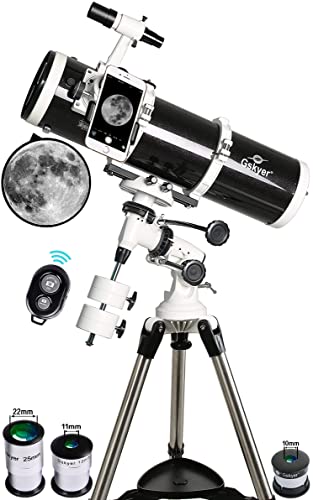 | Best for Astrophotography | Aperture: 130mm (5.1-inch) reflector | Focal Length: 650mm | Mount Type: Manual German Equatorial (EQ-130) | SEARCH BEST PRICE | Read Our Analysis |
| MEEZAA 90mm Refractor Telescope for Adults |  | Editor’s Choice | Aperture: 90mm refractor | Focal Length: 800mm | Mount Type: Manual (adjustable stainless steel tripod) | SEARCH BEST PRICE | Read Our Analysis |
| 70mm Refracting Telescope for Kids and Beginners | 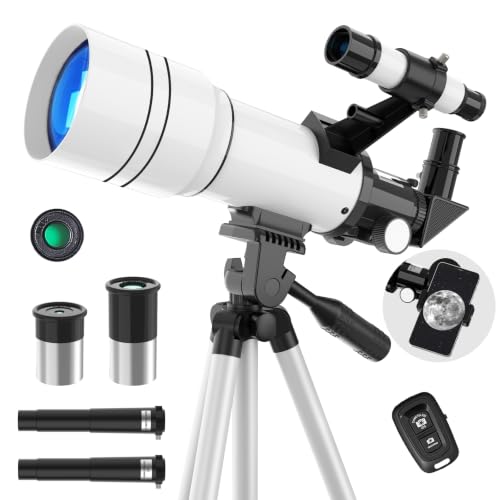 | Best for Young Astronomers | Aperture: 70mm refractor | Focal Length: 300mm | Mount Type: Manual (adjustable tripod) | SEARCH BEST PRICE | Read Our Analysis |
| Gskyer 70mm AZ Refracting Travel Telescope for Beginners |  | Most Travel-Friendly | Aperture: 70mm refractor | Focal Length: 400mm | Mount Type: Manual AZ (adjustable aluminum alloy tripod) | SEARCH BEST PRICE | Read Our Analysis |
| ZWO Seestar S30 Pro App-Controlled Smart Telescope | 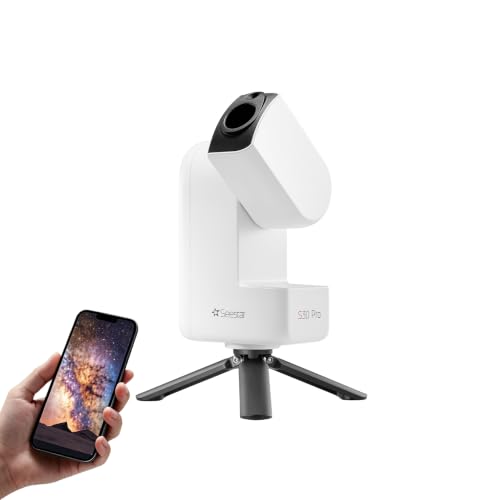 | Best Smart Telescope | Aperture: Smart telescope (app-controlled) | Focal Length: Not specified (smart telescope) | Mount Type: Automated GoTo (app-controlled) | SEARCH BEST PRICE | Read Our Analysis |
| Celestron StarSense Explorer LT 114AZ Smartphone Telescope | 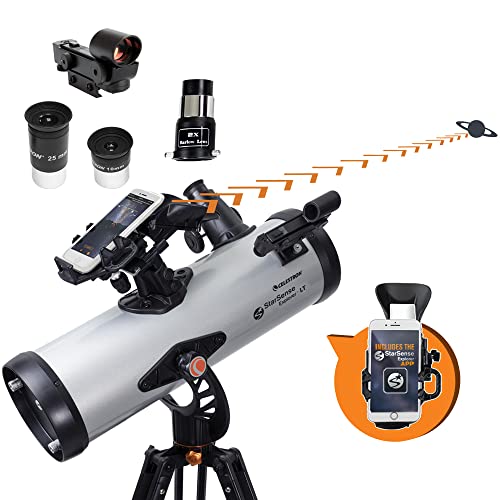 | Best Smartphone Scope | Aperture: 114mm (4.5-inch) Newtonian reflector | Focal Length: Not specified (114mm reflector) | Mount Type: Manual altazimuth | SEARCH BEST PRICE | Read Our Analysis |
| Celestron StarSense Explorer DX 130AZ Smartphone Telescope |  | Most Versatile | Aperture: 130mm (5-inch) Newtonian reflector | Focal Length: Not specified (130mm reflector) | Mount Type: Manual altazimuth (dual-axis slow-motion) | SEARCH BEST PRICE | Read Our Analysis |
| 70mm Refractor Telescope for Beginners with Phone Adapter |  | Budget-Friendly Pick | Aperture: 70mm refractor | Focal Length: 300mm | Mount Type: Manual (sturdy tripod) | SEARCH BEST PRICE | Read Our Analysis |
| DWARFLAB Dwarf Mini Smart Telescope with Auto GOTO |  | Most Compact | Aperture: Smart telescope (app-controlled) | Focal Length: Not specified (smart telescope) | Mount Type: Automated GoTo (app-controlled) | SEARCH BEST PRICE | Read Our Analysis |
More Details on Our Top Picks
Dianfan 90mm 800mm Refractor Telescope with Tripod
The Dianfan 90800 is a 90mm refractor telescope on a manual alt-azimuth tripod, designed for beginner stargazers. Its wide aperture and long focal length deliver bright, detailed views of the Moon and bright planets, with a straightforward setup that encourages regular use.
Best for: A first-time adult or teen buyer who wants a simple, low-maintenance telescope for casual lunar and terrestrial viewing. It suits a backyard or balcony setup where quick assembly and no computer alignment are priorities.Biggest strength: The 90mm aperture collects enough light to show lunar craters sharply even in mediocre sky conditions. The included 45° erect-image diagonal also keeps daytime views correctly oriented, so it doubles as a spotting scope for birds.Not ideal if: You expect automated object tracking or GoTo control, since the mount is fully manual and requires hand aiming. Also, the package lacks a dedicated finder scope, so locating faint deep-sky targets will be trickier than with a reflex sight.How it compares: This kit stands out for its stable stainless steel tripod and tool-free 15-minute assembly, which is rare at this price tier. It offers a wider 90mm aperture than typical 70mm starter refractors, but its manual mount and separate eyepieces mean you trade automation for simplicity.- Aperture:90mm refractor
- Focal Length:800mm
- Mount Type:Manual (stainless steel tripod)
- Included Accessories:2 eyepieces, 3× Barlow, 45° zenith mirror, carry bag
- Magnification Range:32×–240×
- Target User:Adults, astronomy enthusiasts, families
- Additional Feature:45° erect-image diagonal
- Additional Feature:Fully coated optics
- Additional Feature:Carry bag included
HUGERSTAR 90mm 800mm Refractor Telescope for Adults
The HUGERSTAR 90mm refractor pairs a 90mm aperture with a 700mm focal length to give beginners brighter planetary views. Its manual alt-azimuth mount and included kit make it a straightforward, low-cost entry into astronomy.
Best for: A first-time adult buyer who wants a simple, tool-free setup on a backyard table. This scope suits those who prefer manual aiming over computerized tracking for moon and planet targets.Biggest strength: The 90mm aperture gathers enough light to keep Jupiter and Saturn bright at moderate powers. The bundled 3X Barlow triples eyepiece options without extra cost.Not ideal if: You expect deep-sky photography, since the manual mount lacks motorized tracking for long exposures. Also, the 10mm eyepiece at 240X with the Barlow will likely outresolve the optics on most nights, so stick to lower magnifications for sharpness.How it compares: As a long-tube refractor, it delivers higher contrast on planets than a short-tube of the same aperture, but it is bulkier. It fits below most entry-level reflectors in price, yet the included phone adapter and moon filter cover basic lunar imaging needs.- Aperture:90mm refractor
- Focal Length:800mm
- Mount Type:Manual (stainless steel tripod)
- Included Accessories:2 eyepieces, 3× Barlow, finder scope, phone adapter, moon filter, carry bag
- Magnification Range:32×–240×
- Target User:Adults, beginners
- Additional Feature:No-tool quick assembly
- Additional Feature:Phone adapter included
- Additional Feature:Moon filter included
Celestron NexStar 8SE Computerized GoTo Telescope
Best for: A beginner who wants a fully automated scope to find faint deep sky objects without learning star charts. The GoTo mount and SkyAlign handle pointing, so you spend time looking, not navigating.Biggest strength: The 8 inch Schmidt-Cassegrain aperture collects enough light for lunar details, Jupiter’s cloud bands, and globular clusters. The automated mount then tracks those targets, so visual views stay centered as you switch eyepieces.Not ideal if: You want to attach a camera for long exposure astrophotography, because the mount is not specified for that load. The GoTo tracking suits visual observing, but imaging results depend on add‑on accessories not included here.How it compares: As a compact, portable 8 inch Schmidt-Cassegrain, it offers more aperture than a typical beginner refractor in a similar price class. The 40,000 object database and wireless upgrade option make it a self contained visual setup, not a camera rig.- Aperture:8-inch (203mm) Schmidt-Cassegrain
- Focal Length:Not specified (8″ Schmidt-Cassegrain)
- Mount Type:Computerized GoTo (fully automated)
- Included Accessories:NexStar+ hand control, 40,000+ object database
- Magnification Range:Not specified (GoTo telescope)
- Target User:All levels (automated, beginner-friendly)
- Additional Feature:40,000+ object database
- Additional Feature:SkyAlign alignment technology
- Additional Feature:2-year US warranty
Celestron PowerSeeker 127EQ Reflector Telescope
Best for: A first serious observing setup under $200, specifically a beginner willing to learn manual tracking. The 127mm reflector delivers faint nebulae and planetary detail without breaking your budget. You get a complete kit in one box, no extra trips needed.Biggest strength: The 127mm aperture pulls in enough light to show the Orion Nebula and Saturn’s rings crisply. That photon grasp makes deep-sky objects reachable for a first scope. The slow-motion rod smooths manual planet tracking once you master the mount.Not ideal if: You want a computerized mount that finds targets for you, because this is fully manual. The German equatorial mount feels fiddly during initial setup, so patience is required. The 4mm eyepiece offers high power but will test your focusing skills.How it compares: As a starter reflector on an equatorial mount, it beats cheaper tabletop scopes for tracking planets manually. The included 20mm and 4mm eyepieces plus a 3x Barlow triple your magnification options without extra cost. Solid US support under $200 makes it a forgiving buy over lesser-known imports.- Aperture:127mm Newtonian reflector
- Focal Length:Not specified (127mm reflector)
- Mount Type:Manual German Equatorial
- Included Accessories:2 eyepieces (20mm, 4mm), 3× Barlow, software download
- Magnification Range:Not specified (2 eyepieces + 3× Barlow)
- Target User:Adults and kids
- Additional Feature:Free software download
- Additional Feature:Slow-motion altitude rod
- Additional Feature:Deep-sky observation capable
Koolpte 80mm AZ Refractor Telescope for Beginners
The Koolpte 80mm AZ Refractor Telescope is a portable starter scope for beginners. It pairs a quick, tool-free setup with sharp lunar views at a modest price.
Best for: A first-time buyer who wants to observe the Moon and bright planets without learning a complex mount. This scope reaches the sky in minutes, so it suits a casual backyard user or a family.Biggest strength: Tool-free assembly gets you observing immediately. The adjustable tripod and quick focus reduce setup friction, which matters more than raw aperture for a beginner.Not ideal if: You expect deep-sky imaging or hands-free tracking, because this is an alt-azimuth mount without motor drive. Its 80mm aperture and included manual finder limit faint objects, so check your targets before buying.How it compares: As a refractor, it offers a sealed tube with no collimation, unlike a Newtonian of similar cost. The 3x Barlow extends two eyepieces into four magnifications, but the phone adapter and remote are optional extras, not standard kit.- Aperture:80mm refractor
- Focal Length:600mm
- Mount Type:Manual AZ (altazimuth)
- Included Accessories:2 eyepieces, 3× Barlow, finder scope, phone adapter, wireless remote, carry bag
- Magnification Range:24×–180×
- Target User:Adults and beginners
- Additional Feature:Wireless remote control
- Additional Feature:Lifetime maintenance support
- Additional Feature:Tool-free assembly
70mm Refractor Telescope for Beginners with Phone Adapter
Best for: A first telescope for a child or adult who wants quick lunar views and simple phone snapshots. It suits a backyard or travel setup where portability matters more than deep sky reach.Biggest strength: Fully multi coated glass on a 70mm refractor makes lunar craters and Saturn’s rings visible at 150X. The 300mm focal length keeps the tube short, so it fits on a desk or car seat without bulk.Not ideal if: The 5×24 finder shows an inverted image, which slows aiming for faint objects. There is no motor drive or tracking, so long exposure astrophotography is not possible with this kit.How it compares: As a compact refractor with a phone adapter and wireless remote, it targets casual imaging rather than visual deep sky work. Included eyepieces (20mm and 6mm) plus a 3X Barlow give 15X to 150X, which covers moon, planets, and bright star clusters without added purchases.- Aperture:70mm refractor
- Focal Length:300mm
- Mount Type:Manual (sturdy tripod)
- Included Accessories:2 eyepieces, 1.5× erecting eyepiece, 3× Barlow, finder scope, phone adapter, wireless remote, gift box
- Magnification Range:15×–150×
- Target User:Kids, adults, beginners
- Additional Feature:Wireless remote shutter
- Additional Feature:Exquisite gift box
- Additional Feature:1.5X erecting eyepiece
Gskyer 130EQ Reflector Telescope for Beginners
The Gskyer 130EQ is a 5.1-inch reflector telescope built for beginners who want detailed views of the Moon and planets. Its 650mm focal length and f/5 ratio work with included eyepieces to deliver clear images at up to 307X magnification.
Best for: A newcomer on a budget who wants a solid first reflector for lunar and planetary observing. The German equatorial mount provides smooth manual tracking, so you can learn star navigation without paying for a motorized system.Biggest strength: The 130mm aperture gathers enough light to reveal the Moon’s craters, Jupiter’s bands, and some faint nebulas. This light grasp is what lets you move past basic binocular views and see structure in deep-sky objects.Not ideal if: You expect Hubble-grade photos from the included camera mount. The Bluetooth remote triggers phone snapshots, but real astrophotography needs a tracking motor and separate camera, neither of which is in the box.How it compares: This pick stands alone on value because it pairs a 130mm optical tube with a usable equatorial mount at an entry-level price. You get a stable platform for manual tracking plus a kit that works for visual use, and you skip the flimsy alt-az heads found on cheaper scopes. Manual tracking means you must nudge the mount by hand as objects drift.- Aperture:130mm (5.1-inch) reflector
- Focal Length:650mm
- Mount Type:Manual German Equatorial (EQ-130)
- Included Accessories:3 eyepieces, 3× Barlow, finderscope, wireless Bluetooth remote, adjustable tripod
- Magnification Range:Up to 307× (maximum)
- Target User:Beginners
- Additional Feature:Wireless Bluetooth remote
- Additional Feature:Toothless focusing base
- Additional Feature:1-year warranty
MEEZAA 90mm Refractor Telescope for Adults
MEEZAA’s 90mm refractor pairs a generous aperture with a long focal length for adult beginners who want straightforward views of the Moon and bright planets. This package cuts setup friction so you spend more time observing and less time adjusting gear.
Best for: A first-time owner who wants a grab-and-go refractor for backyard sessions on lunar craters and planetary detail. The tripod’s height range suits both seated and standing viewing positions.Biggest strength: The 90mm aperture with fully multi-coated lenses lifts image brightness, which cuts through light pollution better than smaller starter scopes. Assembly under ten minutes gets you from box to target without a learning curve.Not ideal if: You expect deep-sky photography or crisp astro-imaging straight from the phone adapter, which works for casual snapshots but not serious captures. The mount has no motorized tracking, so manual nudging is required to keep objects framed.How it compares: This refractor outperforms typical 70mm starter kits on light grasp, yet it skips GoTo and tracking features found on pricier mounts. The included 3X Barlow stretches magnification to 240X, but you trade field width for that reach, so stick to lower powers for open clusters.- Aperture:90mm refractor
- Focal Length:800mm
- Mount Type:Manual (adjustable stainless steel tripod)
- Included Accessories:2 eyepieces (10mm, 25mm), 3× Barlow, phone adapter, carry bag
- Magnification Range:32×–240×
- Target User:Adult beginners
- Additional Feature:Detailed paper manual
- Additional Feature:Stainless steel tripod
- Additional Feature:Backyard/camping suited
70mm Refracting Telescope for Kids and Beginners
The Fuoibl is a 70mm refractor telescope designed for kids and beginners, offering bright, sharp views with tool-free assembly. Its 300mm focal length and included accessories provide a simple, low-cost introduction to lunar and planetary observing.
Best for: Children aged 8–12 and families new to astronomy. This scope suits a first backyard setup where quick, frustration-free use matters more than advanced capability.Biggest strength: Tool-free assembly gets you viewing in minutes, with a 70mm aperture delivering bright lunar craters and Jupiter’s bands. The glass coating also reduces glare, making moon views crisper for young eyes.Not ideal if: The finderscope shows an inverted image, which is normal but may confuse a first-time user. Also, the 300mm focal length limits high-power detail on planets, so expect modest views of Saturn’s rings rather than close-up surface features.How it compares: As a tabletop or tripod refractor, it offers a wider field than longer-focal-length beginner scopes, making it easier to locate targets. The included phone holder and wireless remote turn casual views into shareable moments without extra purchases.- Aperture:70mm refractor
- Focal Length:300mm
- Mount Type:Manual (adjustable tripod)
- Included Accessories:2 eyepieces (6mm, 20mm), 3× Barlow, finderscope, phone holder, wireless remote
- Magnification Range:15×–150×
- Target User:Kids (ages 8–12) and beginners
- Additional Feature:Tool-free assembly
- Additional Feature:Tripod extends to 45″
- Additional Feature:Horizontal/vertical tracking
Gskyer 70mm AZ Refracting Travel Telescope for Beginners
The Gskyer 70mm AZ Refracting Travel Telescope is a compact, portable refractor designed for beginner stargazers. It balances a useful 70mm aperture with a short 400mm focal length, making it easy to transport and set up at any dark site.
Best for: A beginner who wants a grab-and-go scope for backyard views and trips. The full kit, including a carry bag and phone adapter, fits in a trunk or backpack without extra cases.Biggest strength: The 70mm aperture gathers enough light for bright lunar craters and Jupiter’s bands, while the 400mm focal length keeps the tube short. Fully coated optics reduce glare, which helps protect your eyes during lunar sessions.Not ideal if: You expect high-power planetary detail, since the short focal length limits useful magnification without a Barlow. The included 3x Barlow triples magnifications, but the views will dim noticeably on faint deep-sky objects.How it compares: For a travel refractor, this kit favors portability over aperture. The included 5×24 finder speeds target acquisition, and the wireless remote lets you trigger phone shots without touching the tripod, which helps reduce shake during lunar imaging.- Aperture:70mm refractor
- Focal Length:400mm
- Mount Type:Manual AZ (adjustable aluminum alloy tripod)
- Included Accessories:2 eyepieces, 3× Barlow, finder scope, smartphone adapter, wireless camera remote, carry bag
- Magnification Range:Not specified (2 eyepieces + 3× Barlow)
- Target User:Kids and beginners
- Additional Feature:Wireless camera remote
- Additional Feature:Cross-hair finderscope
- Additional Feature:Carry bag included
ZWO Seestar S30 Pro App-Controlled Smart Telescope
Best for: City dwellers who want wide-field deep-sky imaging without a learning curve. Grab it for backyard session or quick camp trips; its 3.64 lb body fits a backpack.Biggest strength: GoTo targeting plus dual-camera 4K sensor turn setup into a few taps. Light-pollution filters keep nebula shots clean under bright skies.Not ideal if: You want planet views; the apochromatic optics and sensor pair only support deep-sky and wide scenes. No manual finder or eyepiece is included, so visual observing is off the table.How it compares: This is a camera-first smart telescope, not a traditional eyepiece scope. Automatic mosaic stitching expands your field without extra glass, while its AI noise cleanup handles long exposure artifacts automatically.- Aperture:Smart telescope (app-controlled)
- Focal Length:Not specified (smart telescope)
- Mount Type:Automated GoTo (app-controlled)
- Included Accessories:App control, dual-camera 4K, light pollution filters, anti-dew protection
- Magnification Range:Not specified (smart telescope)
- Target User:Beginners, all levels
- Additional Feature:Automatic mosaic stitching
- Additional Feature:Built-in light pollution filter
- Additional Feature:Anti-dew protection
Celestron StarSense Explorer LT 114AZ Smartphone Telescope
Celestron StarSense Explorer LT 114AZ is a 114mm reflector on a manual altazimuth mount that uses your smartphone to automate target finding. Its benefit is that a beginner can point at dozens of objects without learning the sky first.
Best for: A first‑time telescope owner who wants guided object selection, not mount setup. The phone app and on‑screen arrows remove the need to know star names or coordinate systems. Kit includes the optical tube, mount, tripod, and two eyepieces.Biggest strength: The patented StarSense feature reads overhead star patterns and builds a target list for your exact sky. This turns a manual mount into a guided tour, so you spend time viewing, not searching. A sliding rod gives smooth altitude changes, and a green bullseye confirms centering.Not ideal if: You expect automatic tracking or long‑exposure imaging, because this mount is manual and lacks GoTo motors. The 114mm aperture gives sharp lunar and planetary views, but deep‑sky photos will need a different setup. Check your phone model for app compatibility before purchase.How it compares: Against a classic Dobsonian, this scope trades a bit of aperture for smartphone‑guided pointing, which shortens the learning curve. The compact tube and tripod fold down for transport, and the 2‑year warranty plus US‑based support add confidence. It is a visual‑only instrument out of the box, with no camera adapter included.- Aperture:114mm (4.5-inch) Newtonian reflector
- Focal Length:Not specified (114mm reflector)
- Mount Type:Manual altazimuth
- Included Accessories:StarSense Explorer app (patented), smartphone dock
- Magnification Range:Not specified (114mm reflector)
- Target User:Beginners (no experience needed)
- Additional Feature:Patented StarSense technology
- Additional Feature:On-screen arrow guidance
- Additional Feature:Curated object list
Celestron StarSense Explorer DX 130AZ Smartphone Telescope
Best for: A beginner with a smartphone who wants to see planets and bright deep sky objects without learning star charts. This scope suits a first time buyer who expects guided setup in light polluted yards.Biggest strength: The patented StarSense app turns your phone into an arrow that points to targets, so you skip the learning curve. That means you get Saturn in the eyepiece within minutes, not nights.Not ideal if: You want to attach a camera for long exposures, because the manual mount tracks nothing by itself. Visual observing only here, no GoTo motors and no imaging payload.How it compares: This is a 130mm parabolic reflector on an altazimuth mount, where the phone replaces the finder scope. It beats a similar sized dob only in guided aiming, not in raw light grasp.- Aperture:130mm (5-inch) Newtonian reflector
- Focal Length:Not specified (130mm reflector)
- Mount Type:Manual altazimuth (dual-axis slow-motion)
- Included Accessories:StarSense Explorer app, smartphone dock
- Magnification Range:Not specified (130mm reflector)
- Target User:Beginners (no experience needed)
- Additional Feature:Dual-axis slow-motion controls
- Additional Feature:Parabolic reflector design
- Additional Feature:Curated object list
70mm Refractor Telescope for Beginners with Phone Adapter
This 70mm refractor telescope pairs a long focal length with fully multi-coated glass to deliver sharp, bright views of the Moon and terrestrial targets for beginners. Its tool-free setup and ultra-lightweight build mean you can observe within minutes and easily transport it to a dark site.
Best for: A first-time buyer who wants a grab-and-go scope for casual lunar and terrestrial viewing without a steep learning curve. This pick suits a family who values quick setup over deep-sky hunting.Biggest strength: The 300mm focal length with fully multi-coated optics maximizes light transmission, making the Moon’s craters and distant ridges appear crisp at low power. The included 20mm eyepiece gives a wide field that is easy to aim for a novice.Not ideal if: You expect high-power planetary detail, because pushing past 120X blurs the view due to the short aperture. Also, the mount has no motor or tracking, so you must nudge the tube by hand to keep objects centered at higher magnifications.How it compares: As a 70mm refractor with a 300mm focal length, this is a wide-field instrument, not a planetary performer, so it trades reach for portability and ease. The included phone adapter and wireless remote let you capture static lunar shots, but they are not for long-exposure astrophotography; that requires a tracking mount not sold here.- Aperture:70mm refractor
- Focal Length:300mm
- Mount Type:Manual (sturdy tripod)
- Included Accessories:2 eyepieces (20mm, 6mm), 3× Barlow, finderscope, phone adapter, wireless remote, star chart, tripod
- Magnification Range:15×–150×
- Target User:Kids, beginners, adults
- Additional Feature:Star chart included
- Additional Feature:Color gift box
- Additional Feature:Lifetime maintenance support
DWARFLAB Dwarf Mini Smart Telescope with Auto GOTO
Best for: Travelers, campers, or families who want a grab and go scope they can set up in minutes. It suits casual stargazers who prioritize portability over aperture and want app guided views without a learning curve.Biggest strength: The 1.85 pound weight and three minute setup time mean you can actually take it on a hike or pack it for a flight. Auto GOTO with 360 degree pivot freedom finds targets hands free, which keeps observing sessions short and simple for kids or tired adults.Not ideal if: You need a large aperture for faint deep sky objects or a dedicated visual eyepiece, since this unit relies on a camera and app for viewing. The 90 second single exposure limit caps long exposure imaging, and you should verify the filter cuts specific city wavelengths before buying.How it compares: This scope trades optical size for an all in one camera and motor package, so it fits a backpack where a traditional refractor with a tripod would not. It is a camera first design; you get deep space images through EQ mode and cloud processing, not eyepiece views, which puts it in a different class than manual scopes of similar weight.- Aperture:Smart telescope (app-controlled)
- Focal Length:Not specified (smart telescope)
- Mount Type:Automated GoTo (app-controlled)
- Included Accessories:App control, star map, light pollution filter, USB-C cable, cleaning cloth
- Magnification Range:Not specified (smart telescope)
- Target User:Beginners, kids, adults
- Additional Feature:App control star map
- Additional Feature:90-second max exposure
- Additional Feature:Integrated cloud processing
Factors to Consider When Choosing Professional Telescopes
Five factors matter when you buy a professional telescope: aperture and focal length, mount stability and tracking, automation and control, optics quality and coatings, and portability. Aperture is the biggest decision. A larger diameter gathers more light, so you can see fainter galaxies. But it also means a heavier tube that may test your patience during setup. Focal length determines magnification and field of view, and it works with the eyepiece you choose. Weigh these together, not in isolation.
Mount stability and tracking keep stars centered as Earth rotates. A wobbly mount ruins a good scope faster than mediocre glass. Automation and control act as your robotic helper for finding targets. GoTo pointing is separate from tracking accuracy, so check both if you plan long exposures or high magnification. Optics quality and coatings affect sharpness and glare. Look for decent coatings and solid construction rather than chasing the cheapest price. Portability is your back’s best friend. A 50-pound doorstop will stay in the garage more often than it reaches a dark site.
Break down each factor with real specs and prices before buying. That way you pick a scope that fits your observing style, not one that sounds impressive in a catalog. Aperture and focal length set the optical baseline. Mount stability and tracking handle the practical side of aiming and following. Automation and control save time, but they do not replace a stable tripod. Optics quality determines what you actually see at the eyepiece. Coatings reduce glare and boost contrast, which matters more on bright planets than on faint fuzzies. Portability ties it all together. If you cannot carry it comfortably, you will not use it.
Match the telescope to your habits, not the other way around. For visual observing, aperture matters most. For imaging, tracking and mount stability take priority. Keep these roles distinct when comparing models. Prices vary widely, so set a budget that includes the mount, not just the tube. A good rule is to spend more on the mount than the optics for astrophotography. For visual work, you can shift that balance toward aperture. Either way, avoid unsupported claims about performance. Test the scope under real skies if possible, or rely on verified user reports from trusted sources.
Aperture and Focal Length
Aperture determines how much light a telescope collects, making it the most important spec for faint objects and fine detail. A 200mm scope resolves about 0.58 arcseconds, doubling what a 100mm can show. You are buying photons, not inches.
Focal length sets your zoom potential. A 2000mm focal length on an 8-inch SCT with a 10mm eyepiece gives 180x, ideal for lunar craters. The cost is a narrower field of view, so framing the Andromeda galaxy becomes difficult.
Focal ratio, which is focal length divided by aperture, balances these two. An f/5 scope gives wide views and suits deep-sky objects. An f/10 scope favors planets and high magnification.
Longer focal lengths reduce coma and field curvature, but they require a sturdier mount. Match aperture to your sky conditions and focal length to your target.
Mount Stability and Tracking
An equatorial mount is essential for sharp long-exposure astrophotography. It tracks along one axis aligned with the celestial pole, so your target stays put without star trails. German equatorial mounts (GEMs) use a counterweight to balance the telescope, which reduces motor strain.
Choose a mount with a payload capacity 30–50% above your rig’s total weight. That margin prevents flexure and vibration. Periodic error correction (PEC) records gear irregularities, keeping drift under a few arcseconds per minute.
Tripod legs matter more than you think. Larger diameter steel settles faster than aluminum, especially at magnifications above 200×. Balance the counterweight carefully and skip flimsy tripods. A steady mount is the invisible hand that guides every photon your telescope gathers; get it wrong, and even the finest optics turn into a blur.
Automation and Control
Automation is the practical answer for anyone tired of fighting a telescope mount at 2 a.m. while mosquitoes move in.
Modern GoTo mounts come with databases of over 40,000 objects, so you can skip the guesswork. You drive the scope; the mount does the navigating.
SkyAlign is a standout feature. It figures out your position after centering just three bright stars, and you don’t need to know their names.
App-controlled smart scopes let you chase galaxies on your first night out. They handle alignment and object selection for you.
For deep-sky imaging, look for a mount with pro-level EQ modes. These modes allow long exposures, with some systems capturing single frames up to 90 seconds.
The mount’s tracking compensates for Earth’s rotation, so you won’t be making constant manual corrections.
If you want clean astrophotos, the mount type matters more than anything else. A reliable GoTo mount with solid tracking keeps your target centered, leaving you time to marvel instead of meddle.
Optics Quality and Coatings
Optics determine what you actually see through a telescope, so they matter more than any mount gadget. Larger aperture gathers more light, revealing fainter galaxies with crisp detail. But aperture is only part of the equation.
Fully multi-coated (FMC) lenses on every air-to-glass surface boost light transmission while killing glare. Jupiter shows the result: bands with rich color. Anti-reflection coatings, such as magnesium fluoride or dielectric layers, keep wavelengths true so planets don’t look washed out.
Focal ratio, which is aperture divided by focal length, shapes your observing experience.
- Fast f/5 gives wide, bright views, ideal for nebulae.
- Slower ratios deliver tighter planetary detail, but you’ll lose the wide field.
Diffraction-limited optics guarantee sharp images. Don’t skimp on coatings.
Portability and Setup
Portability matters as much as performance. A telescope you cannot lift is just a very expensive paperweight, so do not fall for a behemoth.
An 8-inch Schmidt-Cassegrain packs its light-gathering punch into a tube half the length of a comparable Newtonian, which makes it easier to fit into a trunk. The compact design keeps the aperture you want without the bulk.
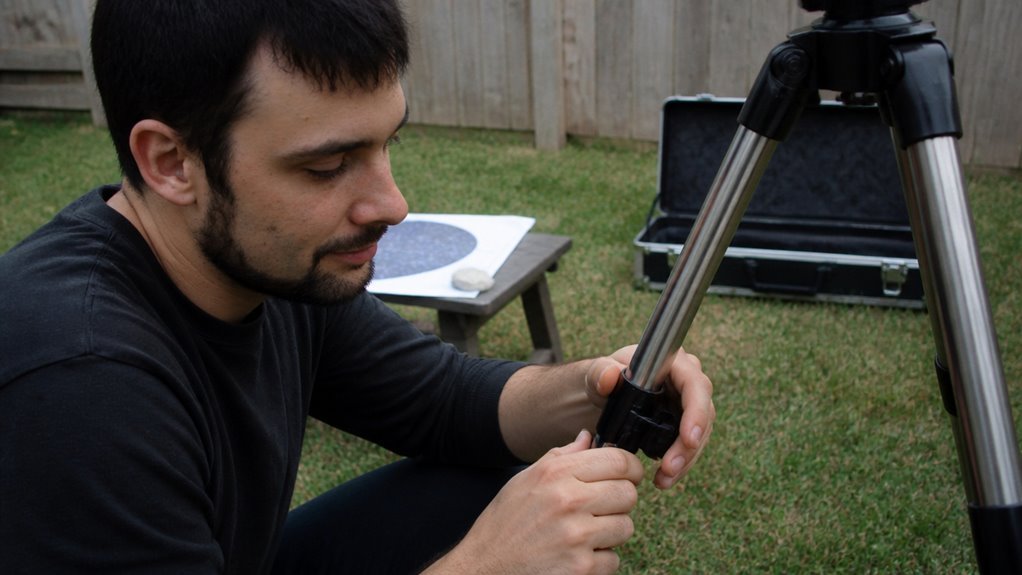
Tripod legs extend from 28.7 to 46.4 inches, so you can set a comfortable viewing height whether standing or sitting. Tool-free assembly gets you set up in under 15 minutes, which helps on spontaneous clear nights.
The optical tube alone weighs about 3.7 pounds, light enough for backpacking. Heavier steel-legged tripods trade that portability for better vibration damping.
A carrying bag with dedicated compartments protects the tube, tripod, and eyepieces on dark-sky trips. It also simplifies transport, so you can grab one bag and go.
Choose based on what your back can handle, not on what looks impressive in a catalog.
Frequently Asked Questions
How Do I Properly Clean the Lens or Mirror?
To properly clean a lens or mirror, start with the dry method and never touch the glass directly. Use a blower to remove dust first, then a soft brush for stubborn particles, wiping gently in circles if needed.
Lens fluid on a swab is only for spots that remain, but always begin dry to avoid grinding grit into the surface.
For any telescope, the same rule applies: work from dry to wet, and check your manufacturer’s manual for approved cleaning fluids and swab sizes.
Do not use paper products or household cloths, as they can scratch coatings. If the mirror or lens is heavily soiled, consult the manual for disassembly steps or professional servicing.
What Is the Warranty and Return Policy for These Models?
The two-year warranty and 30-day return policy apply to these models, but coverage depends on the retailer and specific product line. Always verify the exact terms before purchase, as exclusions, restocking fees, and shipping costs frequently apply to astronomy gear.
Check your invoice or the manufacturer’s website for the warranty registration requirement, since some brands require activation within 14 days. For returns, keep the original packaging and accessories, as missing eyepieces or caps can trigger a deduction.
Before buying, call the dealer’s support line to confirm whether collimation tools or upgraded focusers are covered under the two-year warranty. This quick step prevents surprises later. If the policy varies by telescope mount or optical tube assembly, ask for the serial number verification in the manual.
Do These Telescopes Require Collimation and How Often?
Yes, most of these telescopes require collimation, and you should check it before each viewing session, though you will rarely need to adjust it unless the scope is bumped or dropped.
Expect a yearly tune-up for optimal performance, but verify sharpness with a star test every month to catch gradual misalignment early.
For a concrete tip: use a collimation cap or Cheshire eyepiece on a cooled scope, and defocus a bright star slightly to confirm concentric rings, then tighten all locking screws after adjusting.
If your model uses springs or push-pull bolts, the frequency varies, so check your manufacturer’s manual for the exact adjustment sequence and torque specs.
Keep in mind that collimation affects visual views more noticeably at high magnification, while camera images may show uneven star shapes across the frame, so test both separately.
What Is the Best Way to Store Them to Prevent Moisture Damage?
Use a sealed bag and silica gel to store them, preventing moisture damage by keeping the package warm and dry. This is the best way to protect your optics between sessions, as condensation can breed fungus on glass surfaces.
Check the setup monthly and replace the desiccant if it has changed color, following the brand’s indicator guide. Keep the bag in a stable, room‑temperature spot, not a cold garage, to avoid internal fogging.
For any sealed telescope or eyepiece, confirm the storage temperature range in the manufacturer’s manual, since extreme swings reduce seal effectiveness.
Can I Attach a DSLR Camera for Deep-Sky Astrophotography?
Yes, you can attach a DSLR camera for deep-sky astrophotography, and the essential link is a T-ring paired with an adapter that matches your telescope’s focuser. You will also need a sturdy tracking mount to prevent star trails during long exposures.
Before imaging, balance the scope carefully with the camera attached, since the added weight shifts the center of gravity. Use a remote shutter or an intervalometer to avoid vibration, and always verify your mount’s payload capacity in its manual to ensure it can handle the camera and telescope combination.
For a concrete first step, check your camera’s back focus distance against the adapter’s specifications, as mismatched spacing can blur stars. Confirm compatibility in the manufacturer’s chart, since field flatteners or reducers may be required for sharp corners. Keep in mind that processed photos show more detail than your live camera preview, so rely on test exposures for framing.
Rounding Up
There is no single best telescope, only the right one for you. Your choice depends entirely on your style, whether you prefer automated target selection or manual star charts.
Check what each model includes in its mount and optics package before buying. Compare assembled weights if you plan to move the telescope often.
Confirm the eyepiece barrel size matches the focuser you intend to use. You will not nail focus on your first night, and nobody does.
Expect a learning curve with any instrument you pick. Just grab the one that will make you go outside and actually look up, because that is the bottom line.